All on the Beaulieu (Bowloo) estate … nice to be one of the landed nobility …
The National Motor Museum
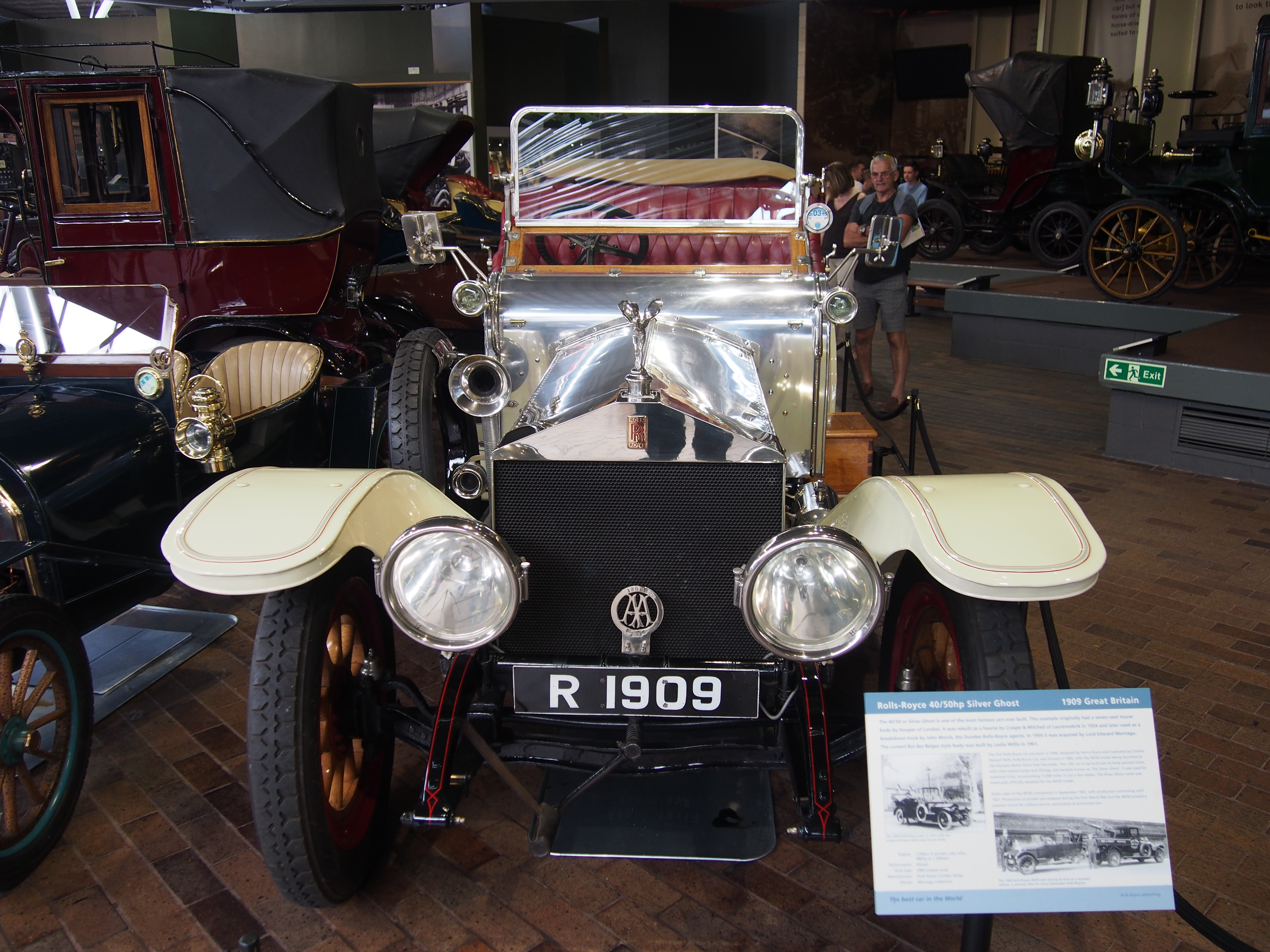
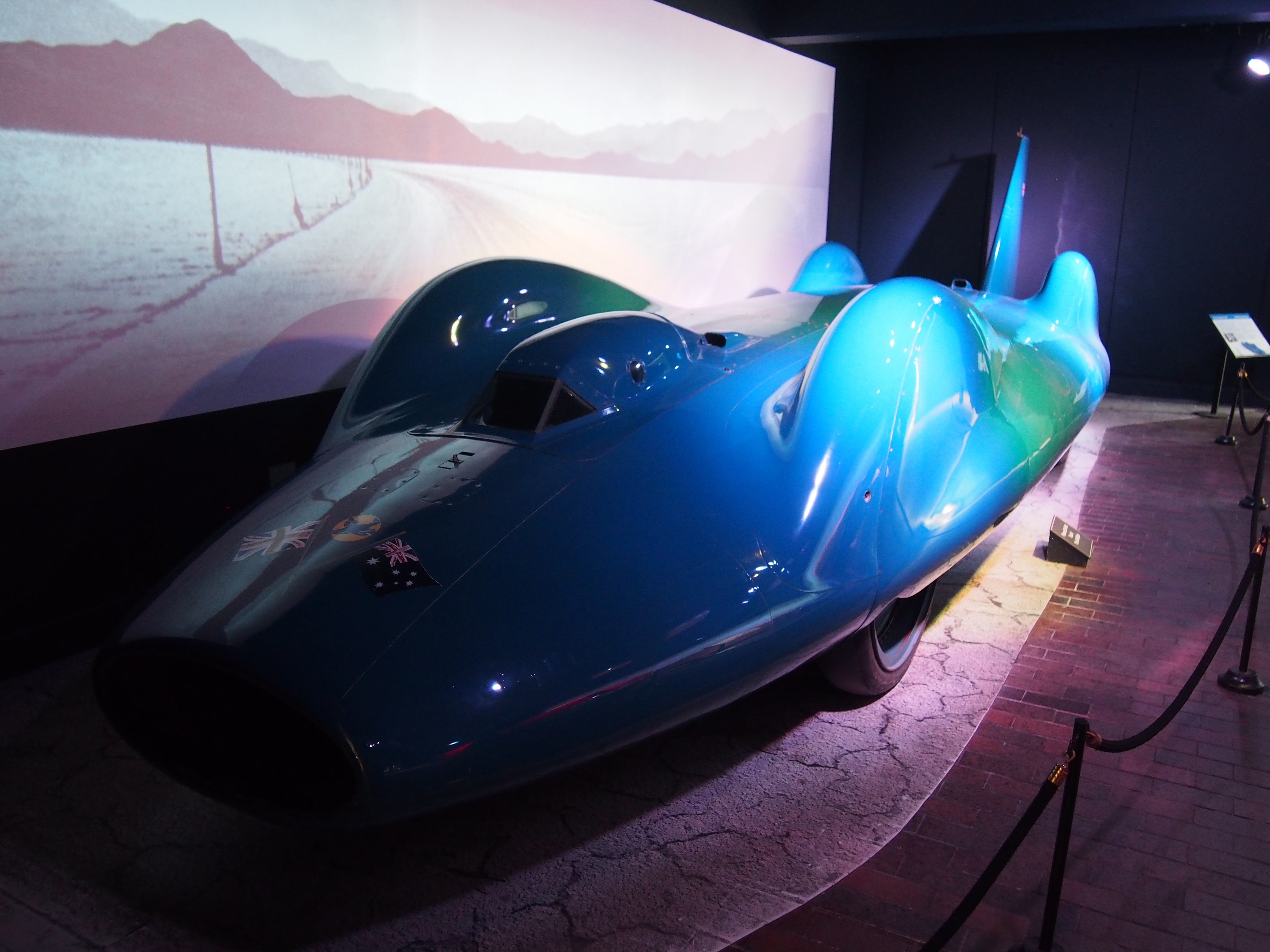
I don’t know that it’s particularly national – it’s a private museum – but it does have a very nice, quite large, and moderately comprehensive collection of cars … I’ll let the photos speak for themselves.
Before the steering wheelAustin 6 (IIRC)The first ‘production’ Daimler (IIRC)Recognise the famous lady on the radiator cap? A 1909 RR Silver GhostBad lighting and no flash — but that’s Alan Campbell’s Bluebird!One of the finest pre-war racing cars – a Bugatti!
The SOE Museum
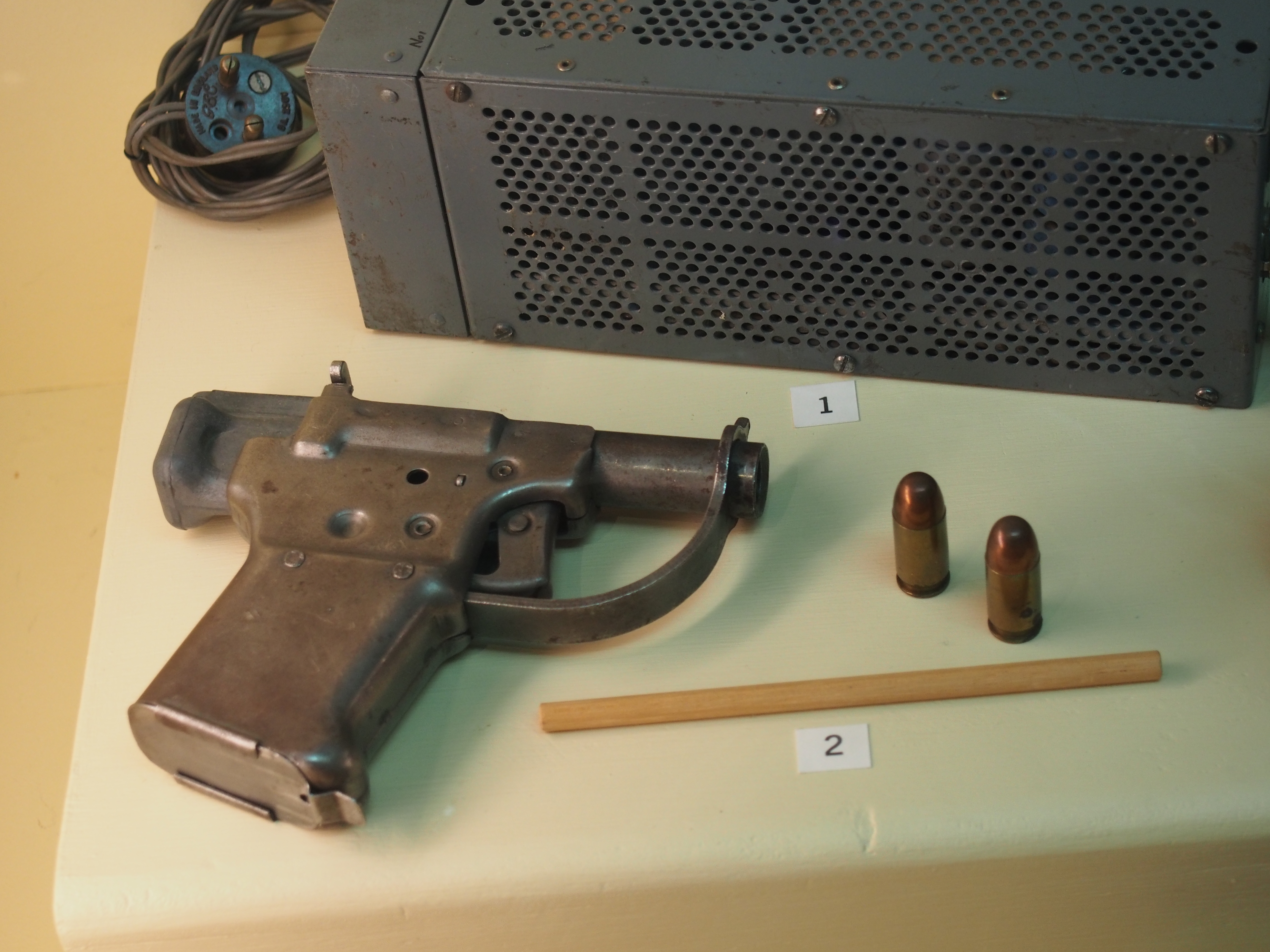
Several of the properties on the estate were used to train SOE Agents during WW2 and there is a small museum dedicated to them …
An original ‘Liberator’ Pistol
Buckler’s Hard
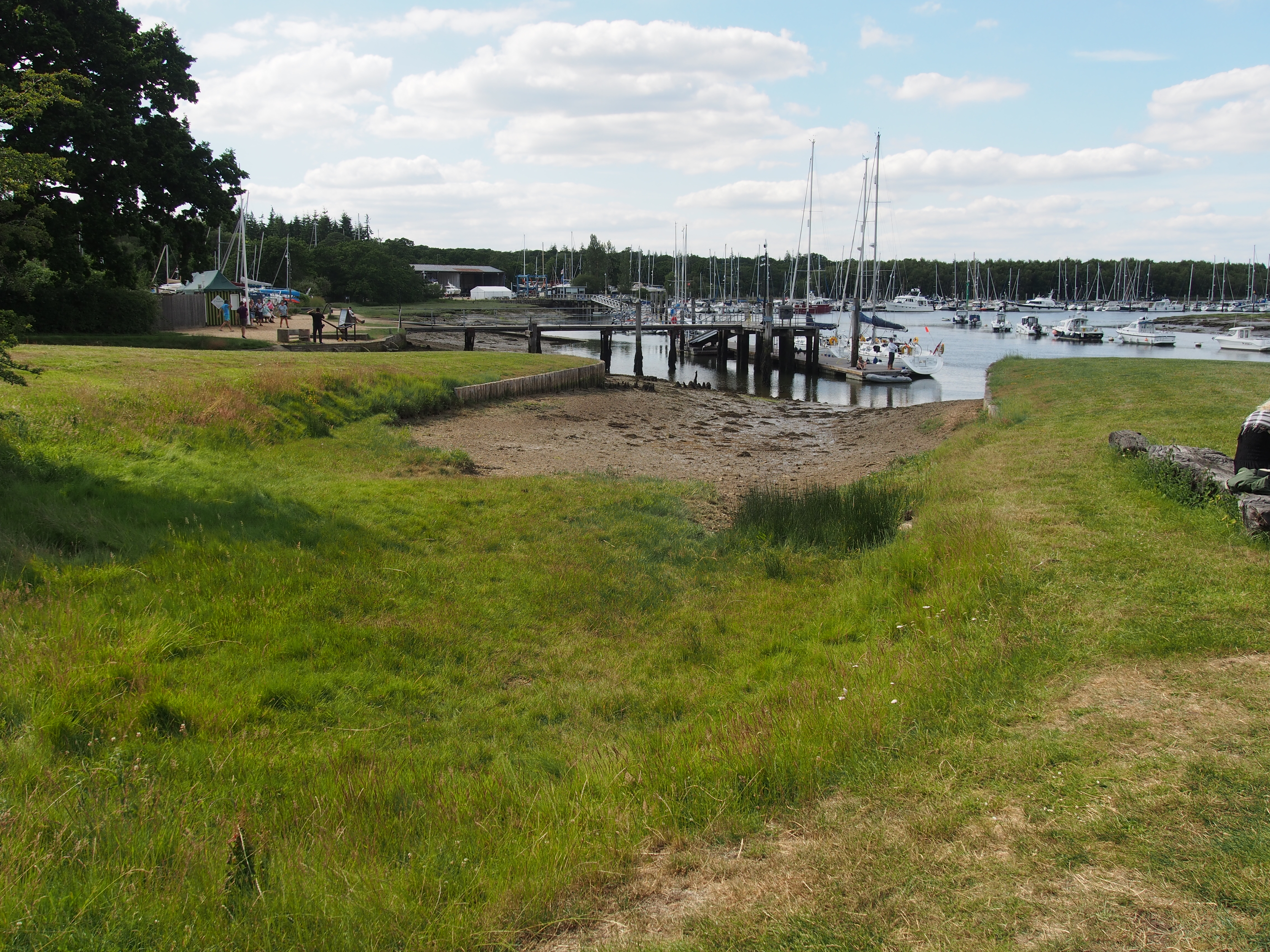
It’s hard to believe it, but this small estuarial site just across the bay from Portsmouth once built men-o’war for the Royal Navy with nothing more than the simple slipways shown below – building forty three over a century or so, including three which fought at Trafalgar!
During WW2 the site was reactivated and used to build Motor Torpedo Boats (and, yes, it’s on land belonging to the Beaulieu estate!)
The remnants of one of the tidal slipways
Beaulieu
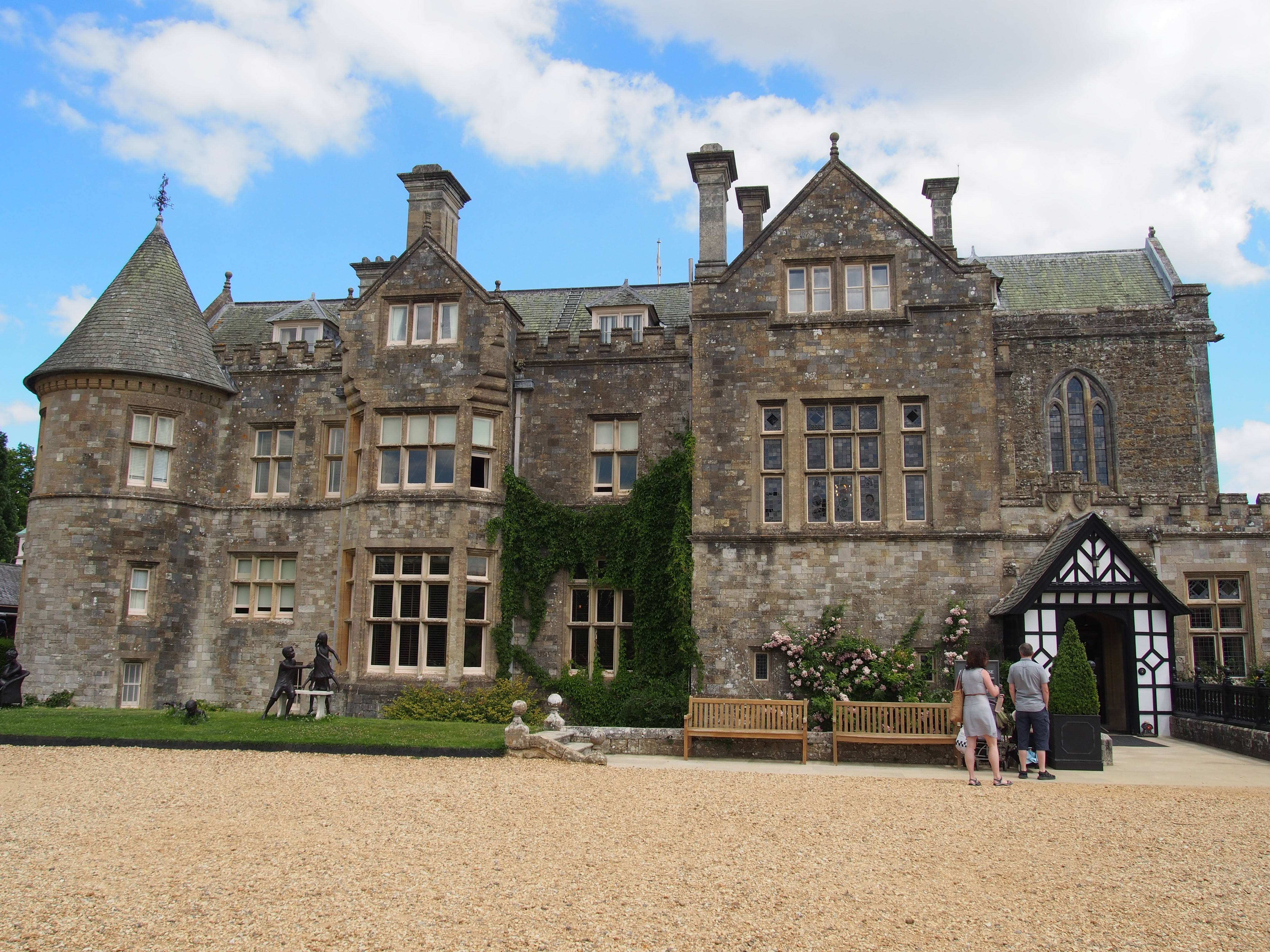
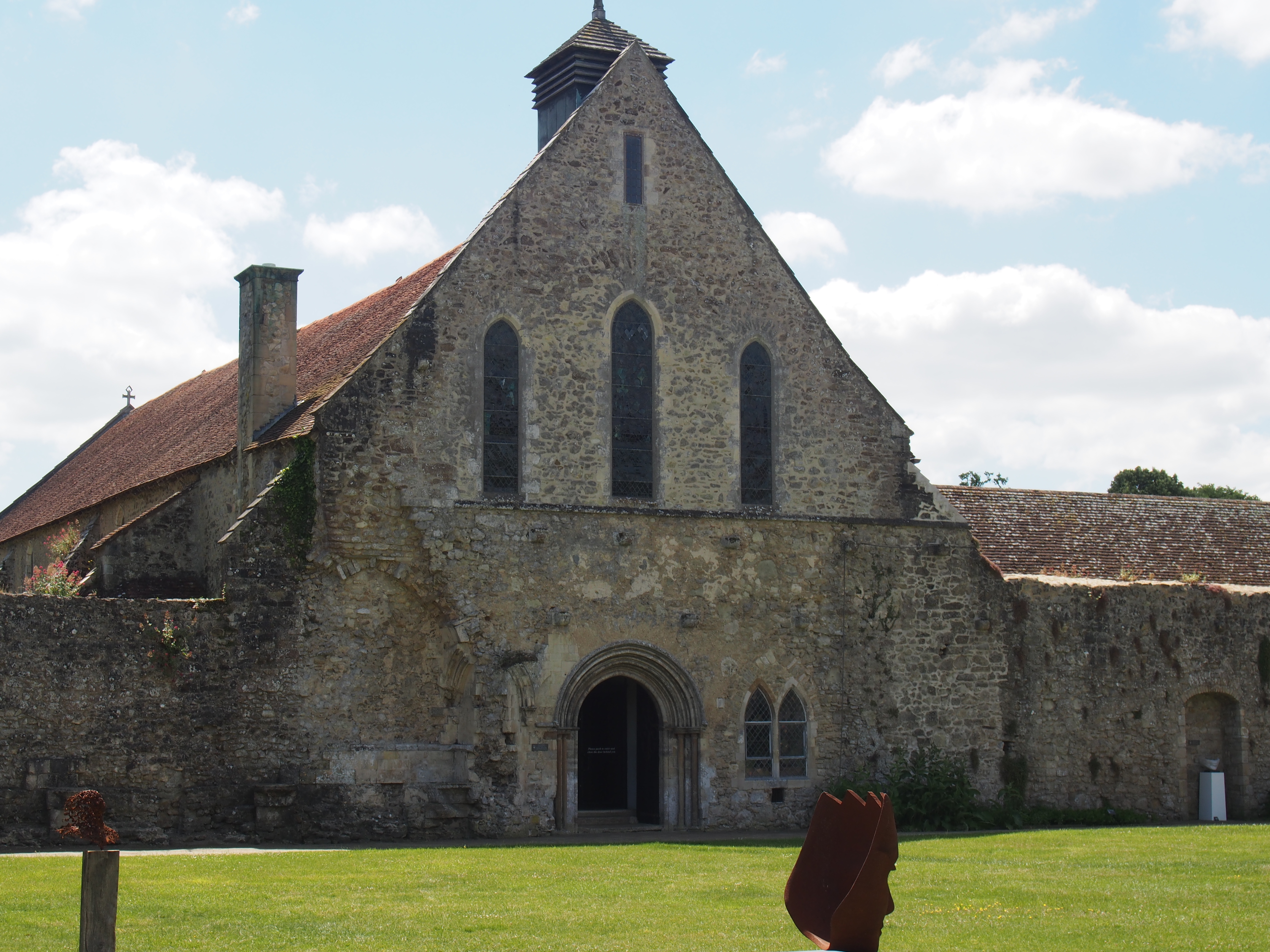
It’s a moderately sized stately home, what more needs to be said? Except that it was originally the Gate House for the Abbey of Beaulieu which was dissolved and sold by Henry VIII for a tidy sum. Now much expanded over the years since, of course,
Beaulieu from the frontThe original Church of Beaulieu Abbey, now the local Parish Church. Externally little different from back in the day. One of the Abbey’s original dormitories. Apart from this and the Church only (some) ruined walls remain
I spent a long … veerrryyy long … day at Portsmouth. Specifically the Historic Dockyard.]
HMS Warrior
Saw the HMS Warrior, Britain’s first major iron hulled steam warship (really steam & sail) which still rides at anchor as it did when I was last here in 1988.
HMS Warrior
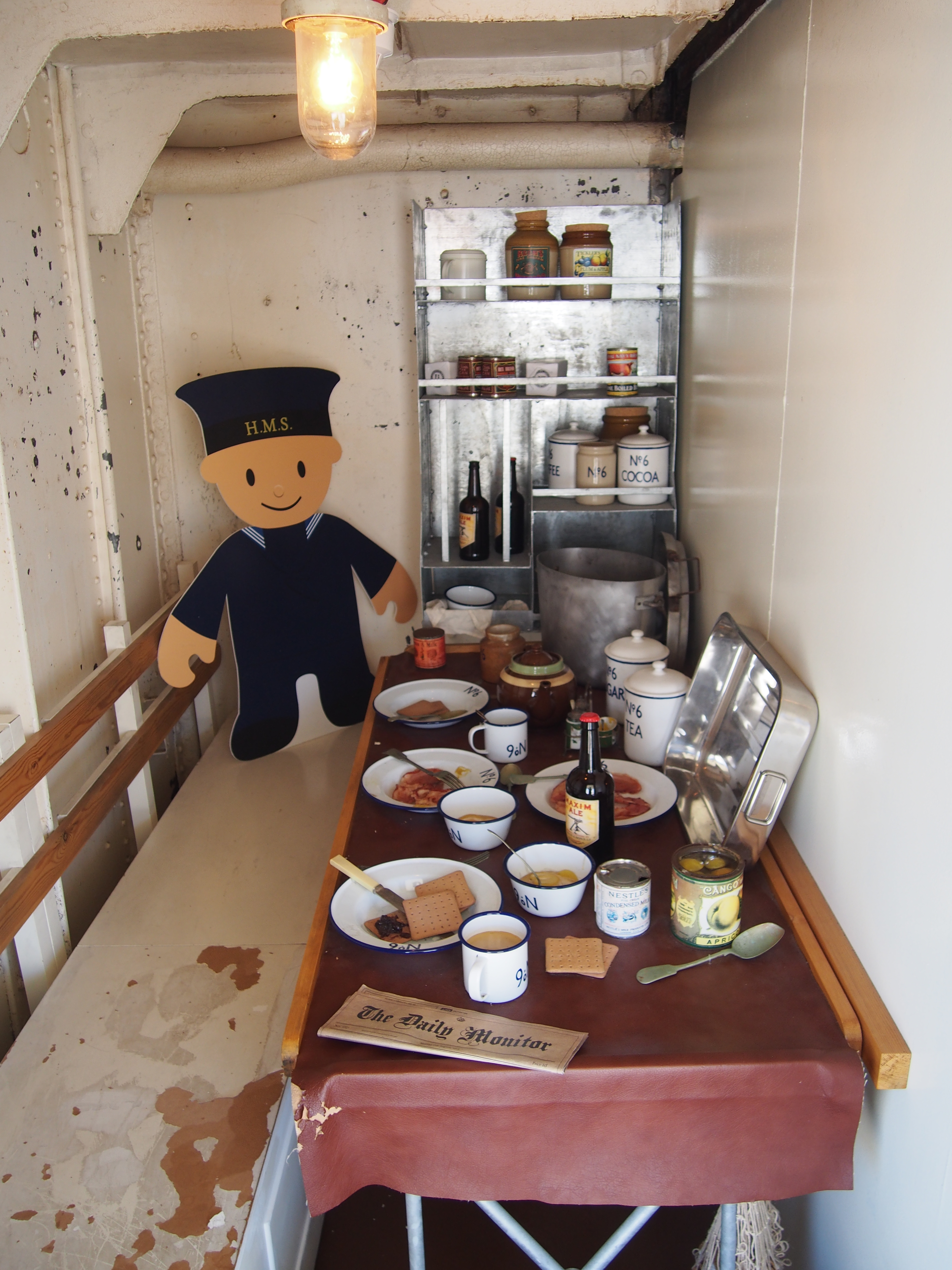
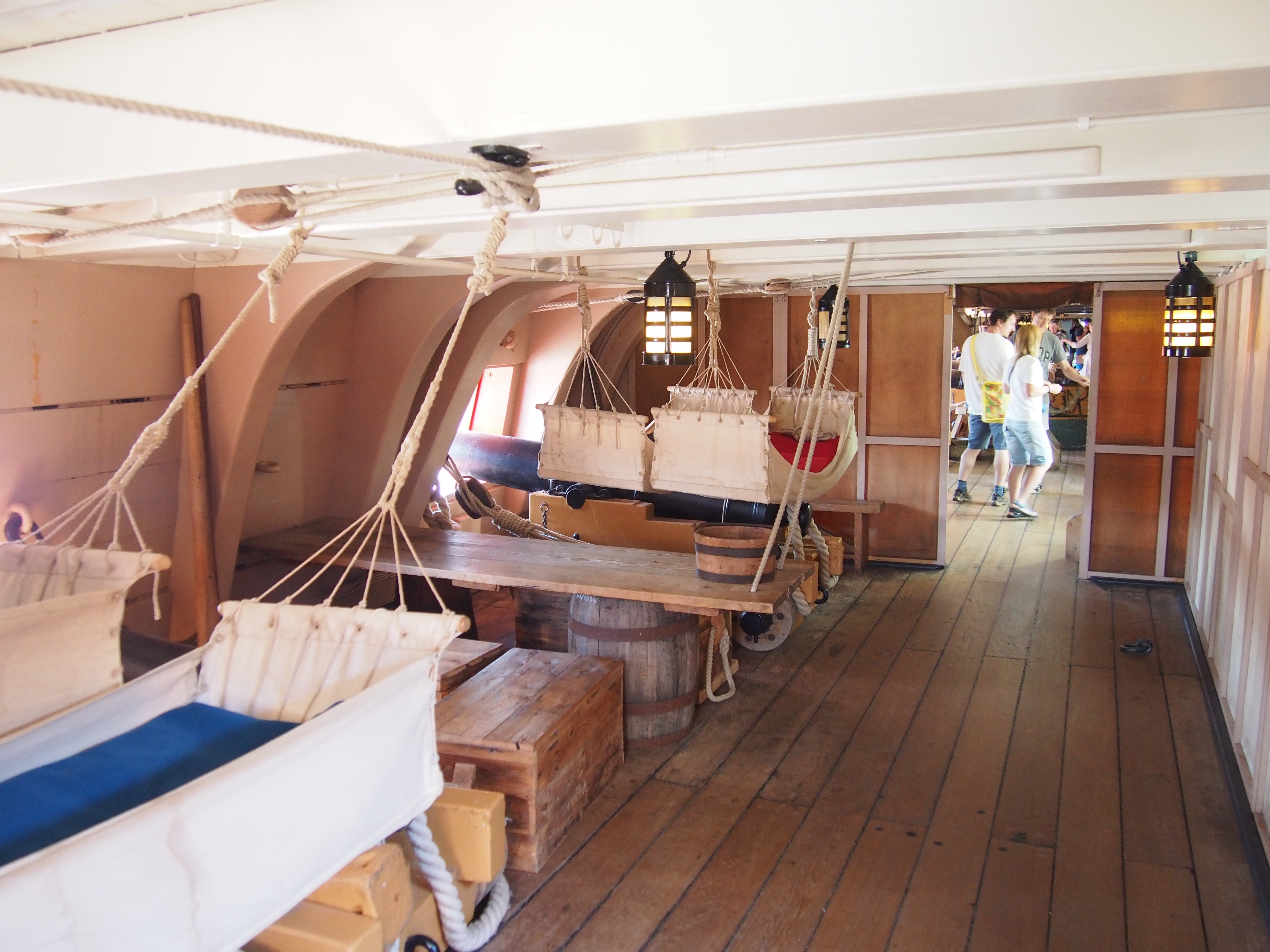
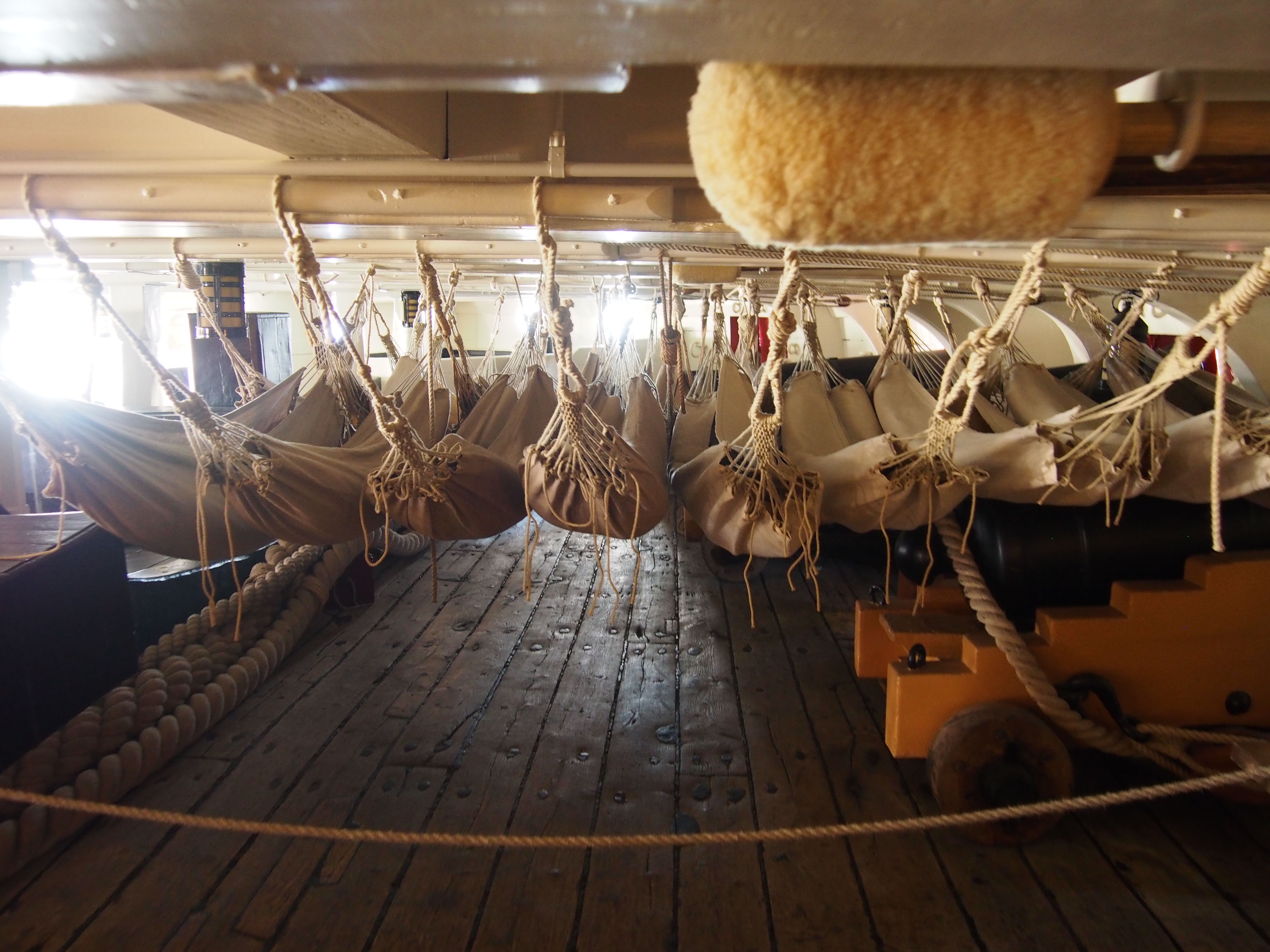
Compared to HMS Victory (less than a century older) she’s much much less cramped, even for the ordinary sailors, and would have been much less unpleasant to serve on board.
Messing tables set up – it doesn’t show on the photo but I can actually stand up straight here without knocking my head!
The ship was so modern that it was the first in the RN to have washing machines!
Muscle powered, of course. But an improvement over a bucketful of seawater!
The Officers, of course, did rather better for themselves.
Senior Officer’s Wardroom
HMS M.33
One of only three surviving WW1 vessels to have served at Gallipoli, the M.33 was a 6″ gun Monitor (2 x 6″ guns) which also served in Northern Russia against the Bolsheviks where she survived several direct hits which, fortunately, either didn’t hit anything important and went straight through or didn’t explode and disintegrated without doing serious damage.
She’s in permanent drydock and was only saved as, over the years, the RN and the Dockyard played ‘pass the parcel’ using her as everything from accommodation through training and as a workshop.
She’s been restored to the WW1 Dazzle pattern camo paint that she would have worn at Gallipoli.
M.33 in dazzle camo
Inside was, of course, quite cramped even for the small crew she carried (around 30 men) and she barely had enough bunkerage to reach Gibraltar from Portsmouth … and, even then, on her first trip there to reach Gallipoli she had to be towed by the collier escorting her as the headwinds were enough so that she was chewing through fuel too fast.
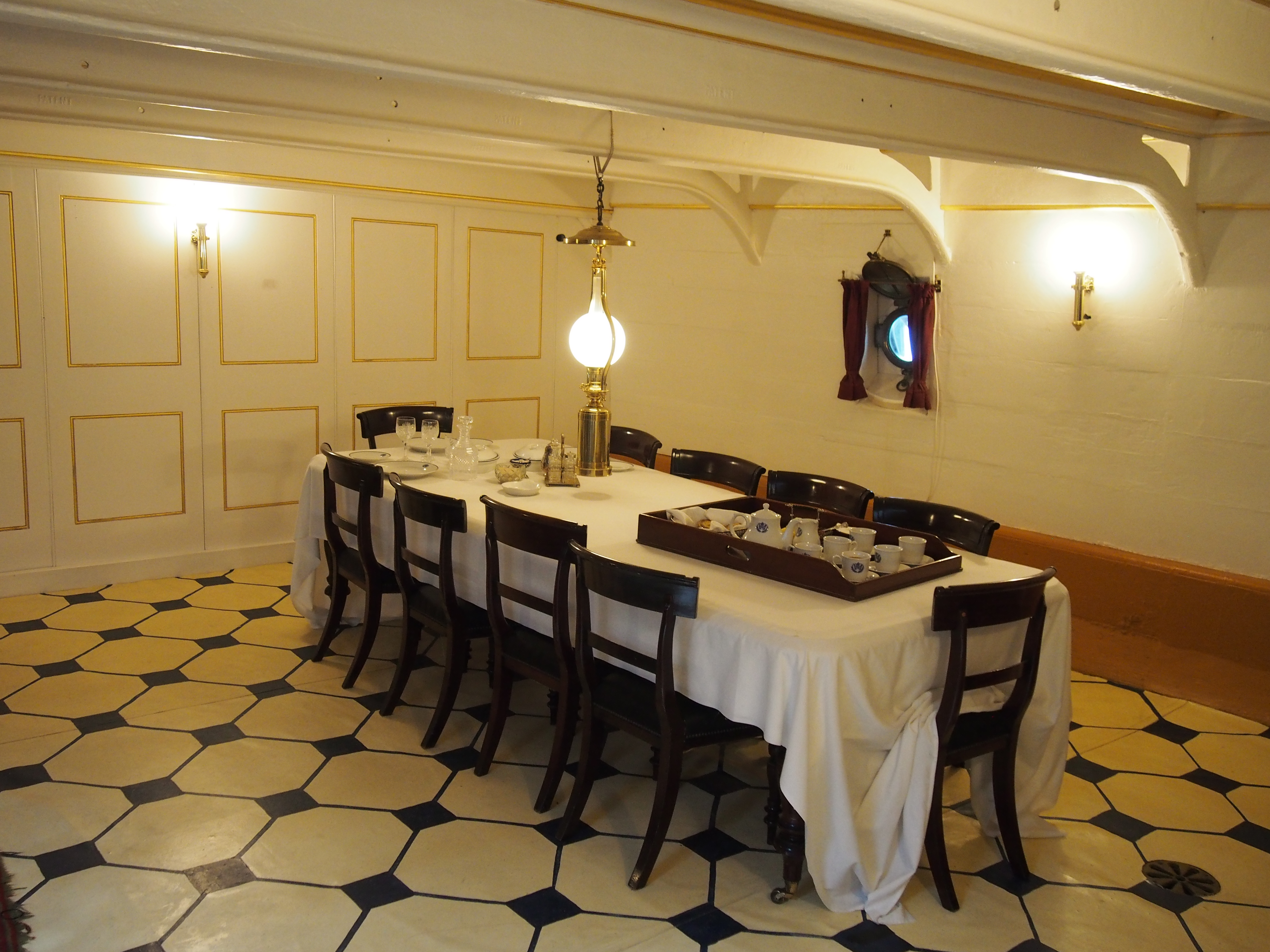
This is the officer’s Wardroom – of course, there were only three in addition to the ‘captain.’
The Mary Rose
When I was here last in 1988 they were still spraying her with a mist of cold seawater and you had to enter a temporary structure through a makeshift airlock.
The spraying ceased several years ago, and the wood is now stable enough that they have only to keep it in a permanent bubble in the new purpose built structure around it and pump that full of dehumidified air.
They’ve also had 30 odd more years to do a lot more preservation and interpretation of the finds that were made at the original sinking site and have, for example, identified the Master Carpenter’s probable bones and cabin, ditto the Master Gunner. They have also identified the probable Purser’s cabin as well as items belonging to one of the senior offices and the body and personal gear of one of the archers aboard.
Amongst many many other things, of course.
As she may have looked at the time of her sinking (there are no surviving pictures)As she looks now – they still haven’t found the sterncastle (but they’re looking!)
HMS Victory
The oldest commissioned warship in the RN. And bloody cramped. The further down you go the lower the headroom becomes … and for someone who’s 6’1″ and a bit it is really uncomfortable (especially since I’m not as limber as I was back in 1988 when it was, therefore, less of an issue) … on the very lowest level I had to bend over double to pass under the deck beams and about 3/4 even between them.
Not too bad on the first GundeckThis was the second or third gundeck, and it still wasn’t too bad.
For fairly obvious reasons I couldn’t take photos on the lower decks … couldn’t straighten up enough.
Headed into Oxford for the day – went to the Ashmolean Museum first … very large, so large I couldn’t fit it all in. Only looked at two floors – the very large and well done lower ground floor covering Conservation and Restoration techniques with a lot of actual artifacts that have been done one or the other (and, sometimes, both).
Then had a look at the Bodleian Library, but only the externals as the only way to see a limited portion of the interior is by a timed tour … no time, sadly.
Horrendous Traffic
We think Australian traffic is bad … British traffic can be truly horrendous. One of the roundabouts between Oxford and Bristol was so badly designed that took the road I was on over 30 minutes for the queue to travel 1.1 miles (less than 2 mph). It wasn’t because the traffic at the roundabout was particularly heavy, it was entirely because the design was so abysmally bad that it actually caused the bank up on that one entrance.
Even approaching Bristol on the M5 when things were slowed down because of works etc. traffic was moving at ~20 mph.
Bristol
The only thing I wanted to see in Bristol was the SS Great Britain, Brunel’s second Steamship and vastly larger than the SS Great Eastern (his first). Much better presented with a lot of the interior spaces furnished ‘as was’ back in its heyday and good museums before and after entry.
One amazing thing was that the so-called First Class cabins were not only about the same size as the steerage ones, but had two bunk beds instead of four … the only advantage they had was that they faced onto a large open lounge on one level and, on the level below, was a space almost as large which was used for dining. First Class travel left a lot to be desired … the bunk beds wouldn’t have even been 6′ long and about as wide as a moern day Economy Class airline seat … I would have had a hard time squeezing into them … no, not fun at all!
The ship itself has had some major conservation work done on it … the drydock it is permanently installed in had been drained and the lower part of the hull, which is severely rust and salt impacted, is set off in a climate controlled perspex structure along what would have been the waterline. Dehumidified air is pumped in continuously to prevent further rust damage and it seems to be working.
First Class ‘luxury’
Bristol Aerospace
Then off to Bristol Aerospace Museum … based on the edge of one of the airfields the Bristol company started just before WW1 and with a fair chunk of vintage planes, not all of them Bristol designs, but all with some element designed or manufactured by the Bristol company … which is still going strong as a conglomerate with interests in many other things besides Aerospace stuff.
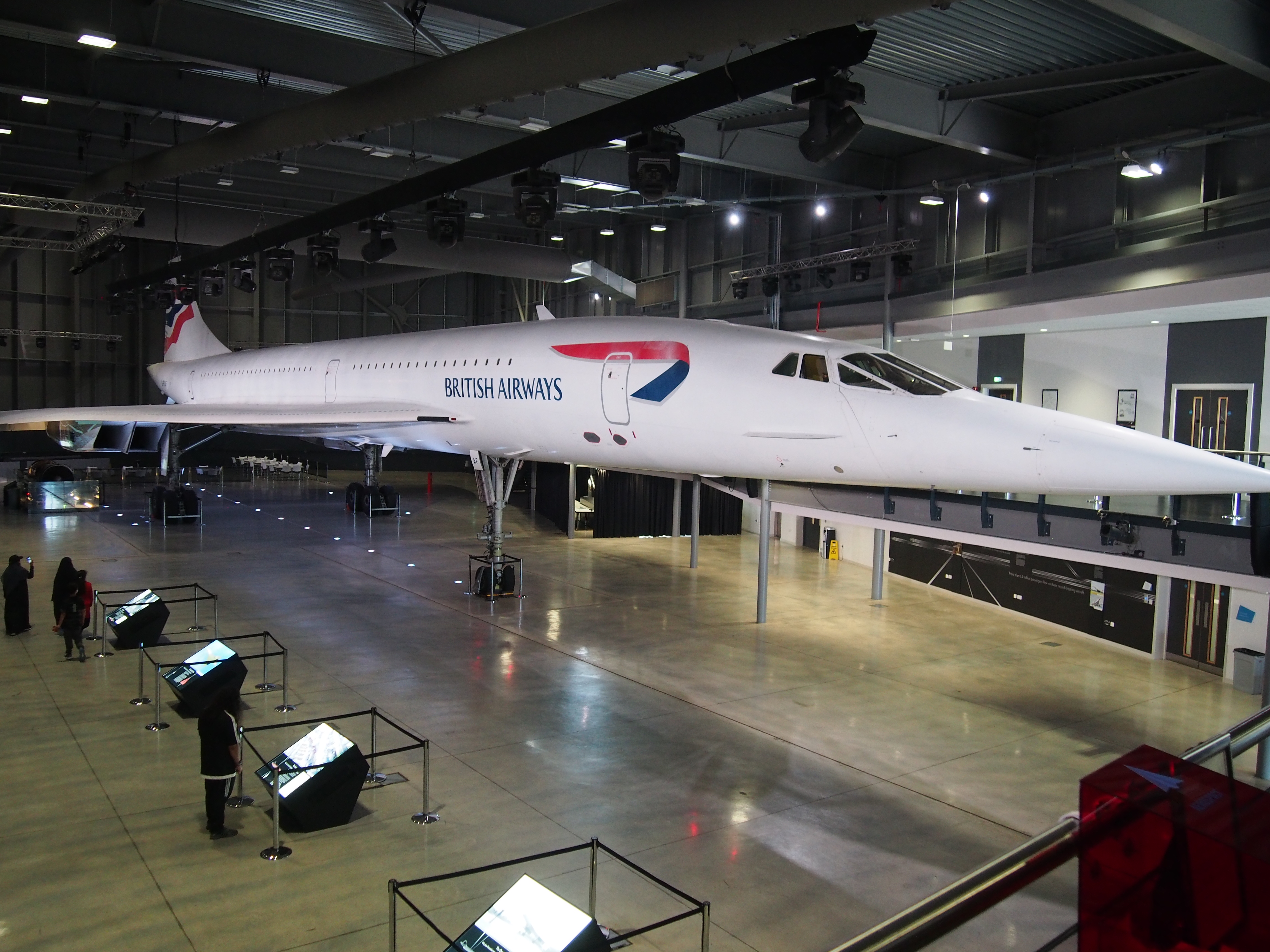
The museum also contains the last Concorde to fly … with the interior fitted out as it was at its last flight, as a passenger carrier, not as a testbed as the one at Duxford is.
ConcordeThe Interior of Concorde – quite cramped!
Bath
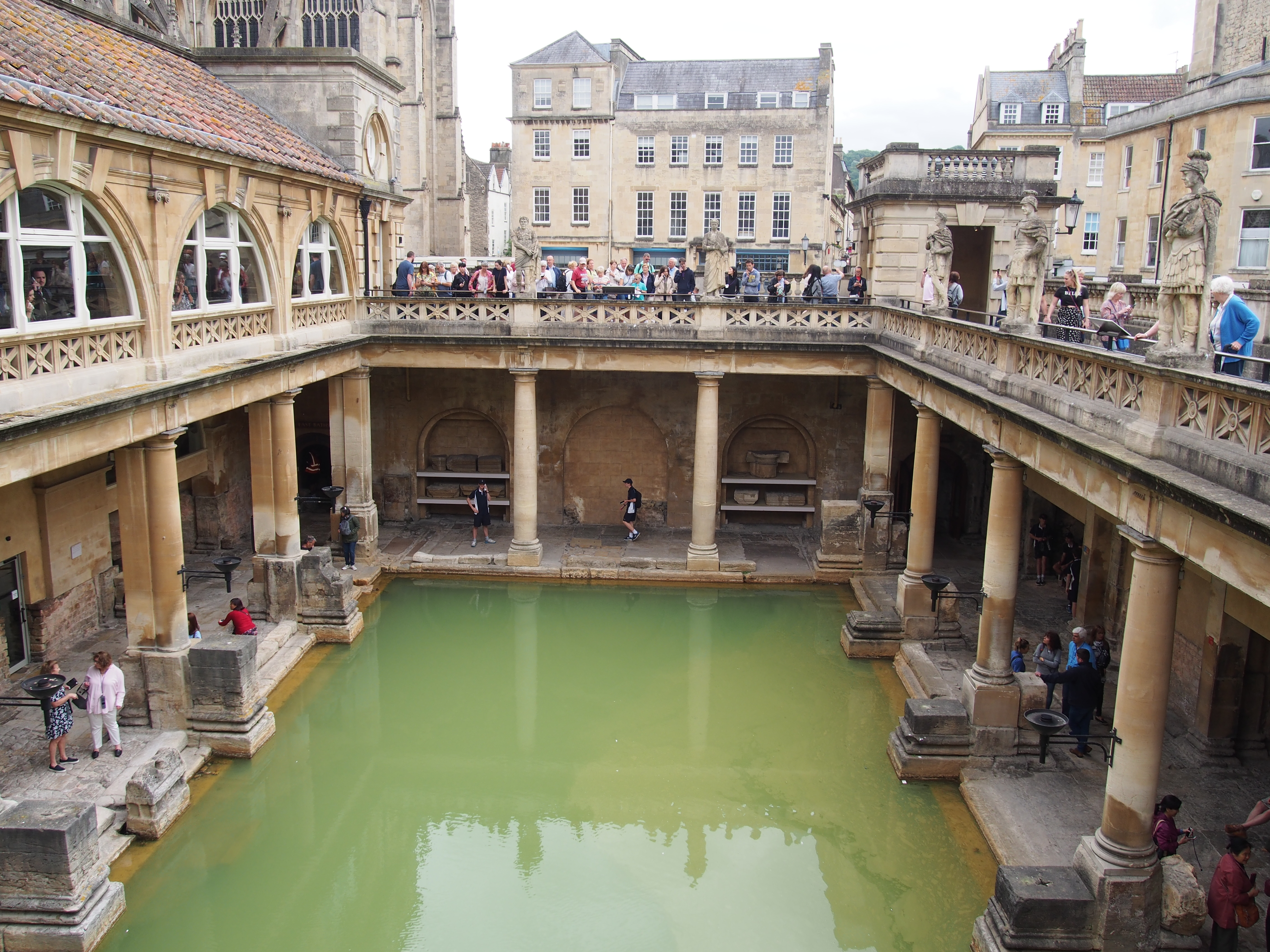
The only thing I really wanted to see in Bath were the famous Roman Baths, but, it seemed, so did every darn tourist in England! Dodging and weaving in, around, and (not quite) under them I was impressed by the way they have opened up areas that (from memory) either weren’t open to the public or weren’t as well presented back in 1981.
No, I still didn’t taste the water … it smells of sulphur and, though they’ve evidently cleaned up the contamination that made it impossible to drink back when I was there last, the smell is just … awful.
(One think I didn’t know, the presentation claimed that Bath is not only the biggest such facility in NW Europe but it is the only natural Hot Water spring in Britain … I am not sure about the latter claim, I suspect it simply means that it’s the only really large one.)
The Great Bath from above
Salisbury
It was sort of difficult to get into Salisbury as the Park & Ride buses were servicing a big Army Day event nearby … almost over by the time I got there … so I drove into town where, fortunately, parking was free as a result, and I managed to see the Cathedral and close.
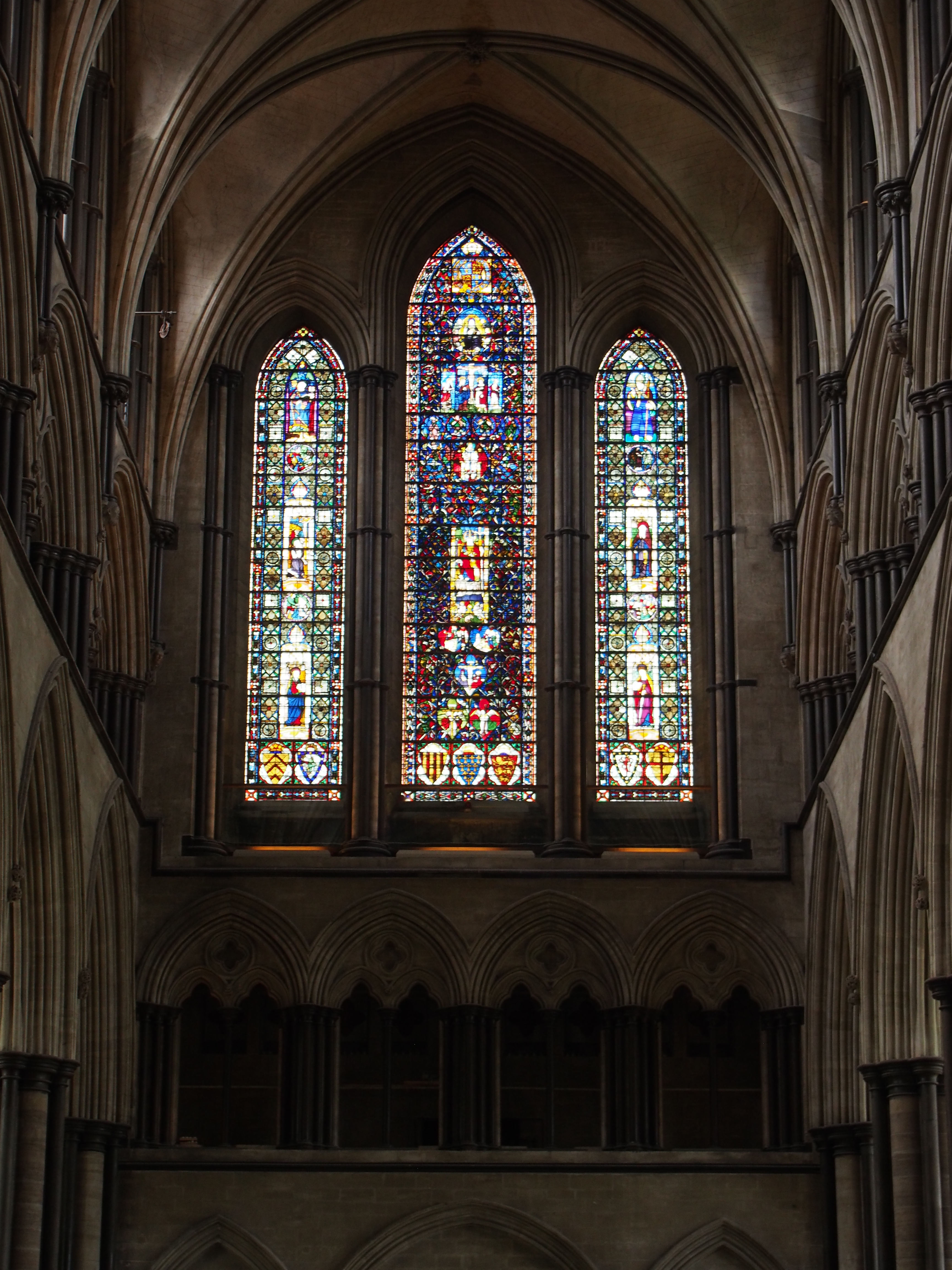
Salisbury Cathedral – the main stained glass windows behind the Altar
And you’ve noted I have figured out how to upload photos to WordPress!
Situated in Ironbridge Gorge, the putative birthplace of the Industrial Revolution, Blist’s Hill was going when I was here last in 1988 … and it’s now bigger, or at least as more buildings on display.
Lots of active and static displays dating back to the late 18th century but mostly 19th century … very well presented, with lots of re-enactors around manning the place. Not as many as there would be in ‘high’ season, but the crowds were also much less. Much less.
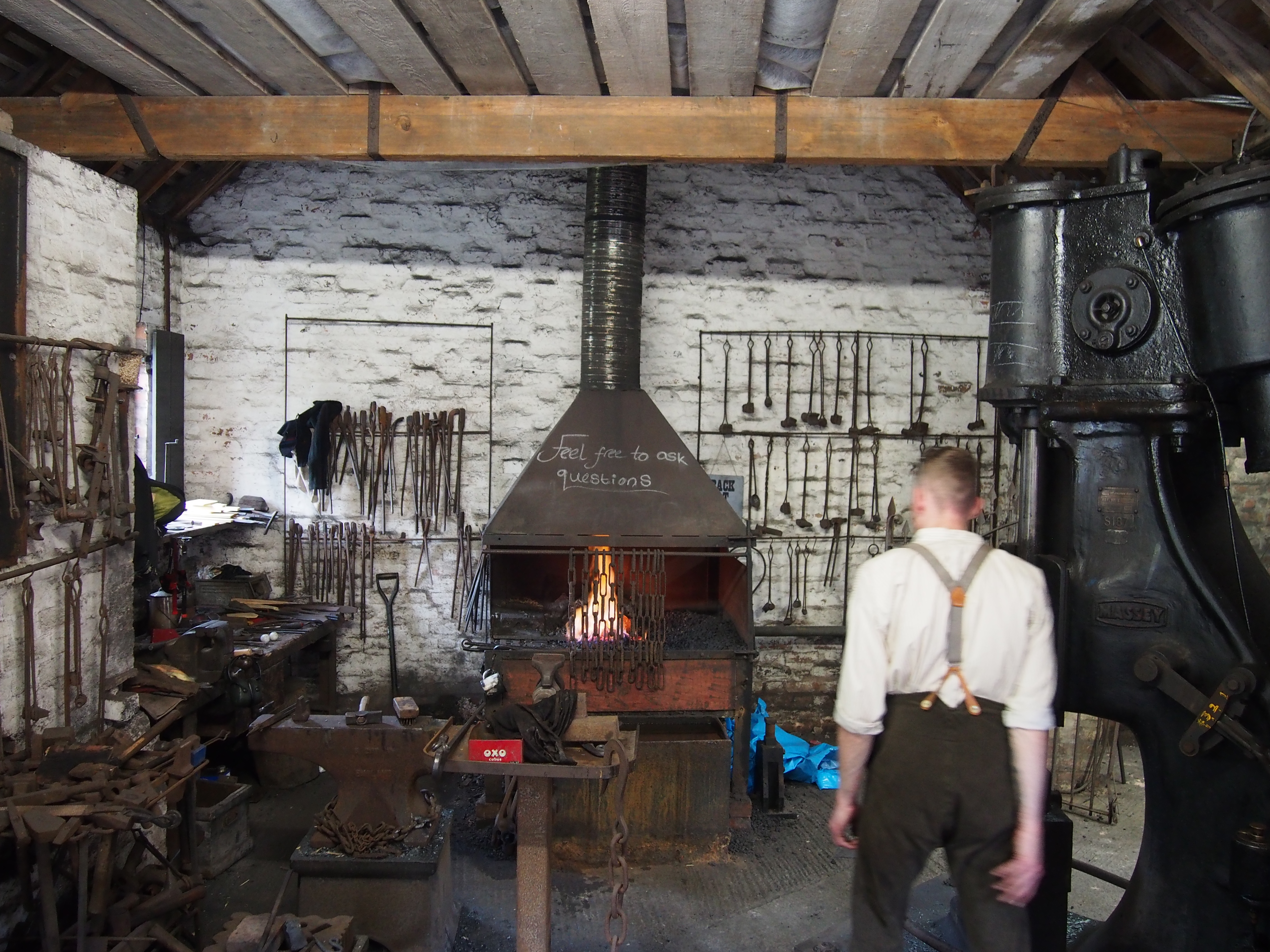
The Blacksmith’s Shop
Even so, it was infested by at least four school groups … and avoiding them was a chore in and of itself.
Candle-making (don’t use pig fat!), blacksmiths casting iron at the ironworks, making horseshoes and other doo-dads at the forge (separate), a late Victorian Fun Fair (guess which was most infested?!?) and interiors fitted out in period style with re-enactors to answer and explain (assuming you managed to get in between the kiddies).
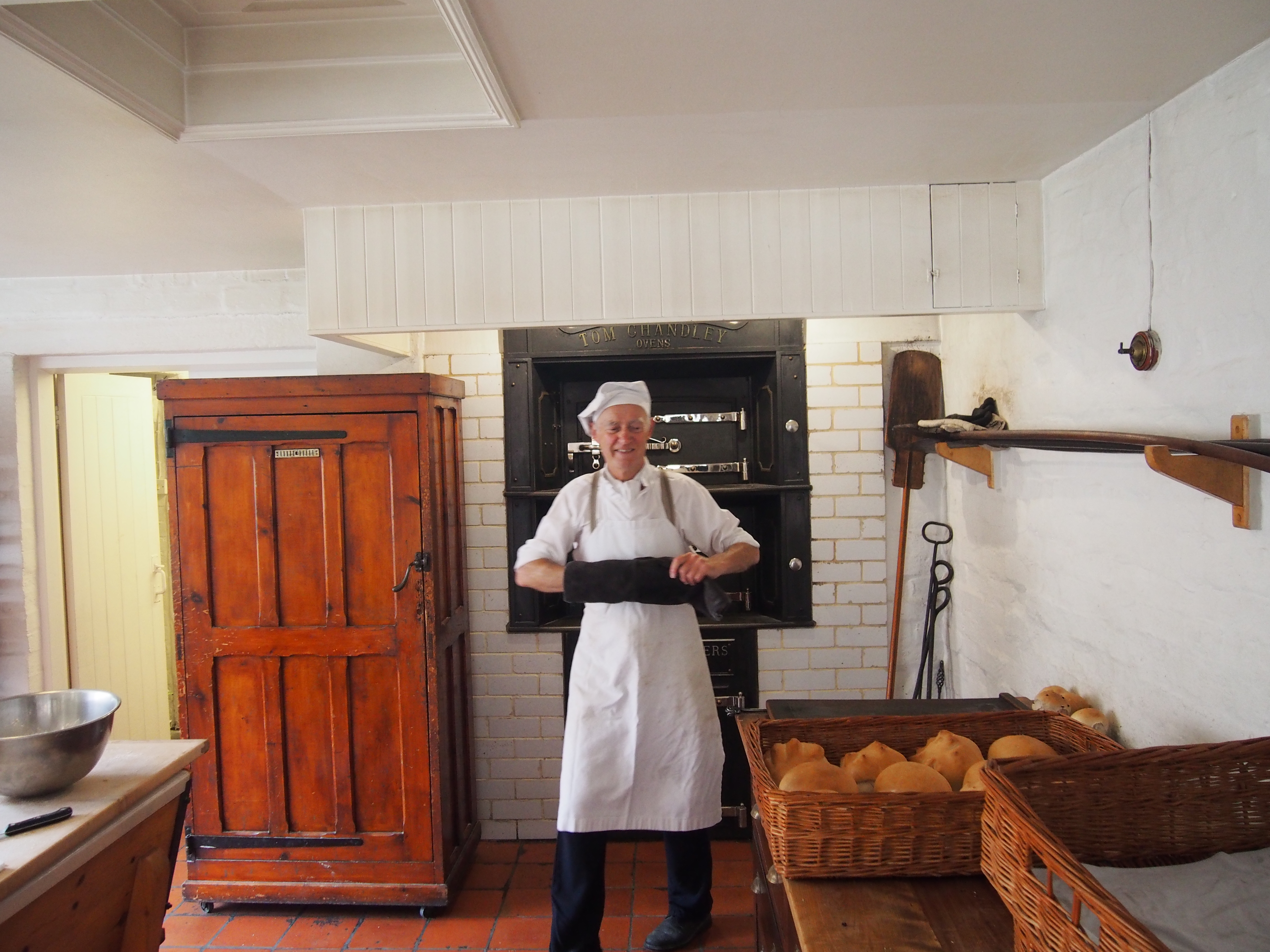
Baking Bread in a Victorian era oven (tasty!)
Black Country
The Black Country Living Museum (Dudley) is very similar, but looks at the industrial heartland as it developed after Ironbridge Gorge was out-developed.
The name comes from a comment made by a distinguished victorian era visitor who said ‘it’s black [smoke from forges and furnaces] by day and red [ditto] by night’ … eight hour days were well into the future!
It covers from the late 17th century through to the mid 20th century – and has an actual section of one of the canals that criss crossed the region with period canal boats as well as a ‘working’ coal mine (they’ve re-dug the shaft but they can’t actually mine unless they get government approval as the Coal Board owns all the rights).
Several Steam Engines, some working, some not (or at least, not on the day when I was there) including a model/reconstruction of a Newcomen Atmospheric Engine.
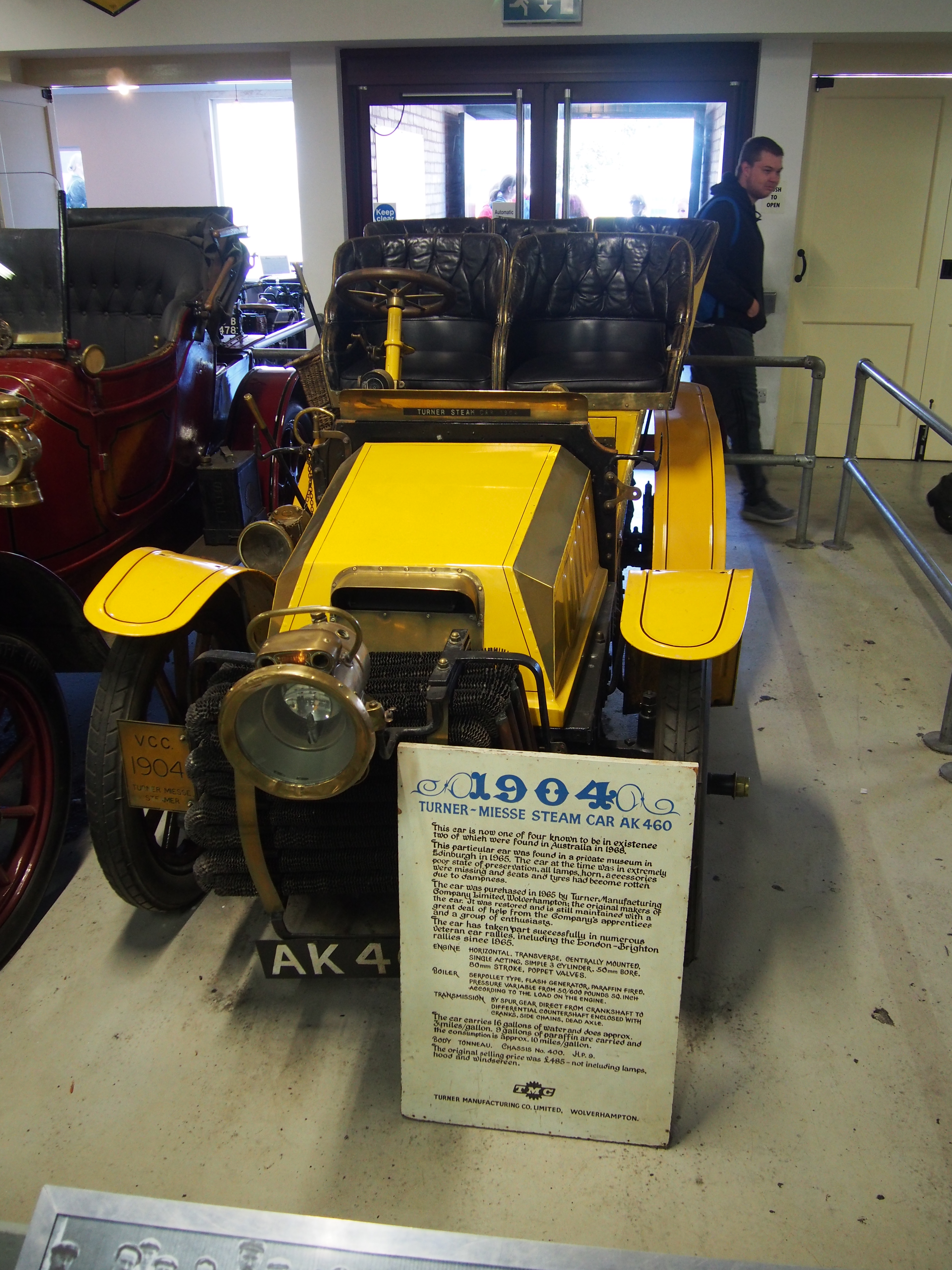
Lots of obscure marks of car and commercial vehicles that were manufactured locally by engineering companies right through to the early 60’s all of whom died because they couldn’t compete even with the big UK manufacturers who, in turn, had a problem competing with Ford etc.
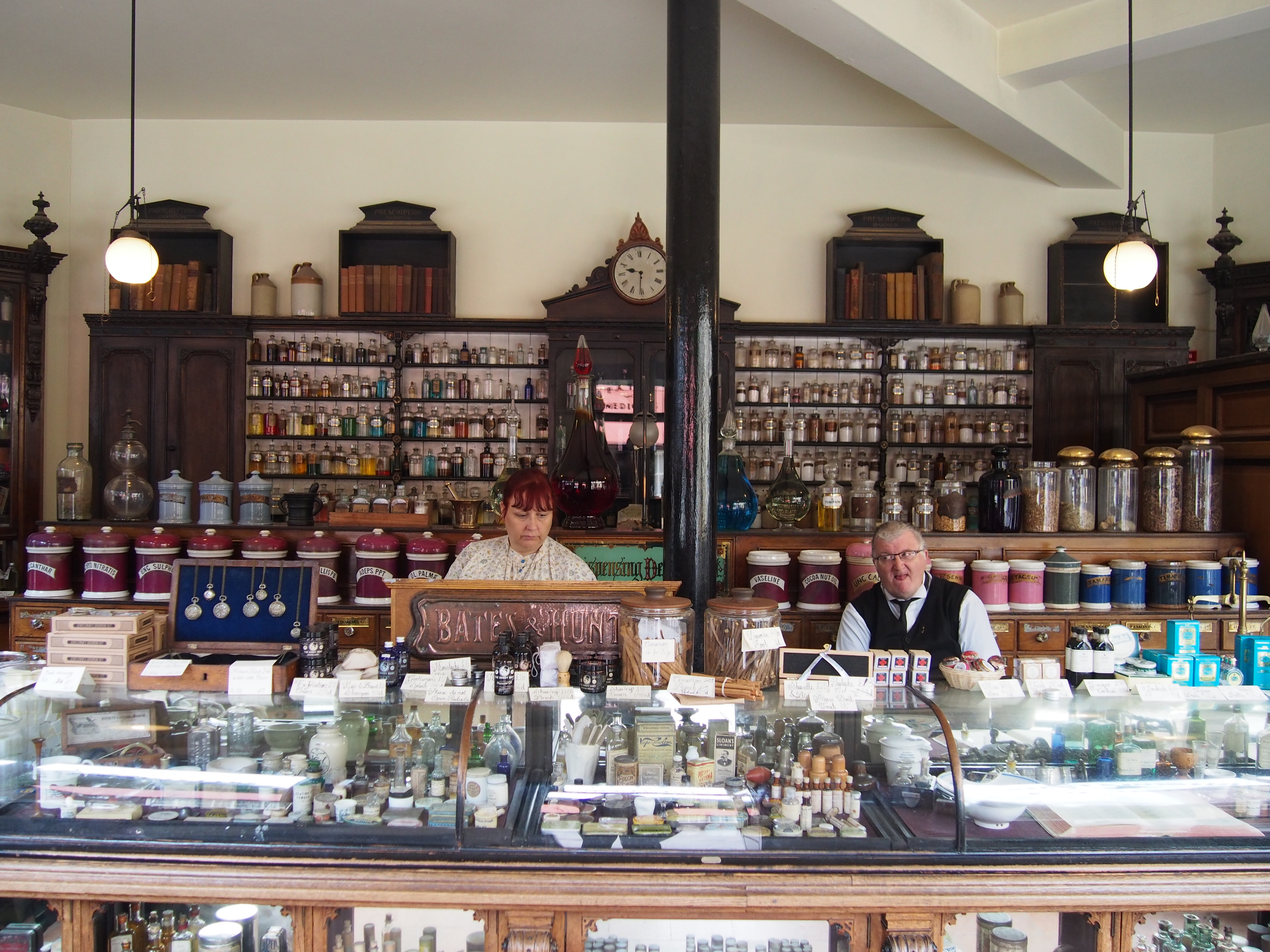
One of the unique cars at BCLMThe local Chemist’s
Blenheim Palace
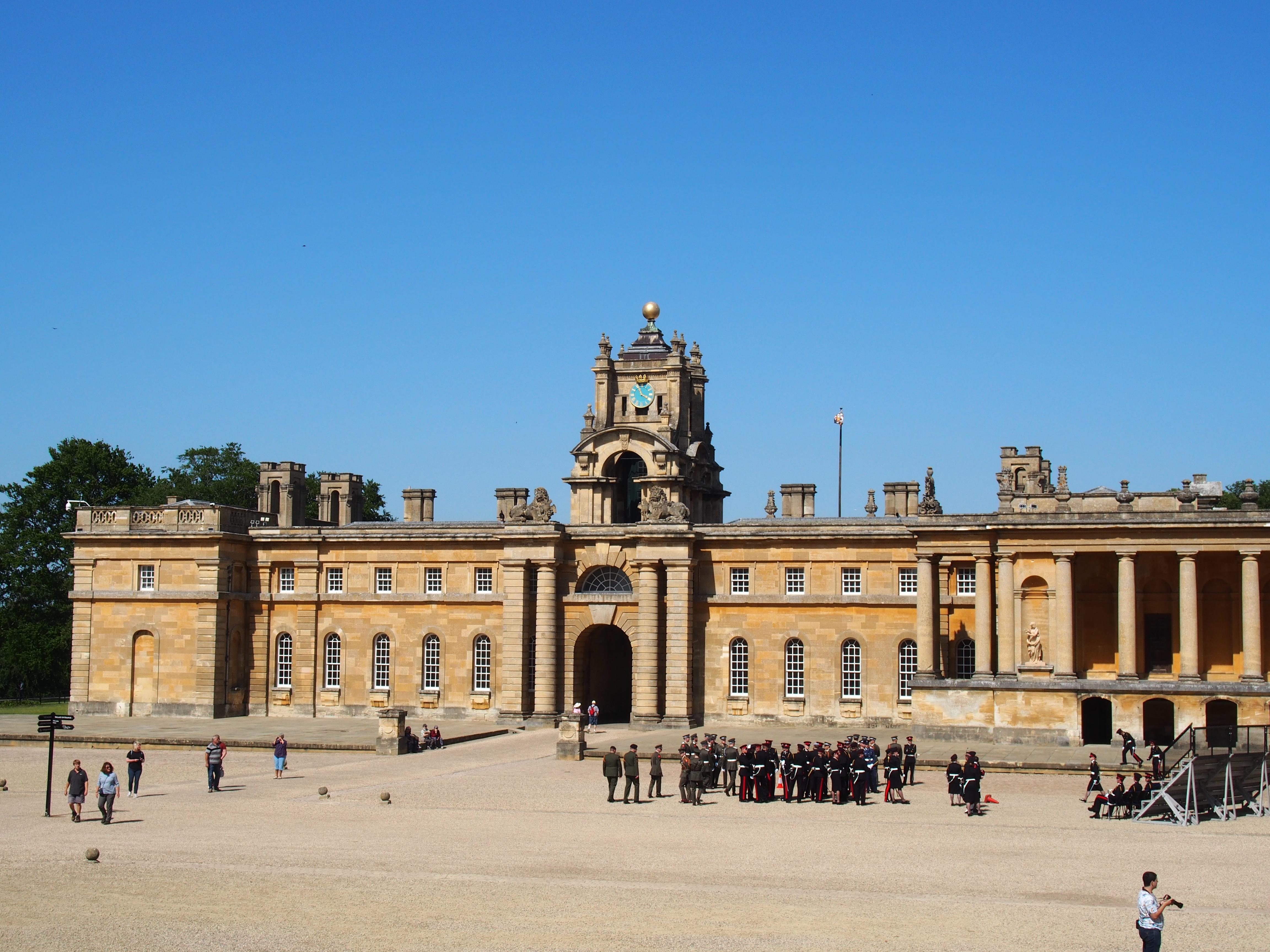
I remember visiting here in 1988 – and it seems even bigger than I remembered. But the externals are much more worn. Of course, it’s over 250 years old!
It’s the only non-royal Palace in the UK … and it’s huge. Set in ~2000 acres of estate … all of which belongs to HM The Queen and which is leased for as long as the Churchills pay a nominal rental of one guidon with an embroidered french Fleur-de-lis on it every year. If they forget, well, it escheats back to the Royals.
The main carriage entry (main Entrance to right)The main entrance to the Palace (carriage entry to left)
Chester (Roman Deva or, as they style it locally, Dewa) is much more commercialised and built up in the old central part of the city than I remember (of course, I was last there in the early 80’s, IIRC) – The Rows (two levels of medieval shops, one at ground level, one above with a covered walkway in front) have been heavily touristified … still interesting, but overdone.
The Grosvenor Museum has a good selection of local finds, mainly Roman, of course, as well as a period house at the rear with each floor/room done in a different period style … I gather the house is old enough for all the stuff from the late 17th century through to Victorian period are things it ‘lived’ through … though, of course, the furnishings aren’t original, though they are period.
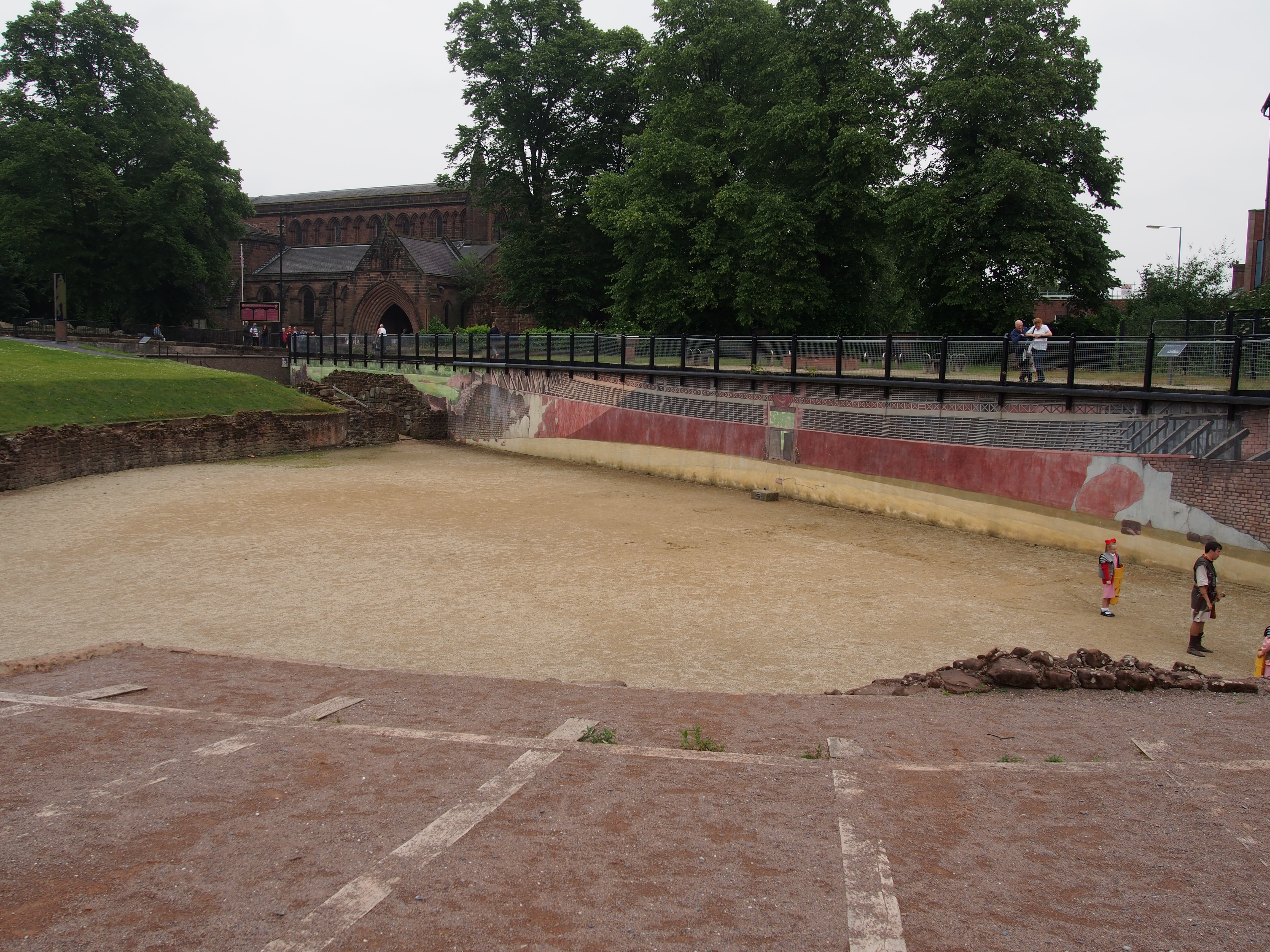
One thing they had excavated which wasn’t back when I was here last (or maybe I didn’t head over, as it was winter, and snowing, as I recall) was part of the Roman Amphitheatre … the largest stone built north of the Alps, if the screed is to be believed. They originally (back in the early 80s) thought it originally had a wood superstructure for seating which was only later replaced with stone when the site was expanded … to make it the biggest & etc. Important for a major Legionary fortress and supply base, I guess.
The excavated part of the Amphitheatre
Welsh Castles
The next day I headed off for Wales proper to see some of Edward I’s castles – I headed to the furthest one I wanted to see, Harlech, which I hadn’t seen that last time I was here (it was winter and, driving, the roads beyond Caernarvon were narrow and winding … and snow covered.
They’re still narrow and winding.
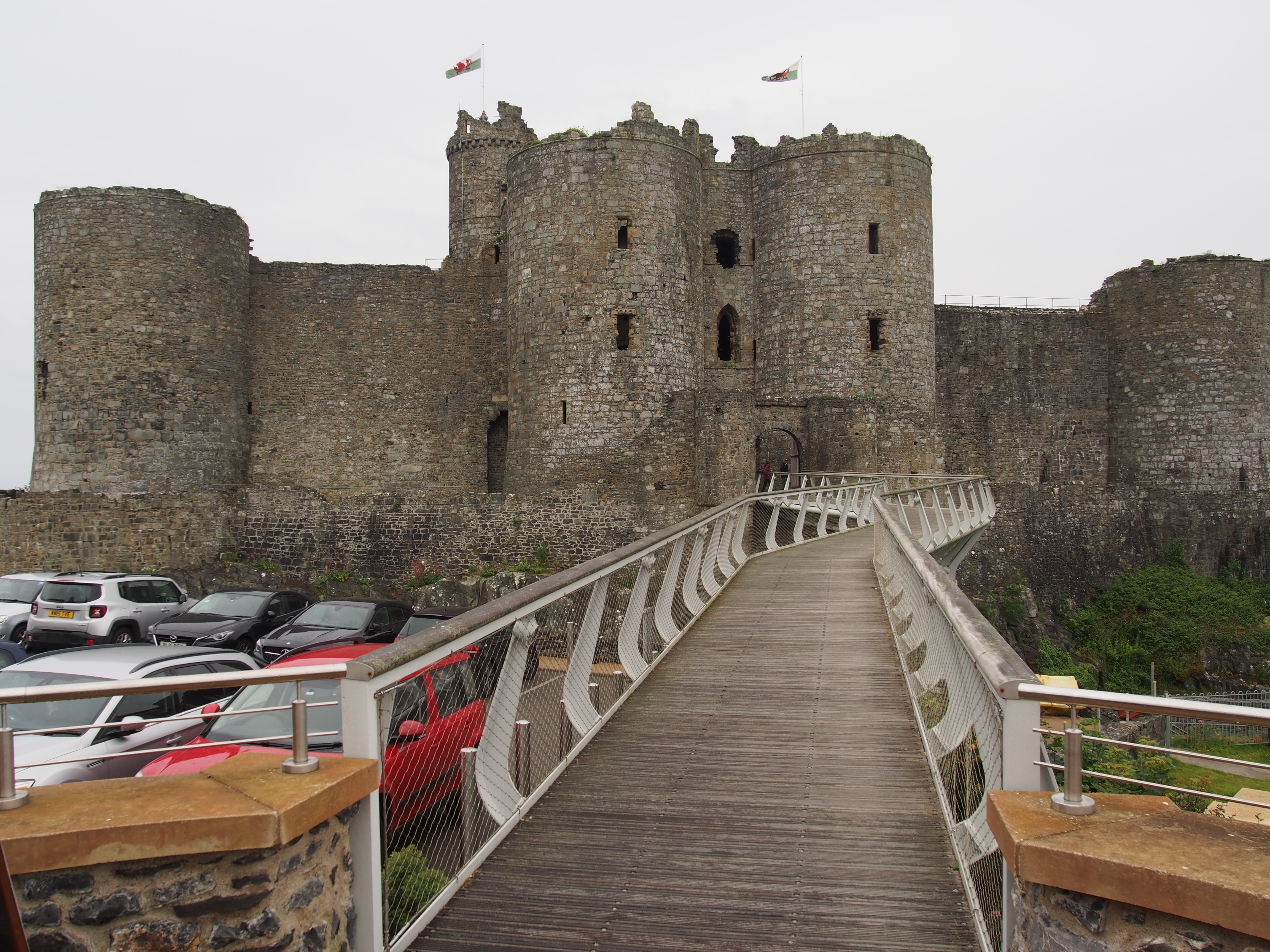
Harlech is, of course, mostly ruinous – but truly massive, even with it’s walls partly slighted. It’s now at least a couple of klicks from the coastline, evidently storms in the late 14th and 15th century silted up the inshore approaches and the village of Harlech is down below now on what was once a coastal port which made the castle hard to successfully besiege.
The Main Gate entered over the Dry MoatThat’s the Village below and the Coast in the distance (just short of the hills at the top of the photo)
Then on to Caernarvonwhich, unlike Harlech, was part of a walled Town’s defences … it’s also massive, but not as brutish and hulking as Harlech. It;s also more intact internally as it has been used much more recently for a variety of military and civilian functions.
The main gate of Caernarvon
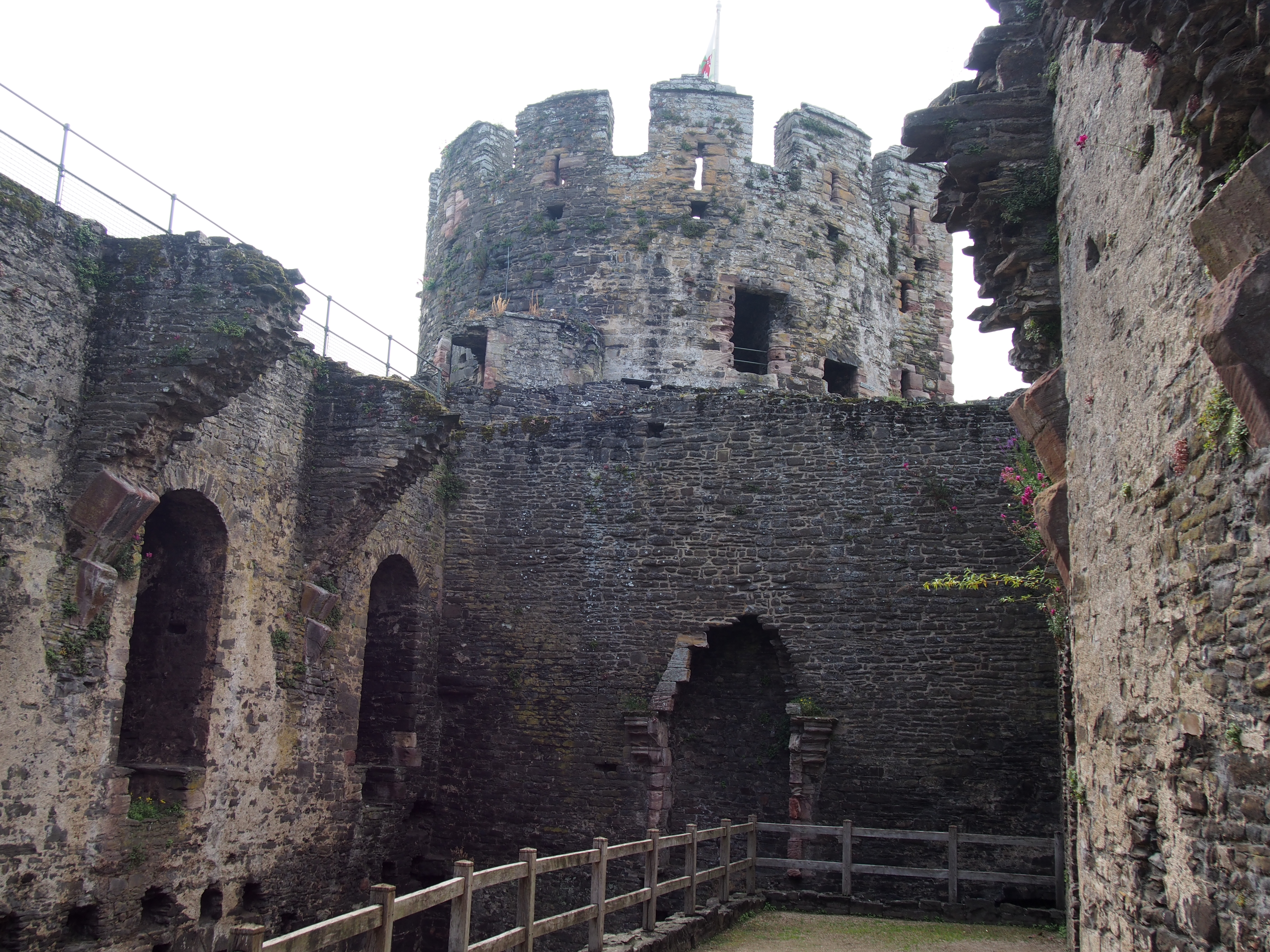
Conwy is, like Caernarvon, part of the town of the same name’s defences – but is sort of between Harlech and Caernarvon in the brutishness stakes. It’s also only slightly less ruinous internally than Harlech, though the external walls are in somewhat better condition.
The modern approach to Conwy
It’s amazing that these castles were built, though not to completion (and some were never really used seriously) in such a short period of time (less than 20 years) … but Edward almost literally threw money at them. IIRC Harlech (or was it Caernarvon) cost around 8000 pounds in 14th century money … many many many millions in real comparative purchasing power today! And that was before the costs of the garrisons!
I noticed this on the way up to Scotland, but didn’t have time to hit it then – so I made a beeline for it when leaving Glasgow. Long drive. Boring.
Worth it.
The Royal Armouries have lots of medieval and post-medieval (and even a few bits of pre-medieval) armour … lots of weapons also. They have some of the best sets of mail armour I have ever seen, and their collection of partial plate armour from the 13th-14th centuries is also top notch.
These pieces are not at all proof pieces, they were intended for actual use – though in many cases, for the earlier periods, they’re sets or parts of sets that were owned by wealthy nobles simply because they were so bloody expensive.
Later periods, the 15th-16th century, and you start to get ‘munition’ armours – sets made relatively cheaply as the cost of producing iron and steel went down with improved smelting and manufacturing technologies and intended to be issued to the better class of ‘grunts’ … and you also get the reallyreally really nice sets of armour intended for parade or display use by the ultra wealthy … including two sets made for Henry VIII for the famous Cloth of Gold tournament with the King of France.
Weapons are well represented, personal ones anyway – including lots of pistols and longarms from matchlocks onwards, including those intended for use by regular soldiers as well as those prettied up for wealthy hunters or as presentation pieces.
There was even a selection of modern (i.e. 20th-21st century) firearms, mainly oddball stuff or stuff confiscated by the Police or Customs, or used in crimes and seized by the Police as a result.
Manchester
Finding parking was a chore – most of the available spots (and being a Sunday there were quite a few) near to where I wanted to go was a chore, the Pay & Display ticket machines only accepted coins (and wanted ridiculous amounts) or phone apps, but I managed to find a multi-storey car park that had machines which accepted notes and coins and card payments.
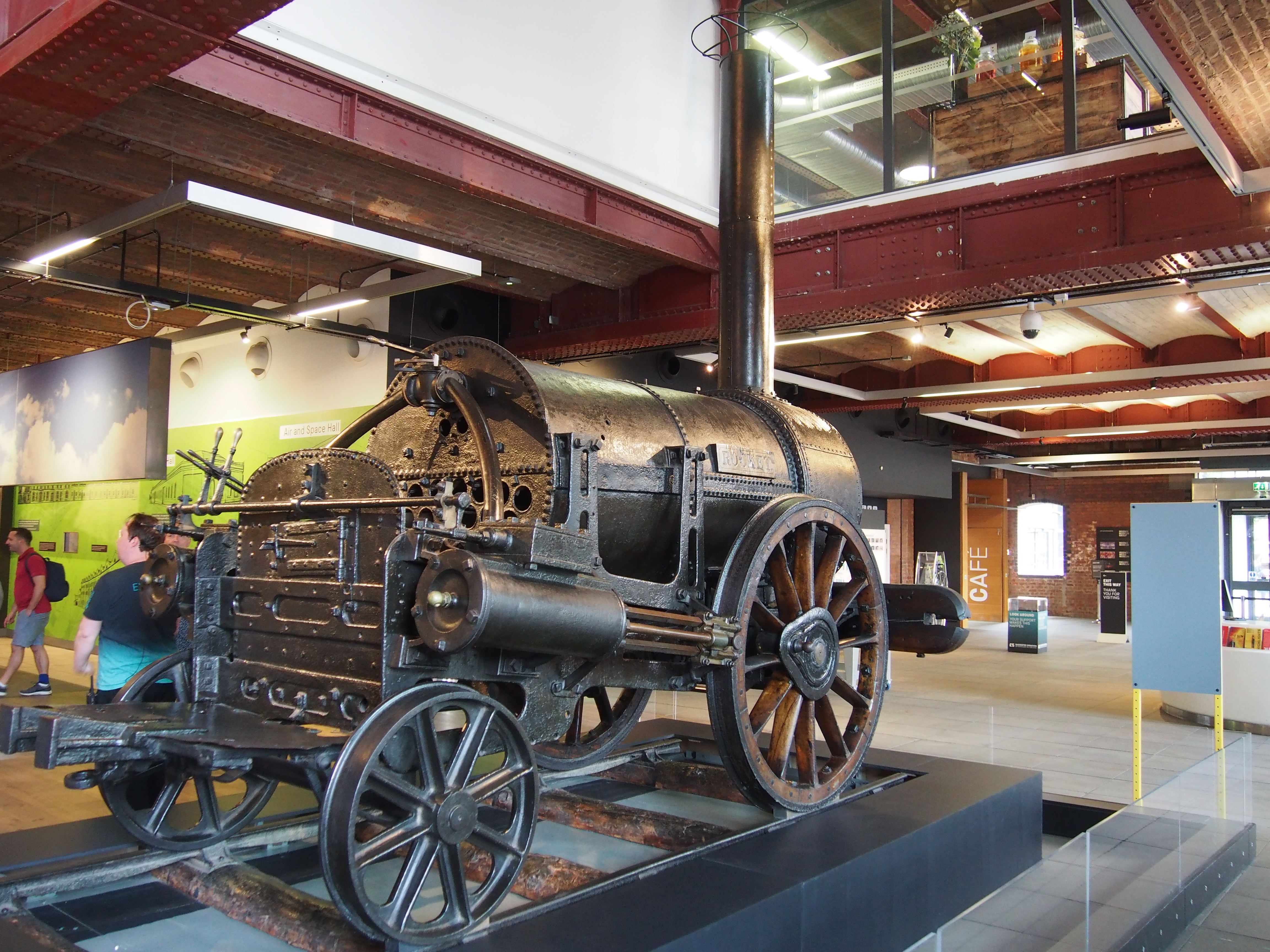
The Museum of Science & Industry, one of the two places I wanted to see, was an almost complete dud. Of the five Halls, three were completely closed for refurbishment and one of the two remaining ones (the Aerospace Hall) was full of displays all right, but a good 40% were either fully or completely covered in tarpaulins and invisible … still, it did have a nice Shackleton ASW/AEW conversion on display, and the other Hall open had the original Rocket on loan from the Science Museum in London.
The Rocket
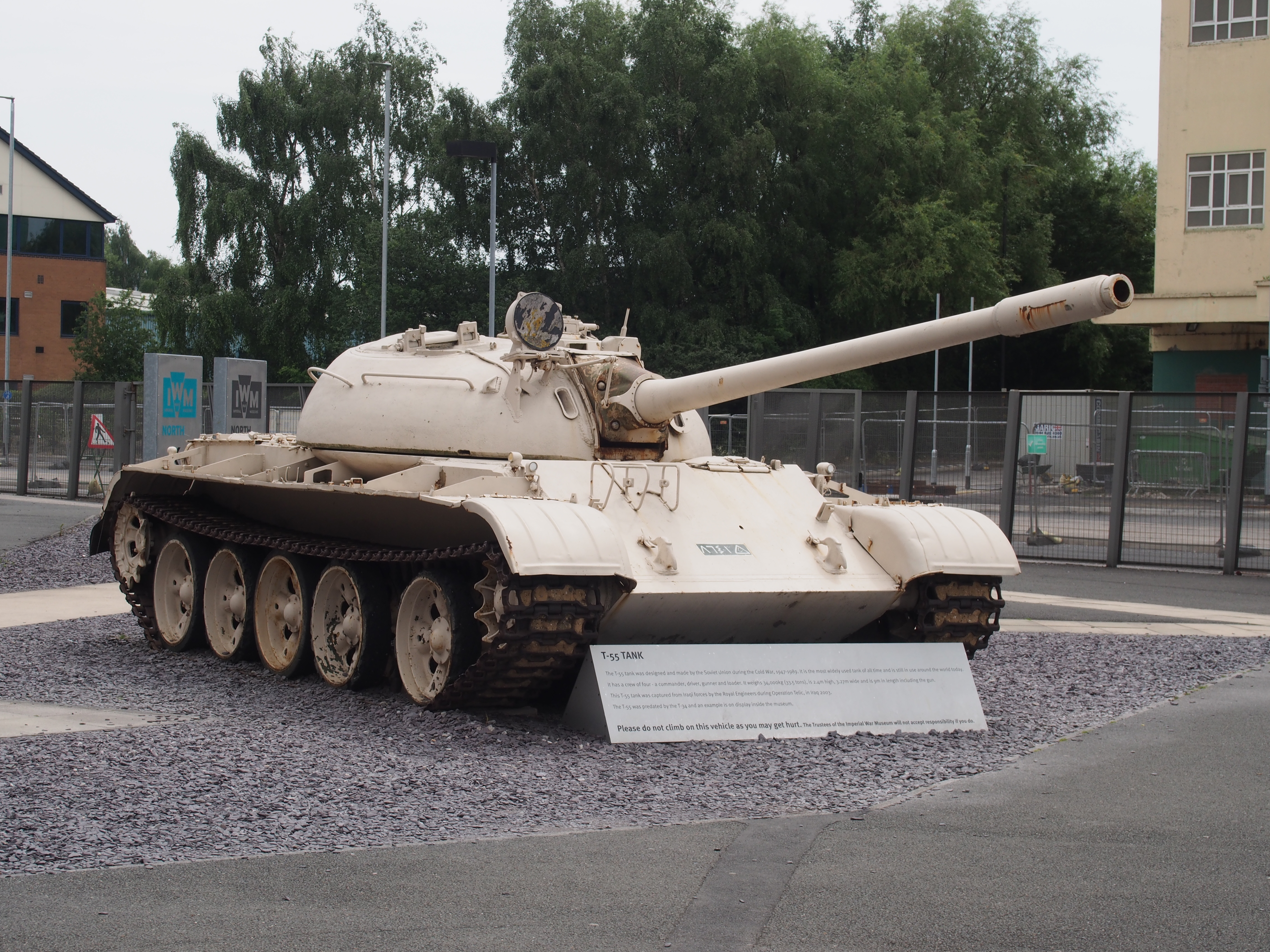
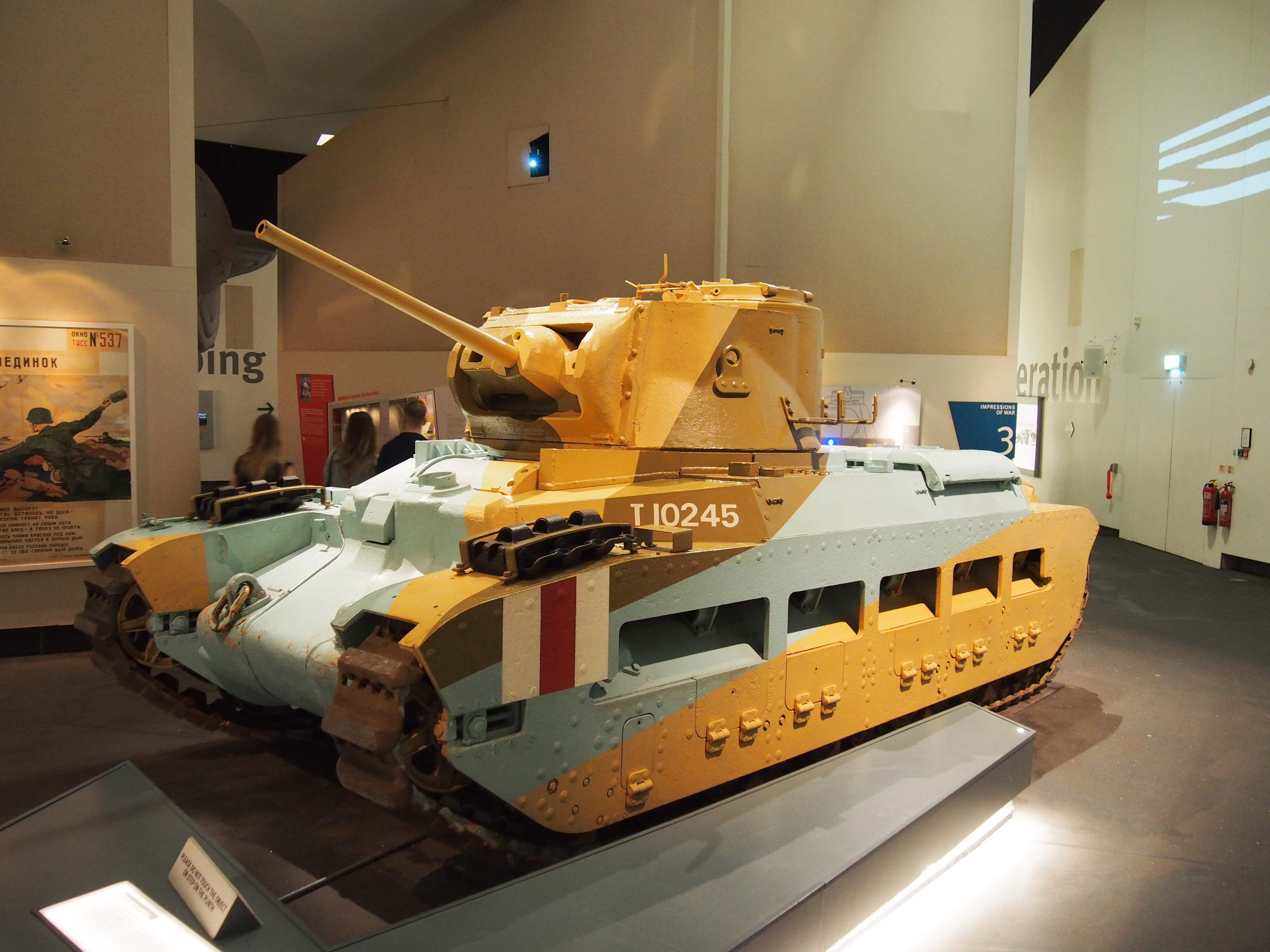
Fortunately the other place I wanted to see, the Imperial War Museum (North) was much better – a T-55 out front and a Matilda in Desert colours inside. There weren’t many big items, it was mostly display cases full of smaller things, but it was comprehensive, covering Britain’s wars from WW1 through to the Cold War, and there was a display on the Fighting (and awful consequences of that) in Yemen as well.
T-55 at the Imperial War Museum (North)Matilda in Desert Camo













 phalanxgamesdesign.com