Just over (one of) the bridges connecting Museuminsel to the ‘mainland’ is the German History Museum which, as you might guess, covers German History. Unfortunately, while quite interesting (especially the special Exhibition on the Weimar Republic and how it failed, there wasn’t a lot to take pictures of … just lots of audiovisual material or stuff that I’ve captured on film (so to speak) elsewhere.
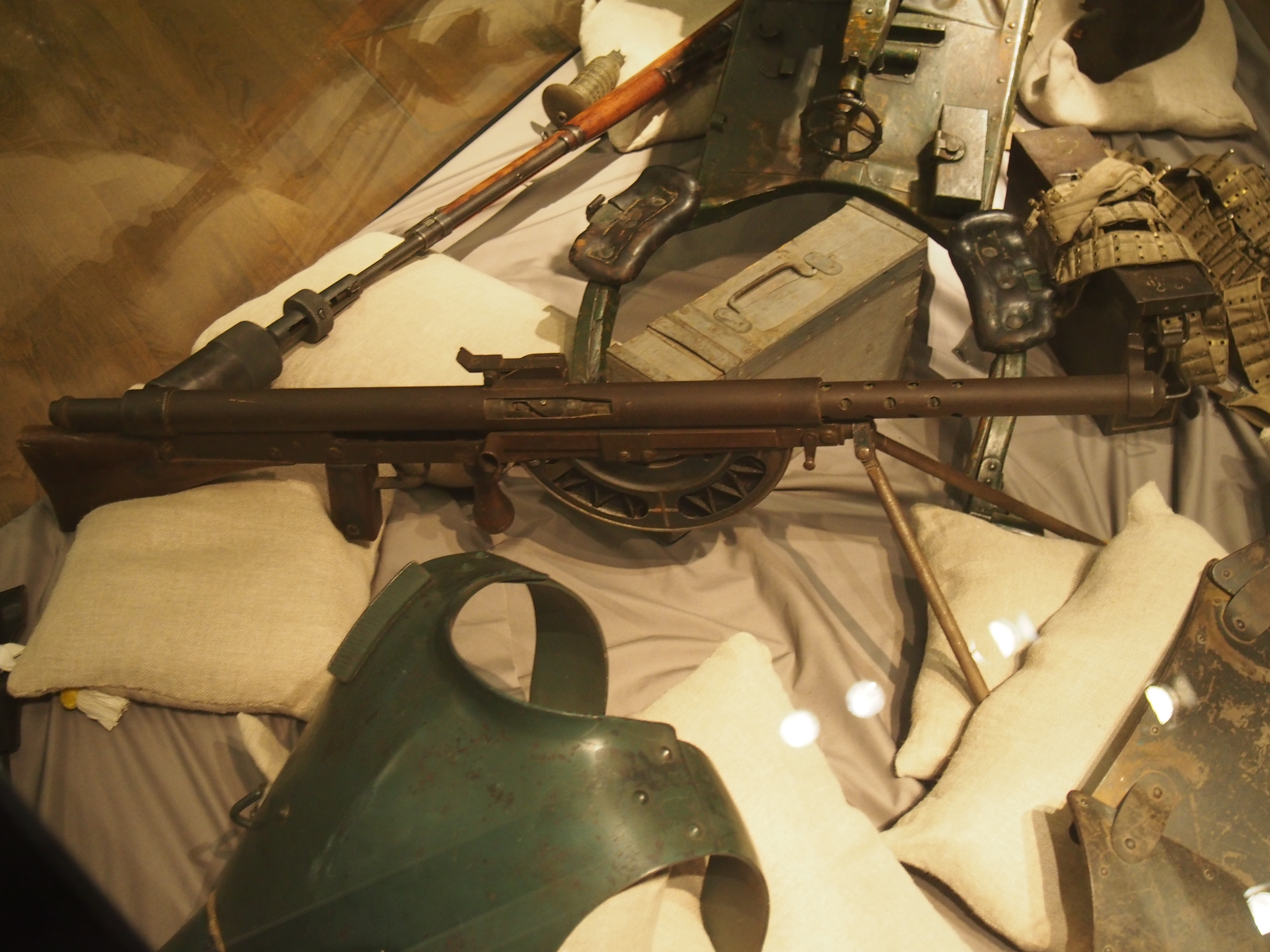
Miscellanea from the WW1 section – that’s the absolutely horrid and infamous Chauchaut Light Machinegun in the centre. More ways to jam than operate properly – semicircular magazine because of the tapered French rounds it used. An absolute abortion – but the French didn’t have anything better and the US also used as they didn’t, either.Same display case as above, different angle – Maxim MG-08 in front.
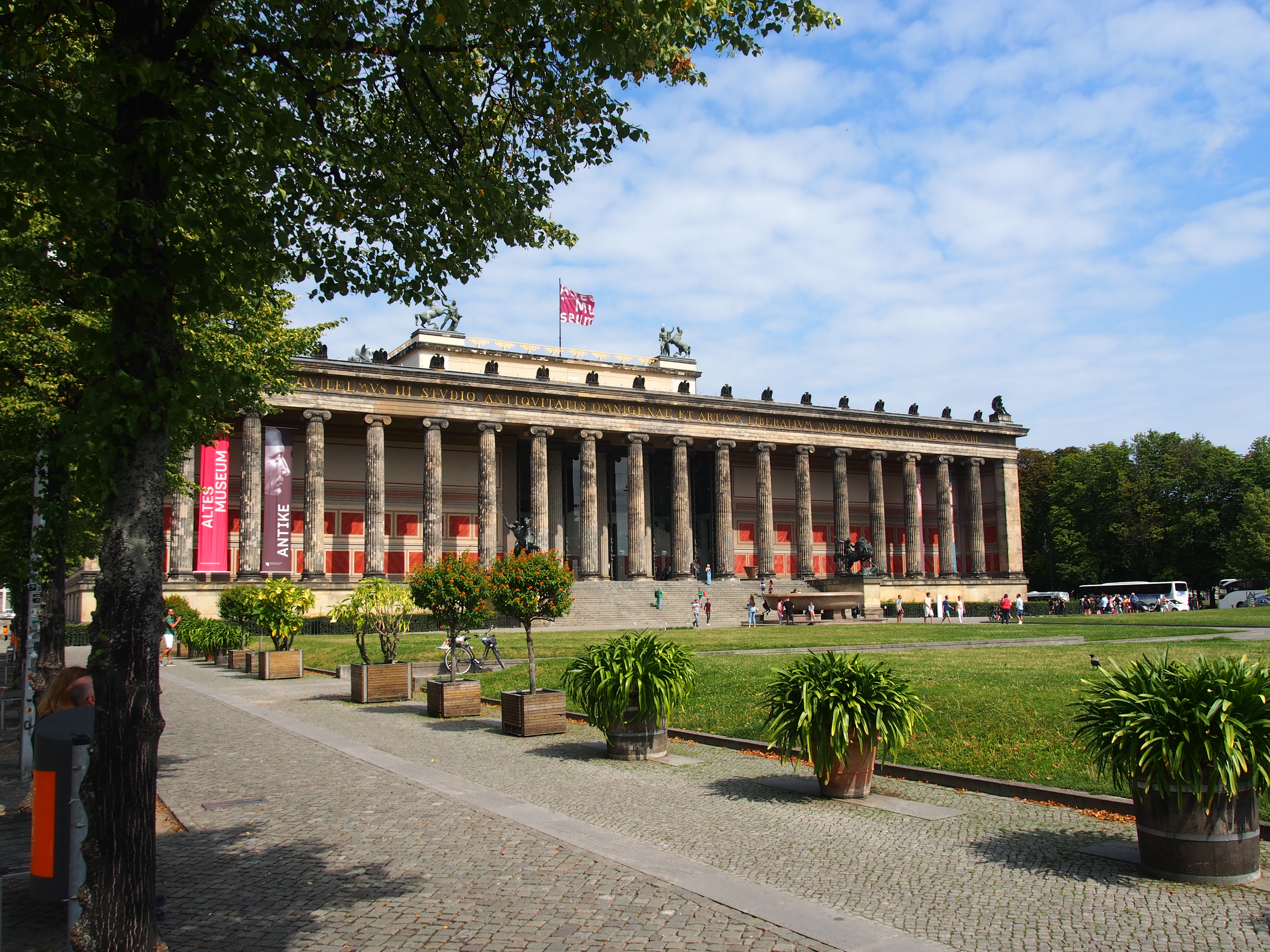
Altes Museum
The Altes Museum is one of the lesser biggies on Museuminsel – mainly lesser stuff, or smaller stuff than in the Pergamon.
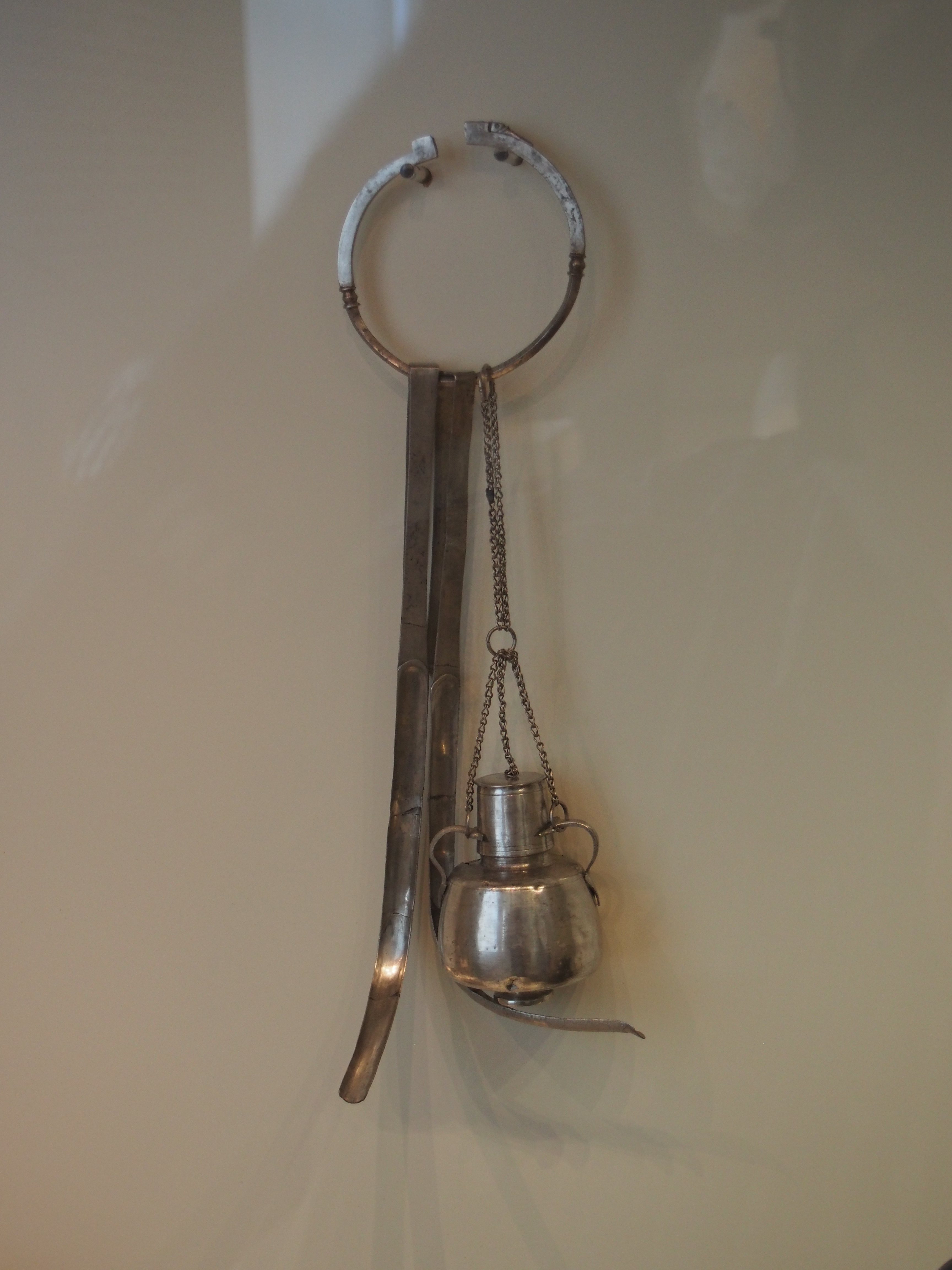
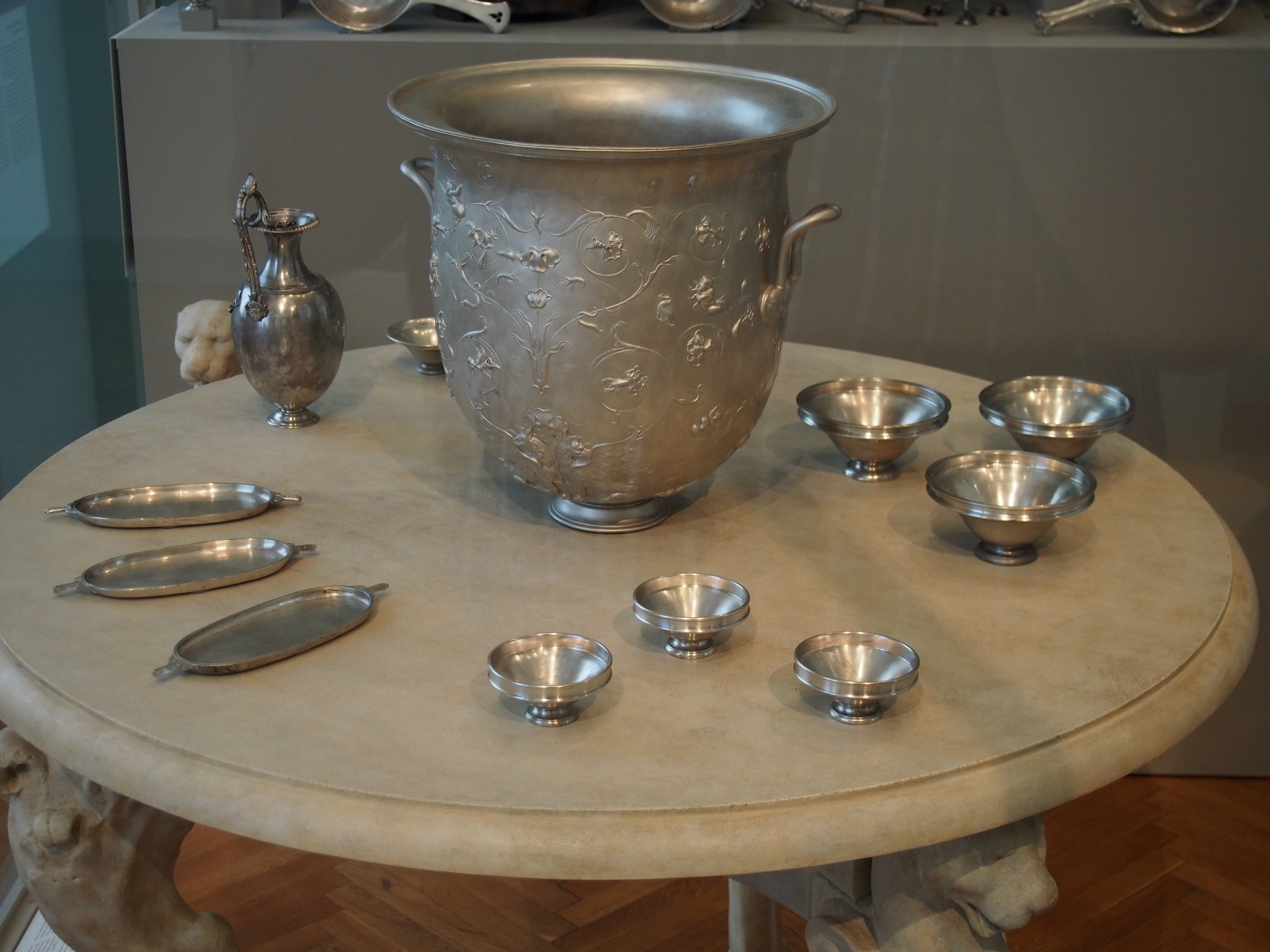
Looking suitably neoclassical.Greek (Corinthian) style Hoplite Helmet of the 5th century BC (or so)Ever wonder how to keep clean without soap? This is the Roman solution – the small silver pot is for olive oil and the silver rod with the curved end is astrigil (‘scraper’). You go to a Roman Bath and work up a sweat to open up the pores and then you cover yourself with olive oil to soak up the dirt and unwanted bodily oils and then you use the strigil to scrape it all off. Simple? Not really – it was notoriously difficult to impossible to do it effectively by yourself and you either had to have a slave/servant of your own or a hired slave/servant at the Baths assist you (doing your back, for example).Classical Greek? Hellenistic? Byzantine? Heck, I forget – nice work though!Reconstruction of a famous (lost) statue pair of two gods armed and equipped (but not armoured) as Hoplites. Like all classical graeco-roman statues they are painted in lifelike colours.A selection of table silver from one of the several large finds from the late Roman period – hidden during the invasions/collapse and never recovered.
There’s a fair bit more at the Pergamon Museum than just the Ishtar Gate.
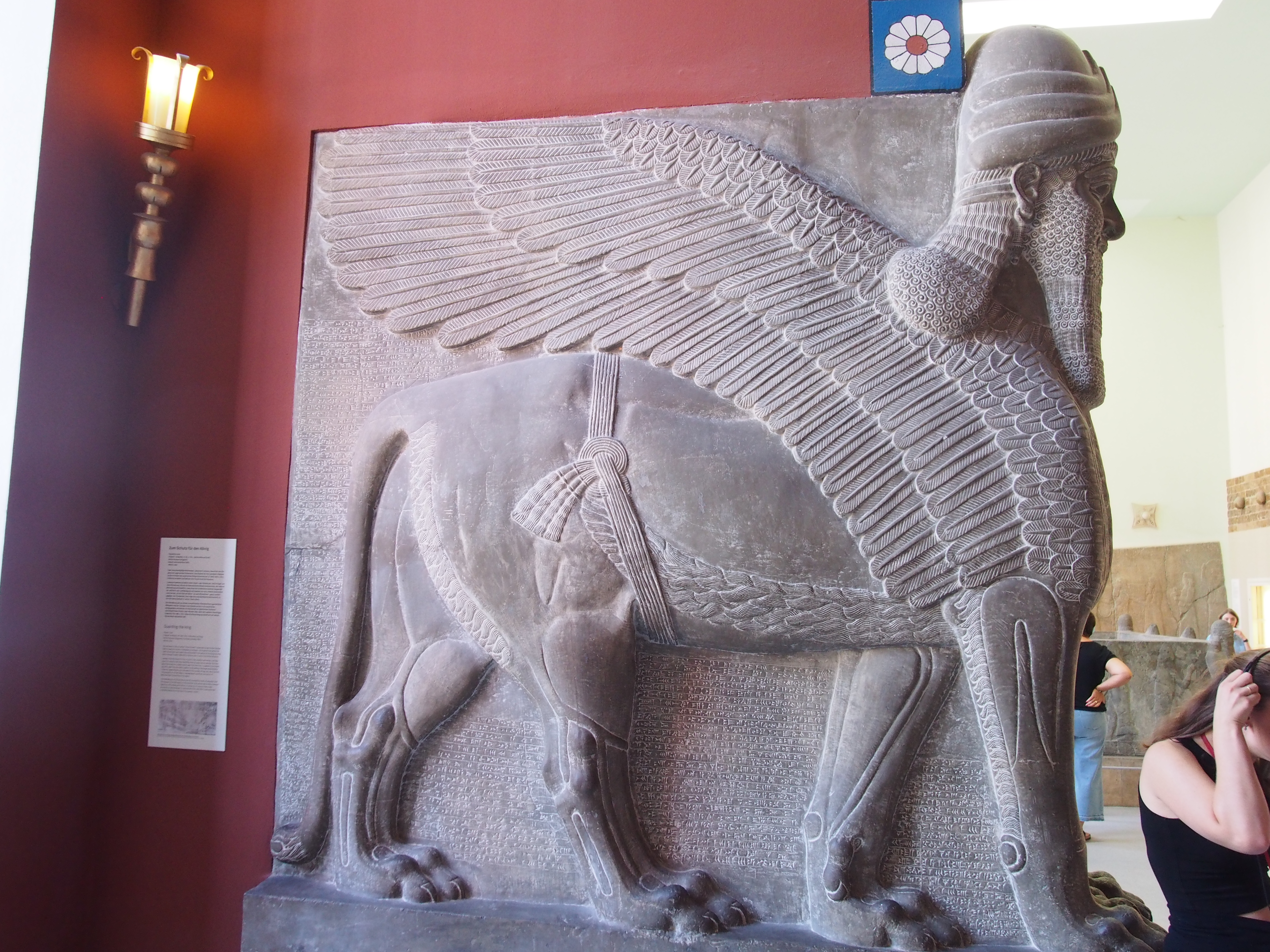
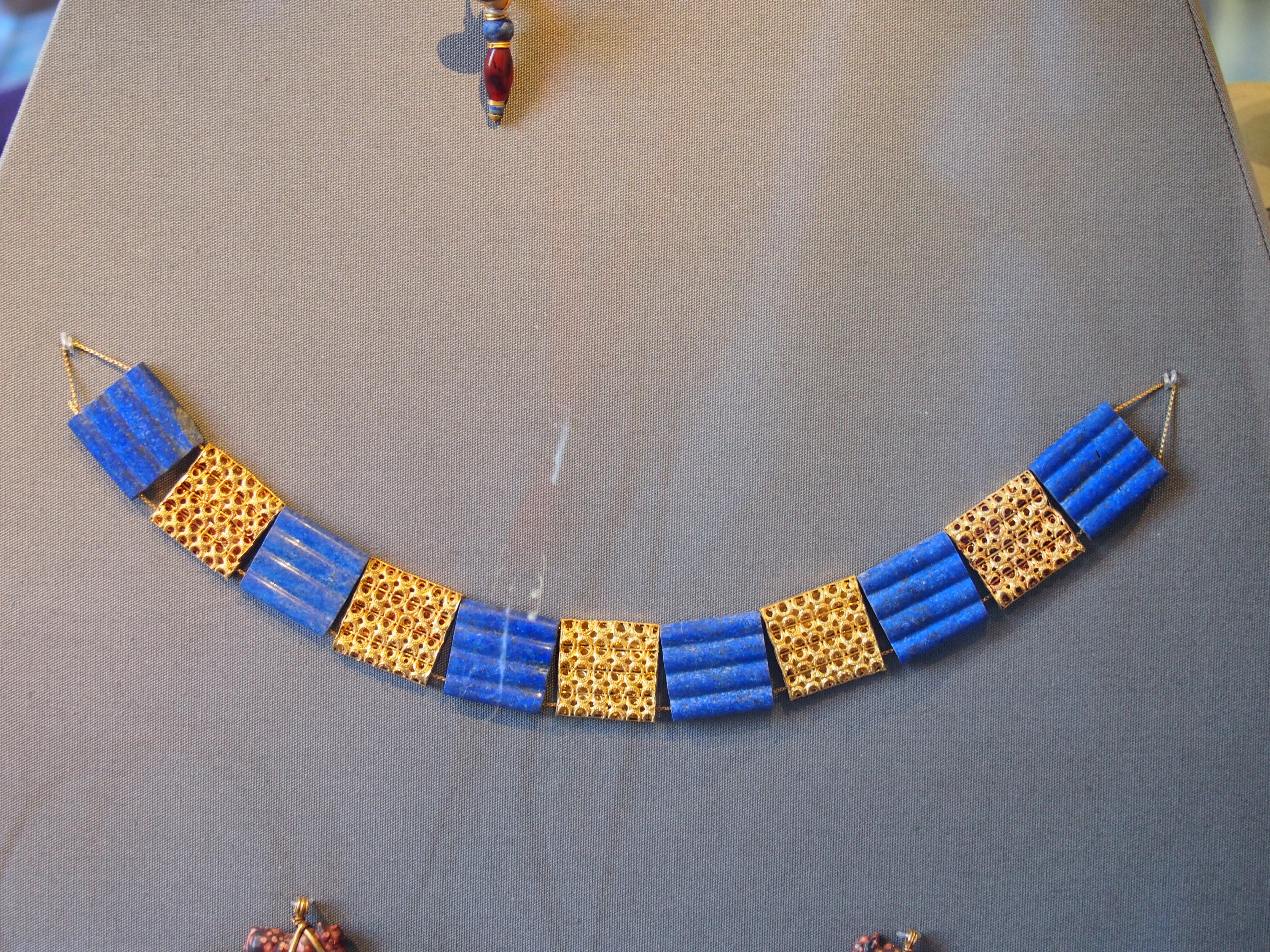
The Market Gate from Miletus, for example. Graeco-Roman.Assyrian(ish) Lammasu – guardian protectors placed on either side of important City or Palace GatesAssorted bits of really nice Near Eastern Jewellery … this necklace (?) is of gold and lapis lazuli.
The Neues Museum
Despite the name, this contains much in the way of Egyptian and Germanic antiquities … it is a separate institution (at least nominally) but with the new construction on Museuminsel it is now connected to the Pergamon Museum by an underground walkway.
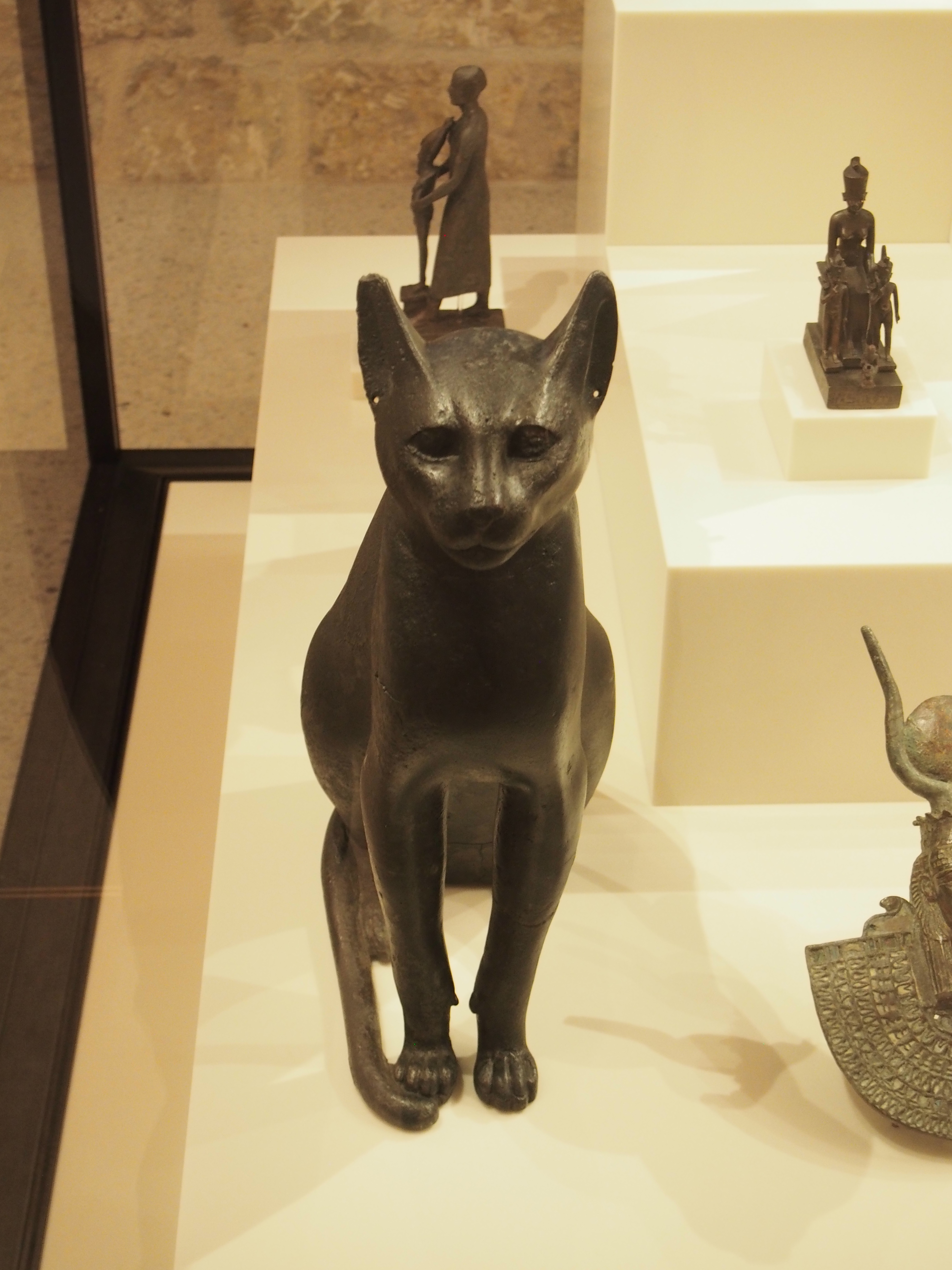
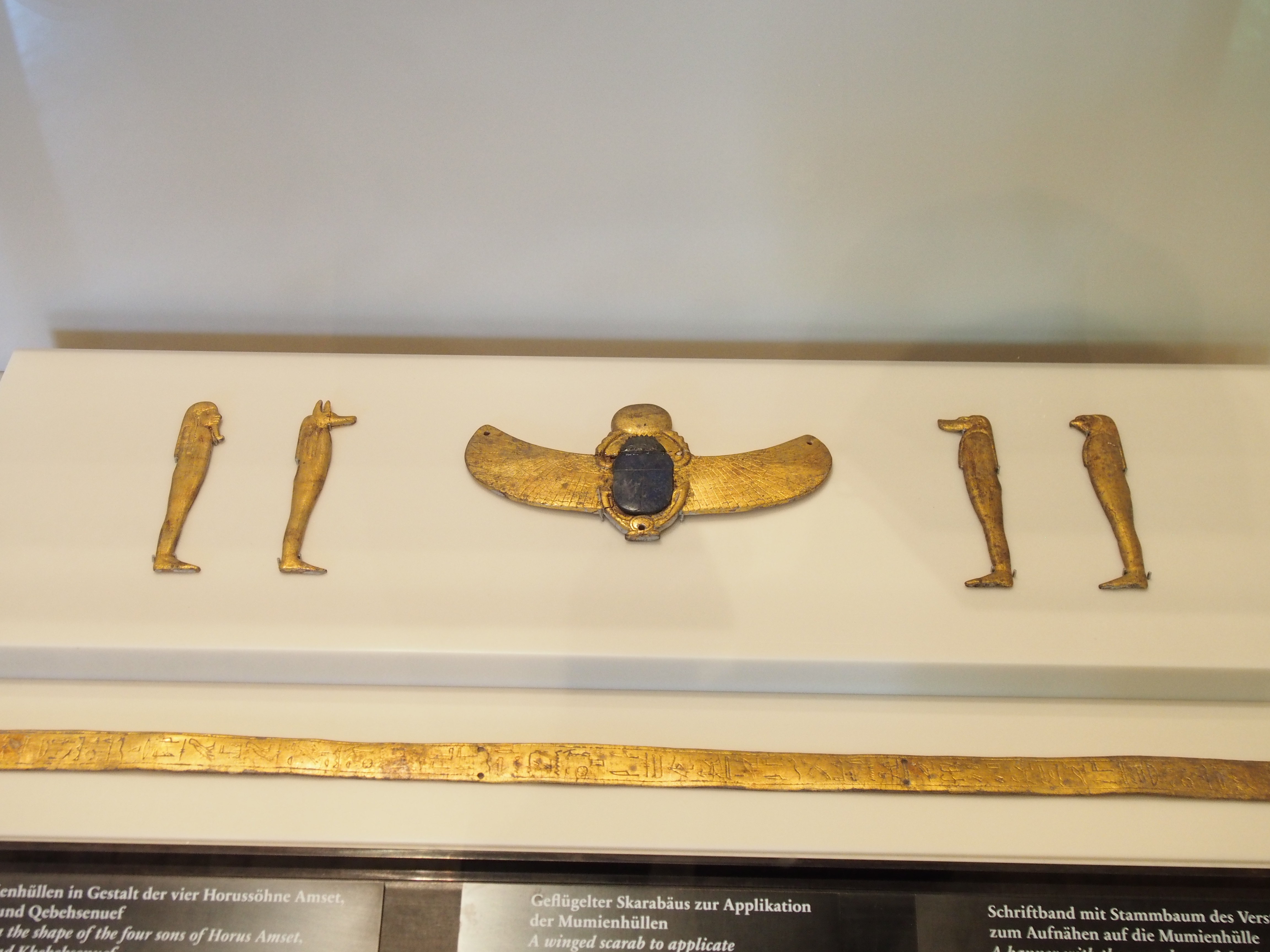
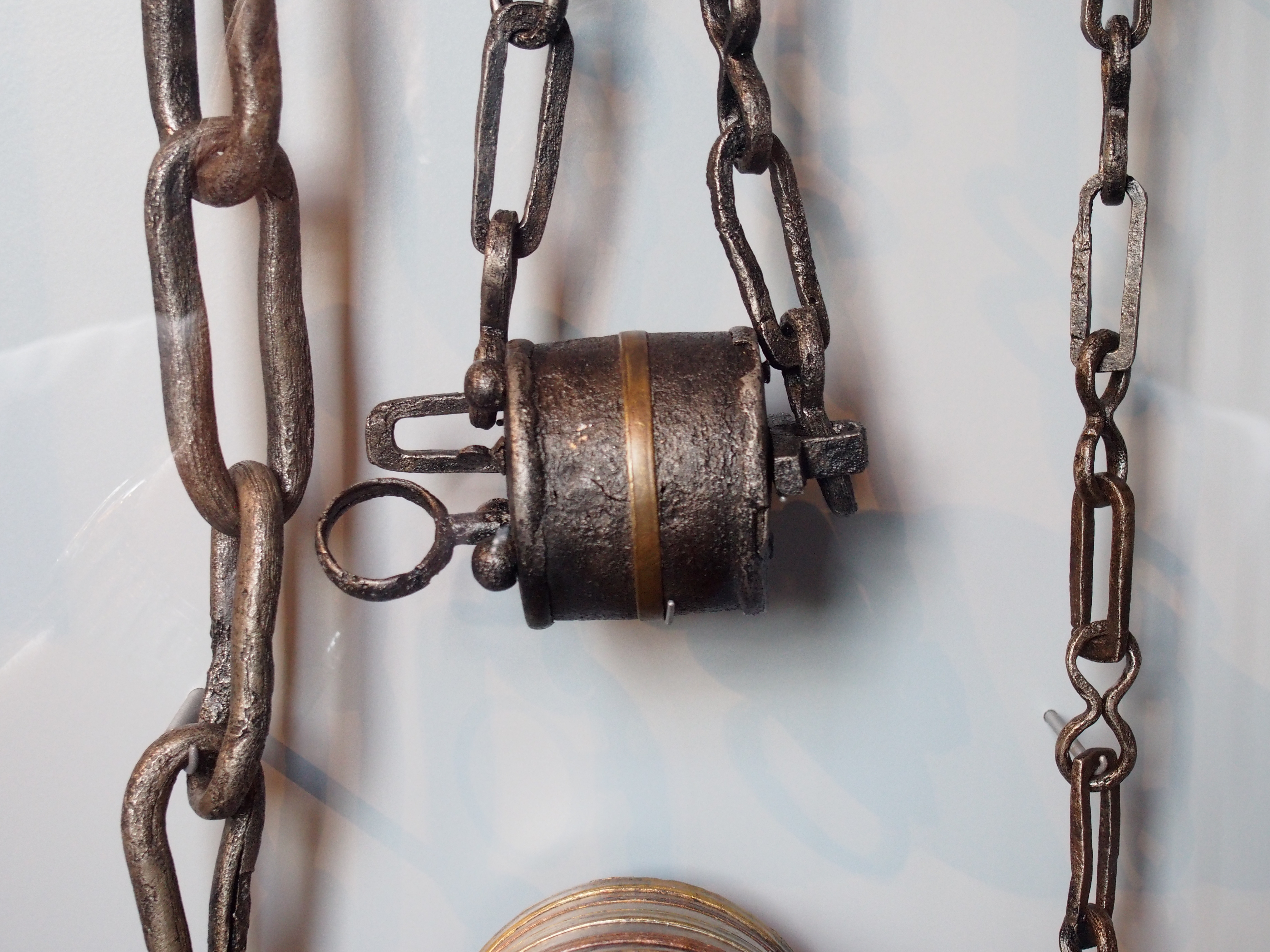
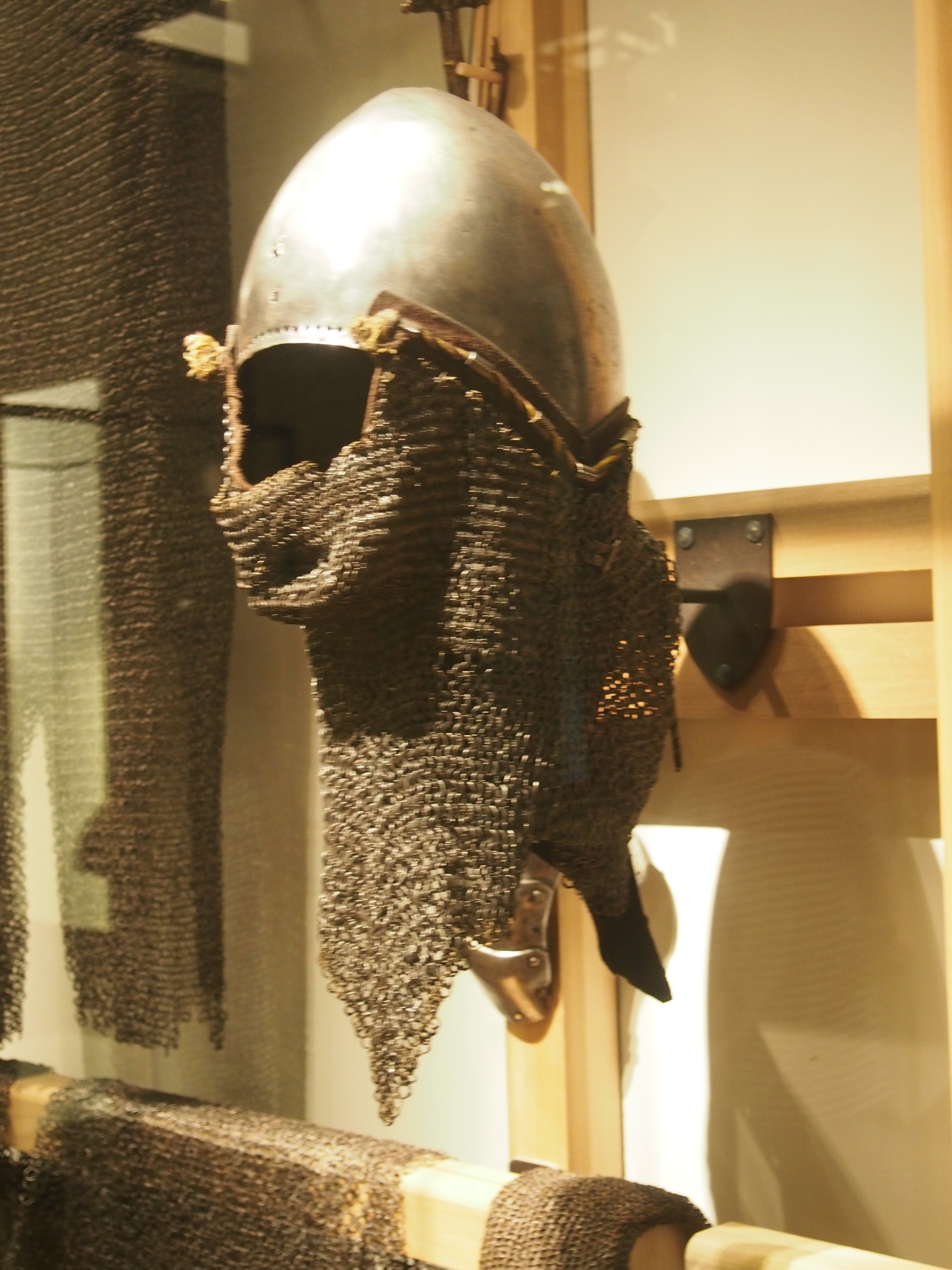
What’s an Egyptian Museum without a statue of Bastfor cat lovers?And ritual cart statues – sadly, as is almost always the case, the golden earrings that were in the statuettes pierced ears were long gone by the time it was discovered,A nice set of Canopic Jars – to contain the internal organs removed during the mummification process.Gold jewellery and other items from high status burials – evidently Gold was something of a royal monopoly and only high status individuals would be granted the right to possess any, either as direct gifts of jewellery from the royal court or as raw gold to have their own pieces made to order.On the upper floors there is some surprisingly interesting Roman stuff – like this very well preserved example of a warded roman barrel padlock and original chains.And the remains of a set of Phalerae, silver medallions issued by the Emperor to soldiers, usually Centurions and above, as rewards – sort of like a cross between a Medal for Valour, a Campaign Medal and a retirement bonus (it wasn’t uncommon for such awards to be made multiple times to a single individual – and you could only actually wear one of them). They were evidently worn attached to a leather harness which was worn over the armour.And there’s the usual suits of plate armour – most of it late Medieval or even early Renaissance.Though some of it is much earlier – like this piece, probably 11th or 12th century.
There’s much more on Berlin to follow … but that will be in a later post
Museuminsel is a collection of several important national museums – not all of which I visited (the Art/Painting/Old Masters … not particularly interested) …
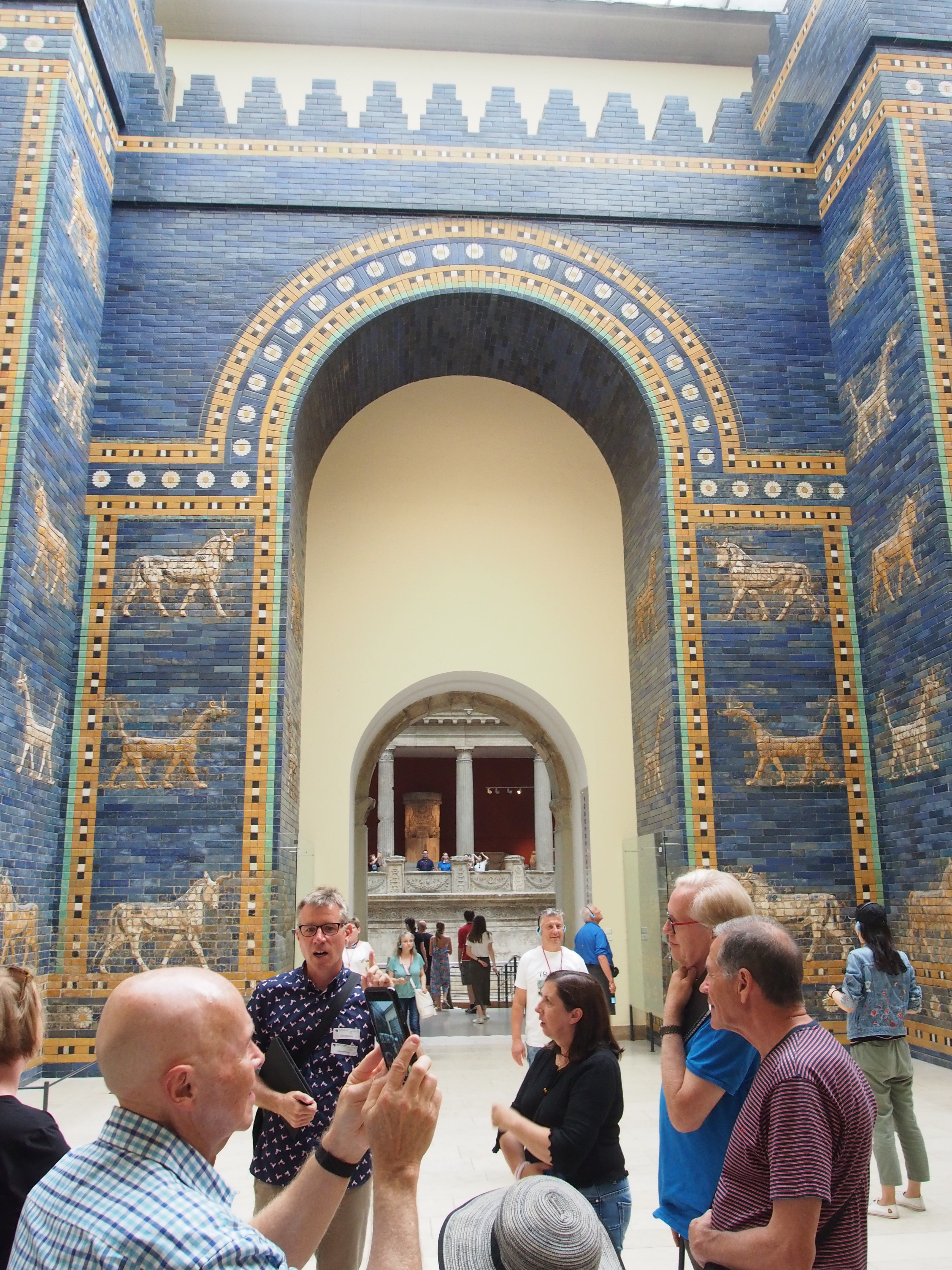
Pergamon Museum – The Ishtar Gate
This is well known as the location of the Pergamon Altar (not really an Altar, but, hey, who cares) from which it takes its name and which, like the other big items on ‘display’ was disassembled and removed to be re-erected in Berlin.
The last time I was here in 2003 the museum was undergoing refurbishment and the Altar was only partly displayed as were other of the major features … this time it was not accessible at all as there is (another) major rebuilding project under way.
The Ishtar Gate, however, and the Processional Way, however, which, last time, were also only partly on display were fully on display this time!
Swings. Roundabouts.
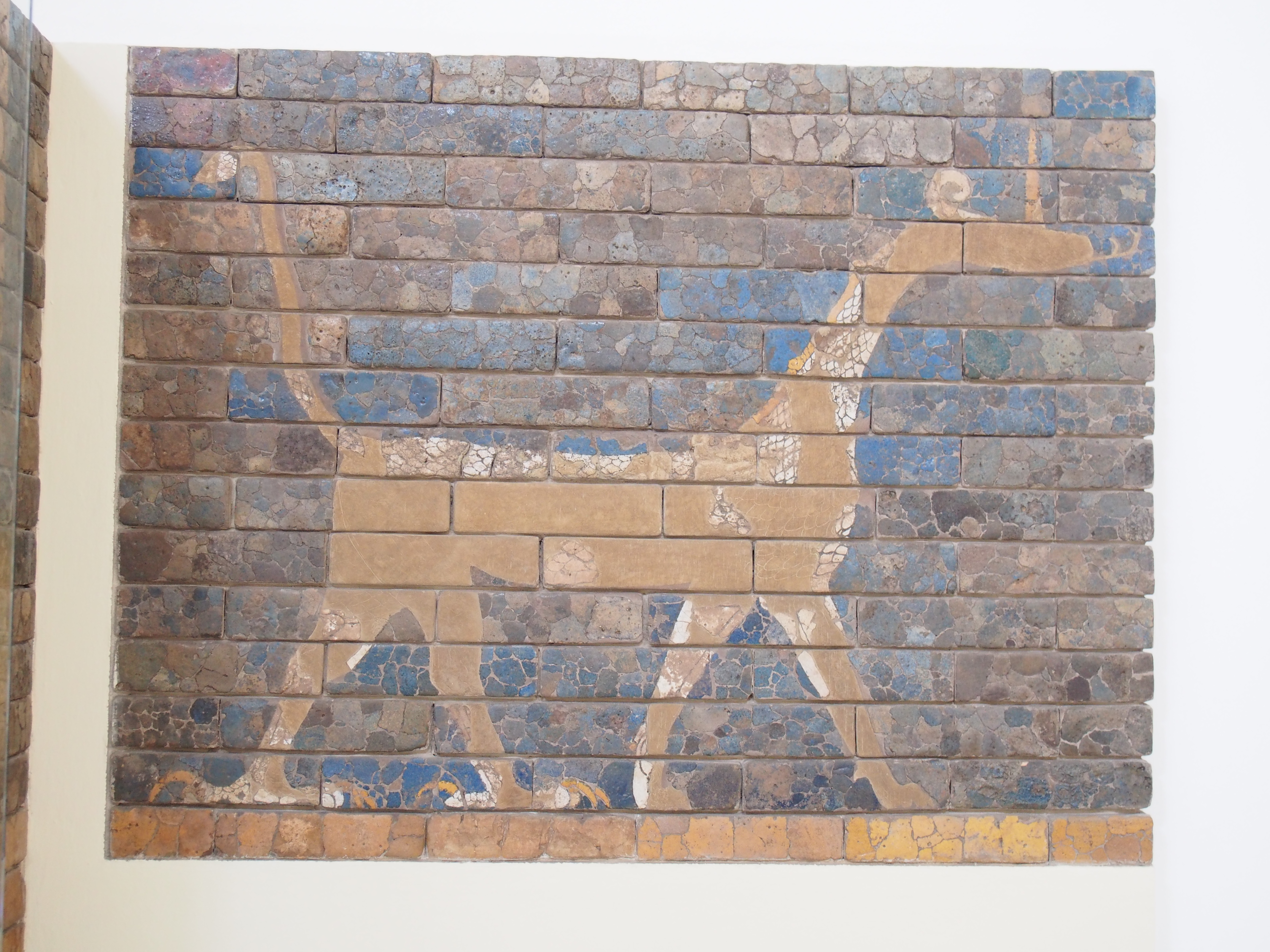
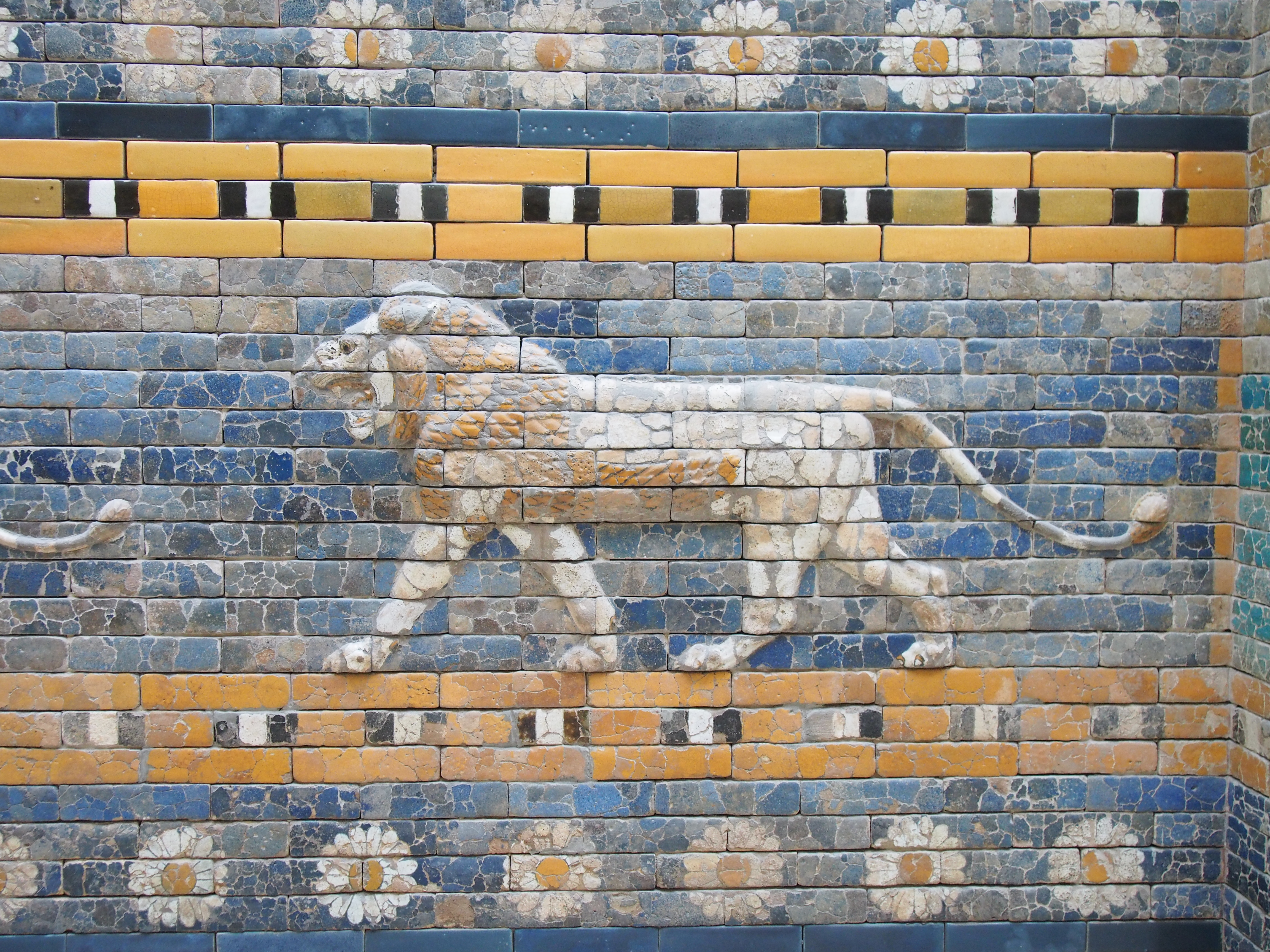
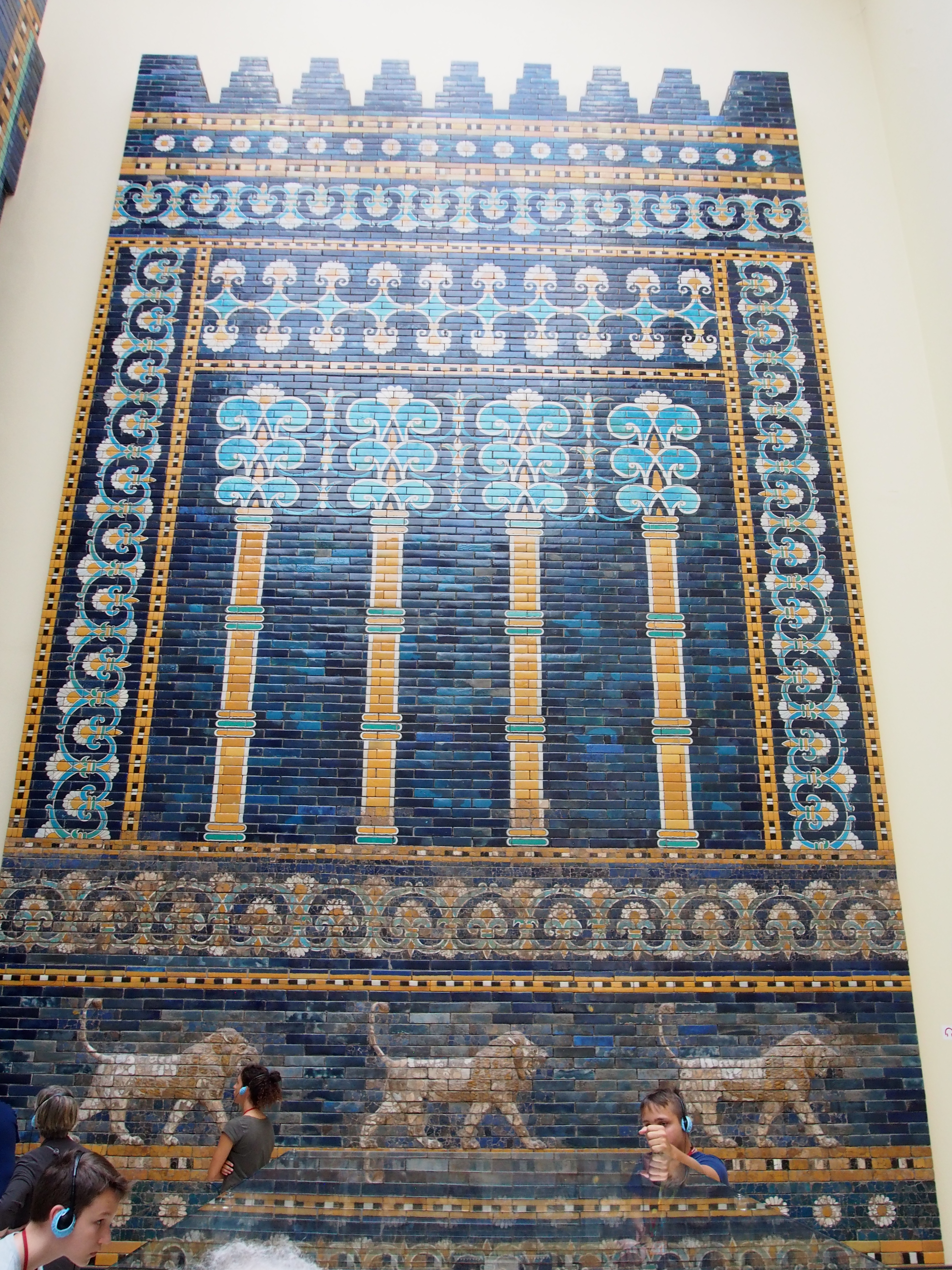
Bull from the Processional Way leading to the Ishtar Gate – as you can make out, these were reassembled from fragments of glazed brick excavated in Ottoman Iraq at the site of Babylon way back … amazing artwork and an amazing archaeological jigsaw puzzle!Dragon (mušḫuššu ) also from the Processional Way.Lion from the Processional Way
The reconstruction is not 100% original, some of the glazed bricks were not found (shattered into two small fragments?) and they were replaced with modern reproductions when erected … the rosettes above and below the animals, for example, are almost entirely replacements based on the few surviving fragments.
The Processional Way as displayed in the Museum … the actual way, in situ in Babylon, was about two or three times the width shown here.The central part of the Ishtar Gate – bloody tourists all wanting to take pictures and look. How dare they!One of the ‘towers’ on either side of the central gate archThe right hand side of the arch of the Ishtar Gate. The Processional Way and Ishtar Gate were rather like ‘Troy’ … that is, they were one of a series of similarly intended structures built, razed and replaced by bigger or better ones.An earlier iteration of the Processional Way with unglazed bricks … Bull and Dragon still depicted.Even earlier – differently coloured fired clay cones (yellow, red, black) pressed into wet clay bricks to form several different geometric patterns.
You get a real feel for what it may have been like back in the day … it must have been an awe-inspiring sight to foreign embassies and other visitors and to anyone travelling to Babylon on business, commercial or religious. Which, of course, was the intention of the thing … conspicuous display of just how wealthy (and, therefore, powerful) the King was and how strong his desire to please the Gods was, and, of course, this implied that the Gods would favour him in all things as well. A sobering thought for those visitors.
Visited after seeing all those tanks – Pictures speak louder than words.
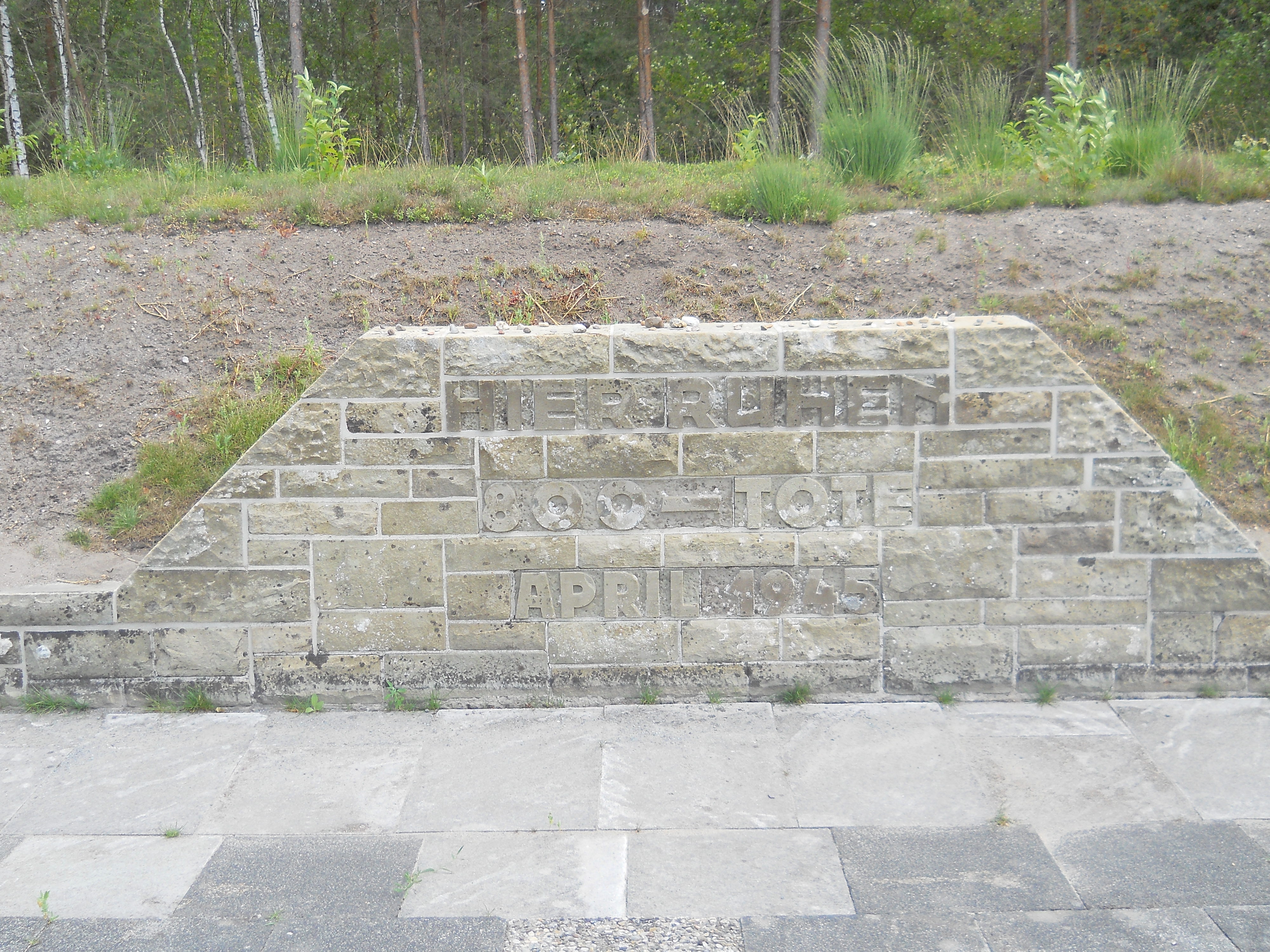
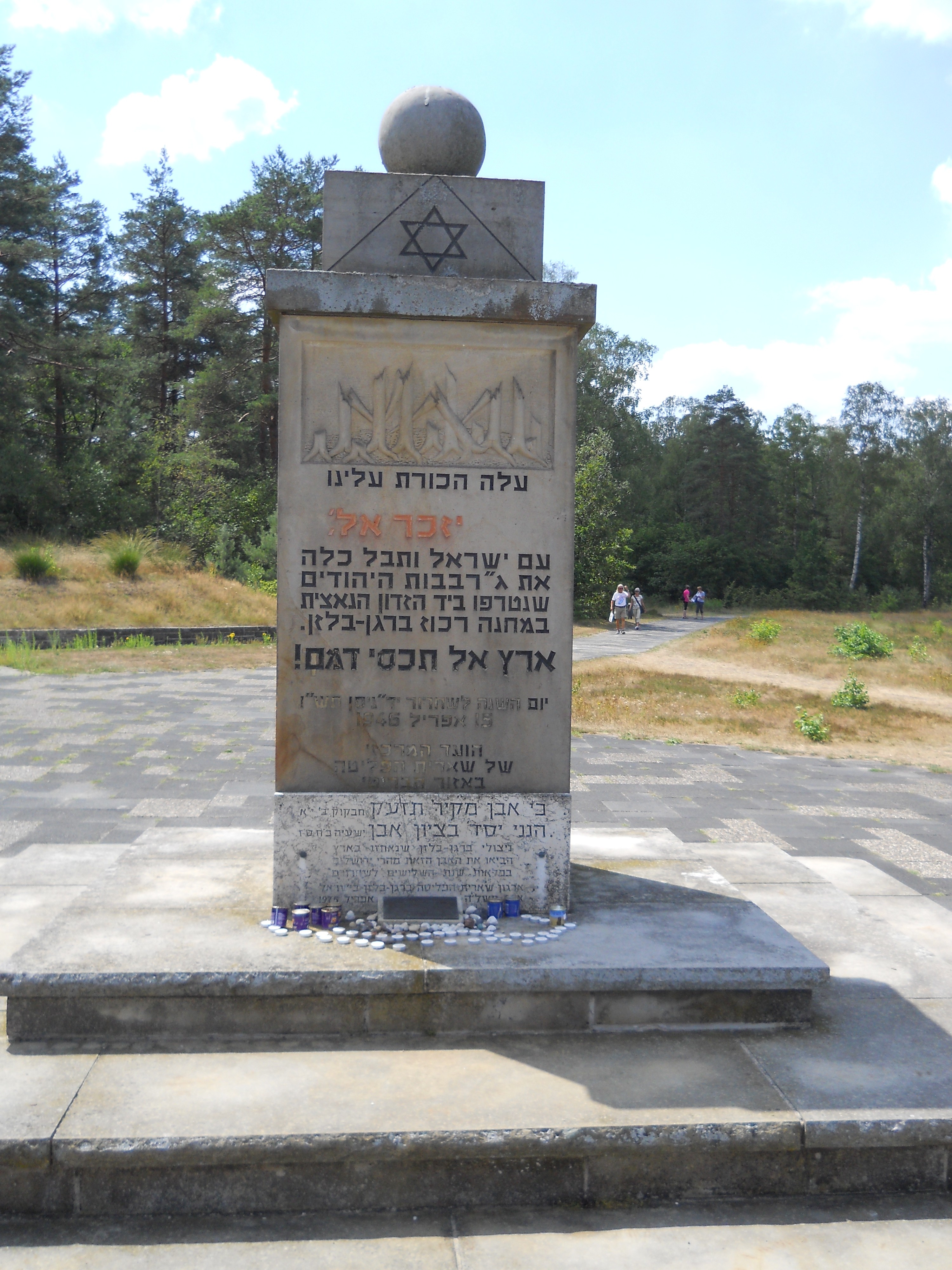
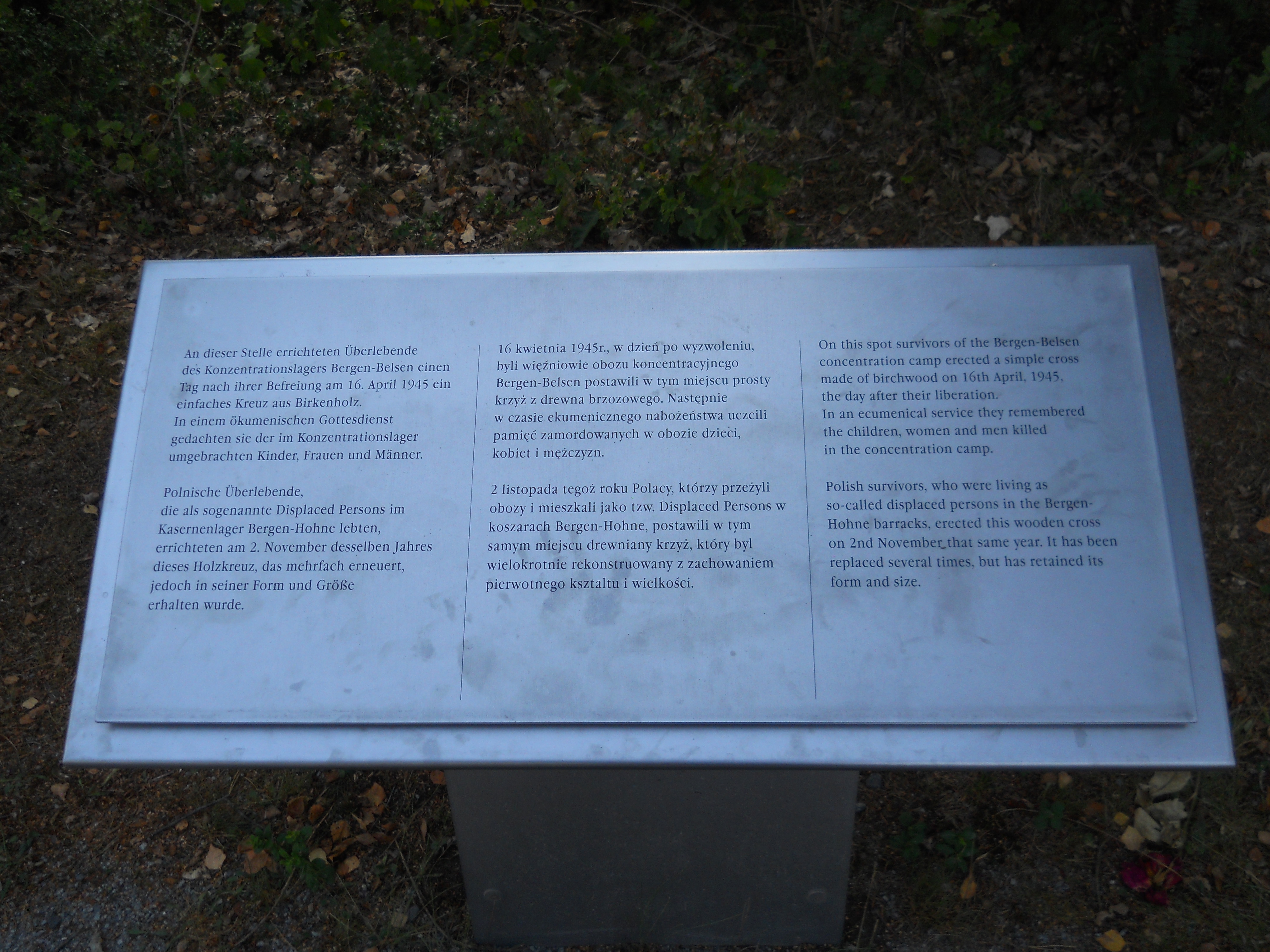
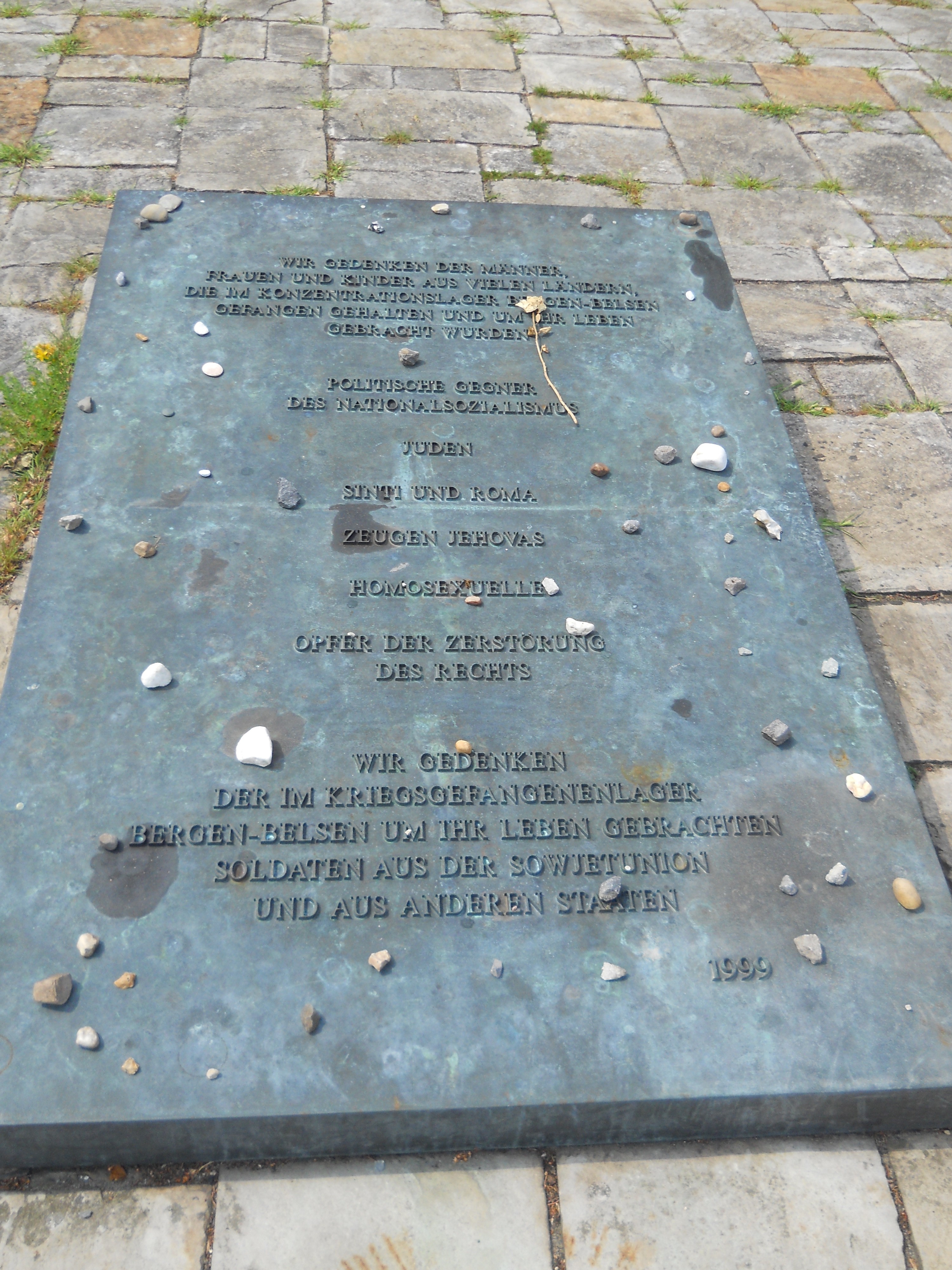
Mass grave mound – there are about a score or more of these on the site, with numbers between the 800 in this one and around 5000 in several others.Jewish MemorialMemorial Column & WallPolish Memorial PlaqueGeneral memorial plaque
There is also an excellent on-site museum with many audio-visual segments in a variety of languages as well as a great many artifacts and the story of the various phases the Camp went through … it wasn’t always a Death Camp as such. One of the better presented such museums I have seen (Sachsenhausen near Berlin and Dachau near Munich) in 2002/3. Pulls no punches.
There aren’t as many types, obviously, and a lot are US or Russian in origin, but, of course, there’s the German ones as well.
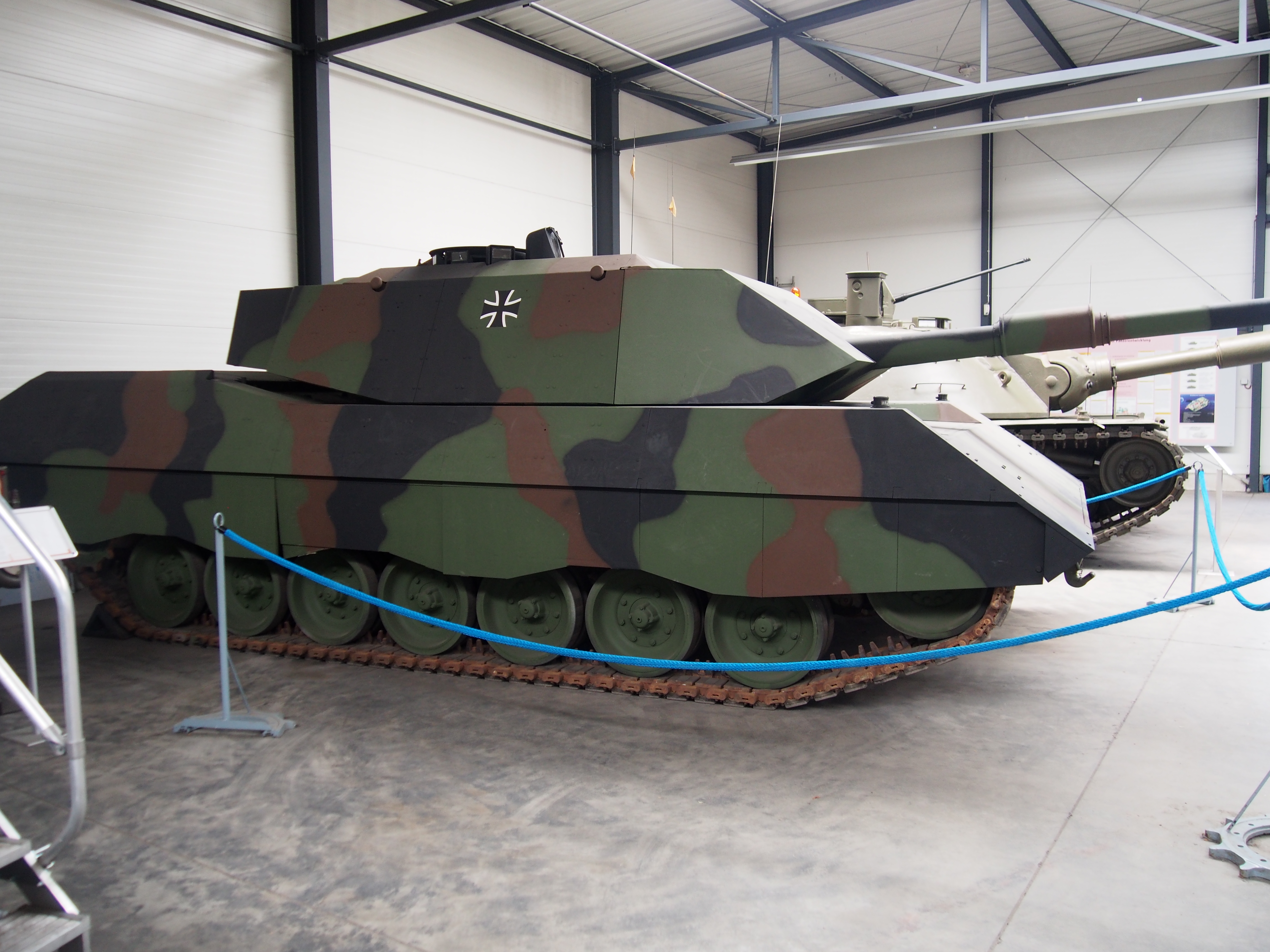
Leopard 1 prototype.HS.30 APC – based on a Swiss design, it proved to be a costly failure and only about 2500 of a projected 10000 were built. There was a huge political scandal over it in the mid 60sSchutzenpanzer Kurz, 11.2, based on a French Hotchkiss design. Used for recon until the Luchs entered service.Leopard IIIMBT-70 Prototype. The Germans wanted to bid on the contract to replace the M-60 and the MBT-70 was built to the specifications the Yanks wanted. By all accounts it was superior to the competition … but it had one insurmountable flaw … it wasn’t a US design … so it ‘lost’
There’s a lot more, but I think we’re all tanked out by now!
An easy hour’s drive south of Hamburg is the German Panzer Museum in Munster (Örtze)which is located in/between two of the largest Bundeswehr training grounds. The museum, naturally, covers mainly tanks used by the German Army from WW1 to the present (which, since they include the East German Volksarmee in with the West German Bundeswehr means that some good examples of Russian and East Bloc stuff is included.
The collection isn’t as extensive as the British one at Bovingdon, which I covered in a previous post, but it’s not as old … and it’s pretty good anyway.
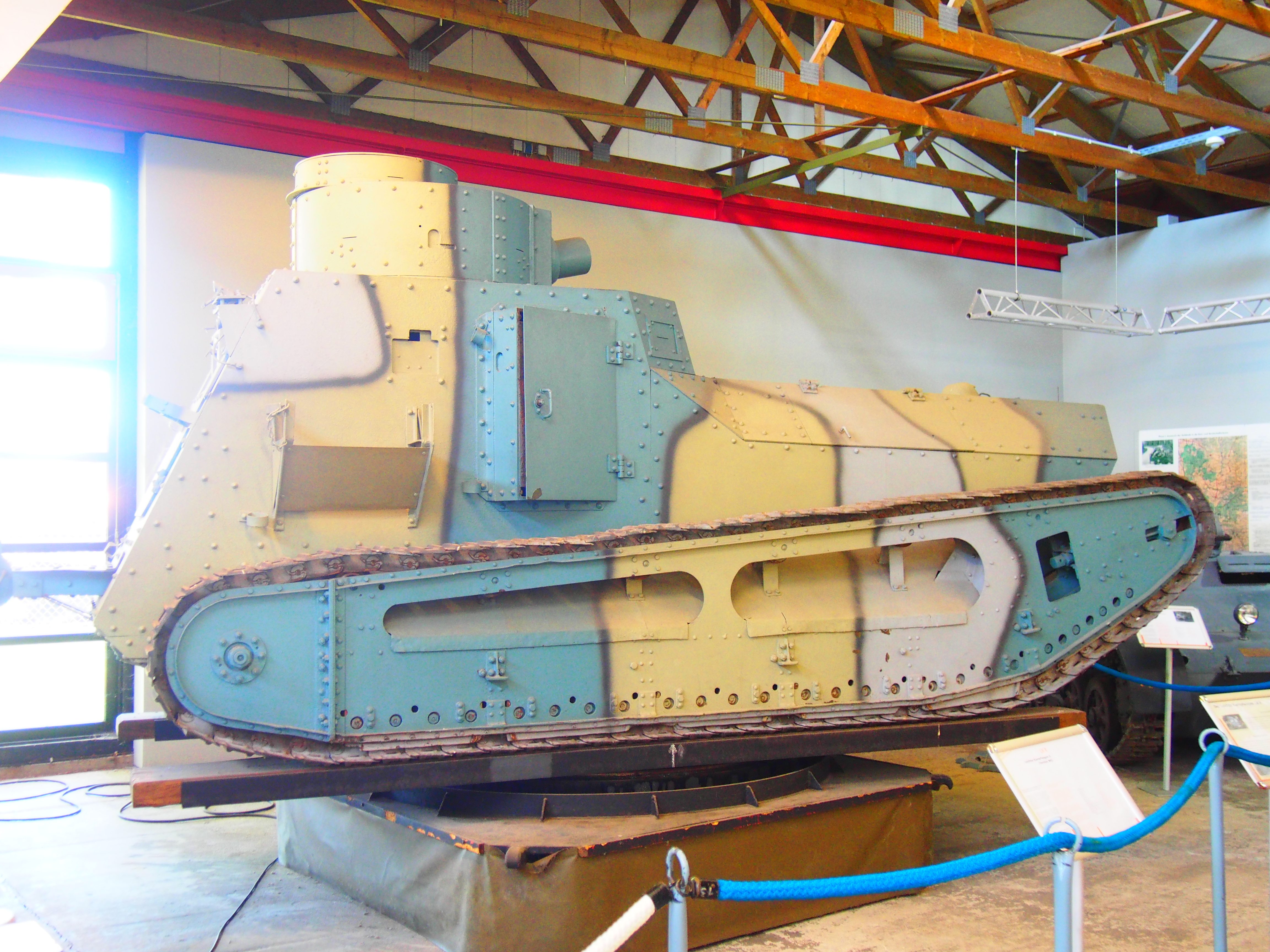
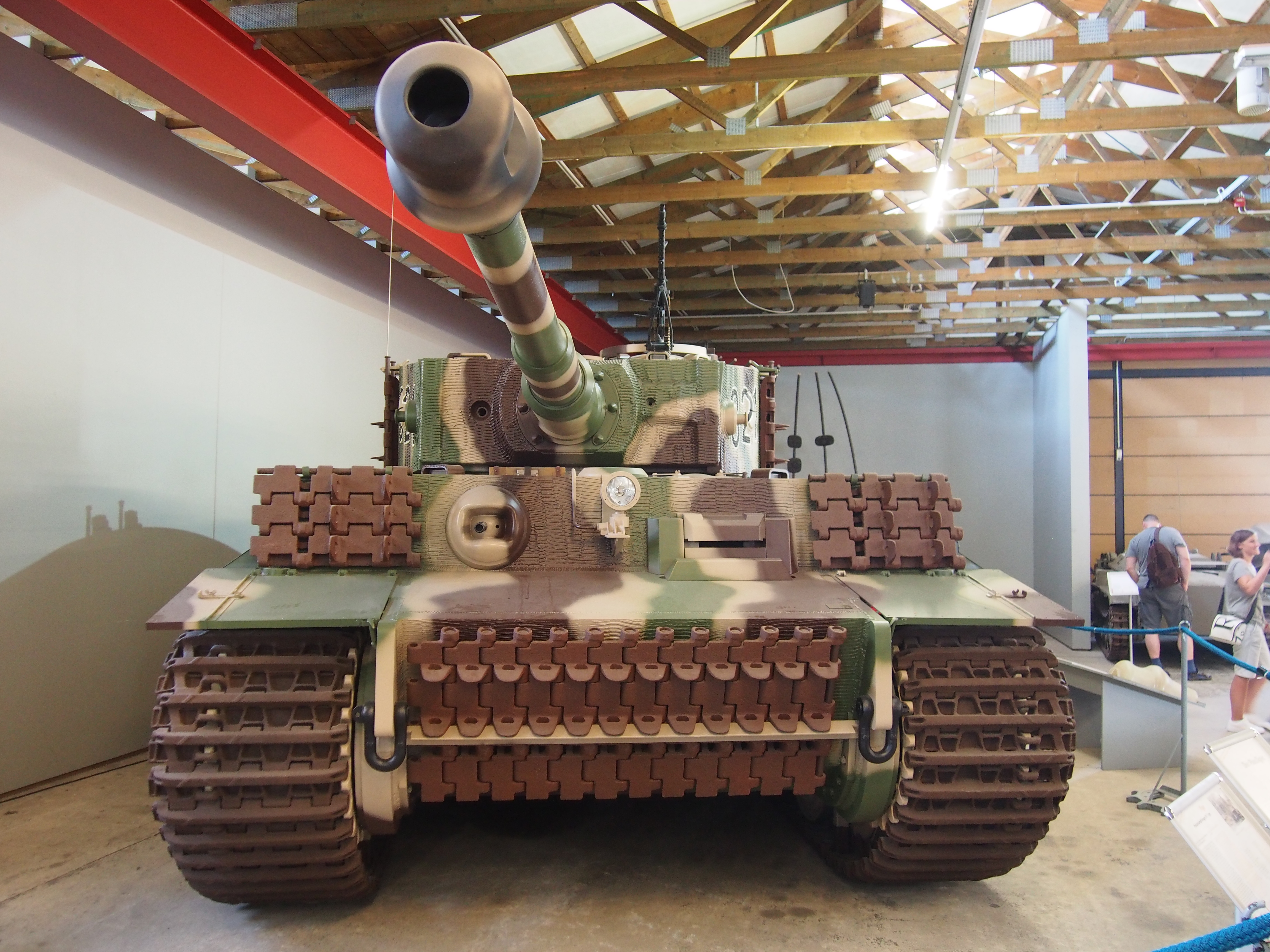
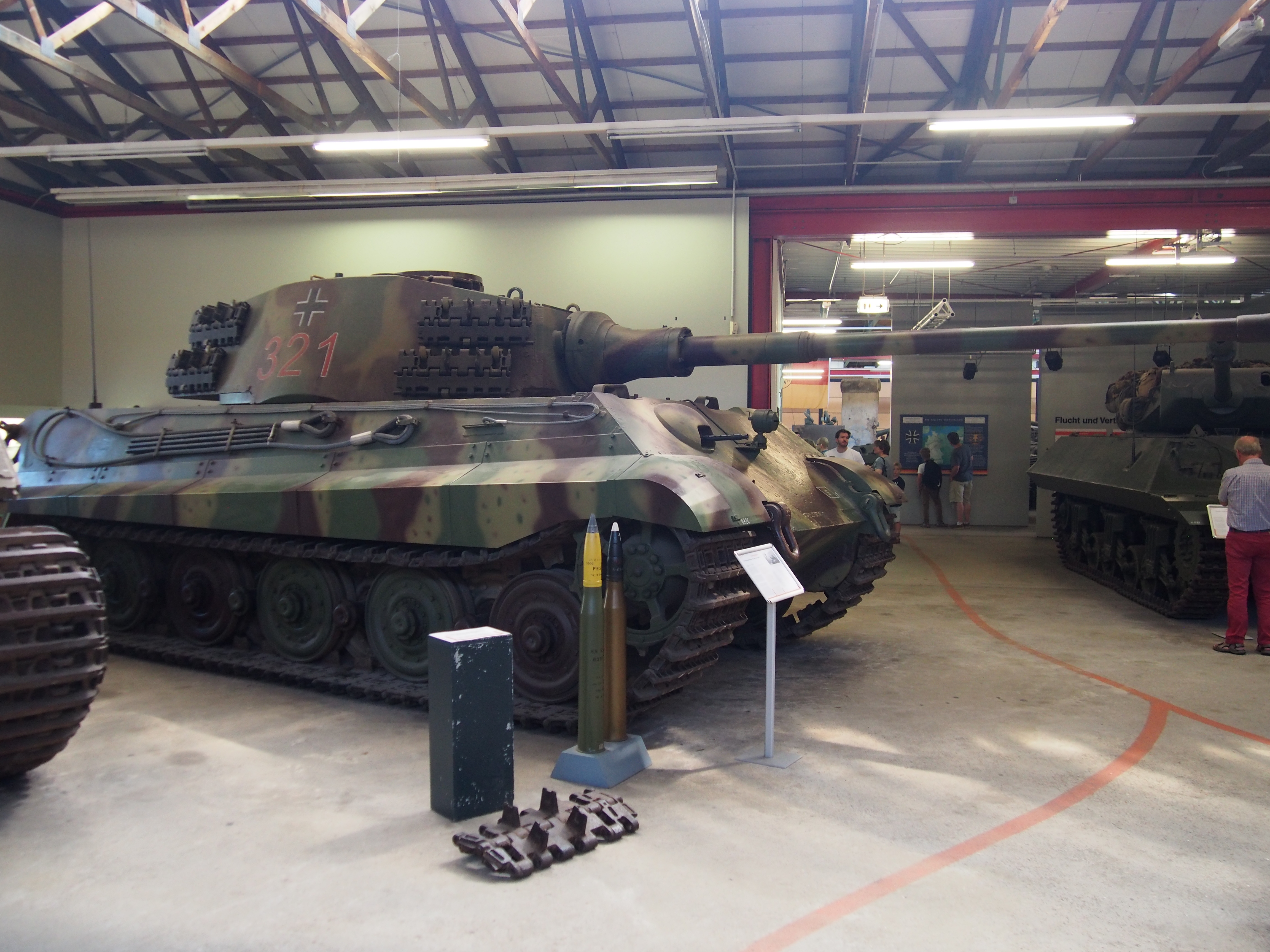
A mock-up of the A7V, the only German combat tank of WW1 – the only surviving example is in, of all places, Brisbane. They only produced around 40 of these monsters because of raw material shortages, the fact that it wasn’t a very good design, and the lack of foresight of the High Command … not necessarily in that order!Late war German light tank prototype – yes, it looks like the British Whippet, but isn’t. Great minds think alike, I guess.Panzer 1, the mainstay of the Panzer forces vs Czechoslovakia, Poland and in the 1940 invasion of western Europe. Pathetic. But there were a fair few, but, more importantly, the German armoured doctrine of Blitzkrieg made excellent use of them.Panzer V Panther with zimmerit, a paste applied to the armour to make it impossible to attach magnetic anti-tank mines. Only used for several months until some bright spark noted that none of their enemies used magnetic AT mines! Panzer III, later model, with long 50mm gun.Panzer IV with long 75mm gun. Shipped to North Africa brand new, it broke down and was captured by the Allies within days of its arrival! How embarrassing.German Tiger 1 – it’s marked as 321 just like the one at Bovingdon.JPz 38T Hetzer… based on a Czech chassis … the Germans were so desperate for armoured vehicles they never threw anything away if they could repurpose it.Prototype of the JPz IV – there are significant differences between it and the production version (which the museum also has, but isn’t pictured here)StuG-111 with long 75mm cannonHummel with 150mm Howitzer (they also have a Wespe with 105mm Howitizer (not pictured here)The Brummbar self-propelled gun based on a Panzer IV chassis, it was armed with a ‘gun’ that fired 150mm HE shells and was intended for use demolishing bunker and other fortifications (mainly – exigencies of war meant it was often used as an ad hoc tank substitute)King Tiger with production turret.
I must say that the Danish Royals (including Princess Mary, of course) really know how to furnish a Palace – and their subjects really seem to like them. A lotsince they have provided some really nice stuff even in recent years.
These photos are from the Royal Palace/Parliament Building (its most recent incarnation was burnt down some years ago and when it was, of course, rebuilt, the Royals decided they didn’t really need it all that much and so it is used by Parliament for their sessions in one of the wings and the other areas are used by the Royals and the Parliament for official functions … and the Royal Chambers are used by the PM as his (or her) offices.
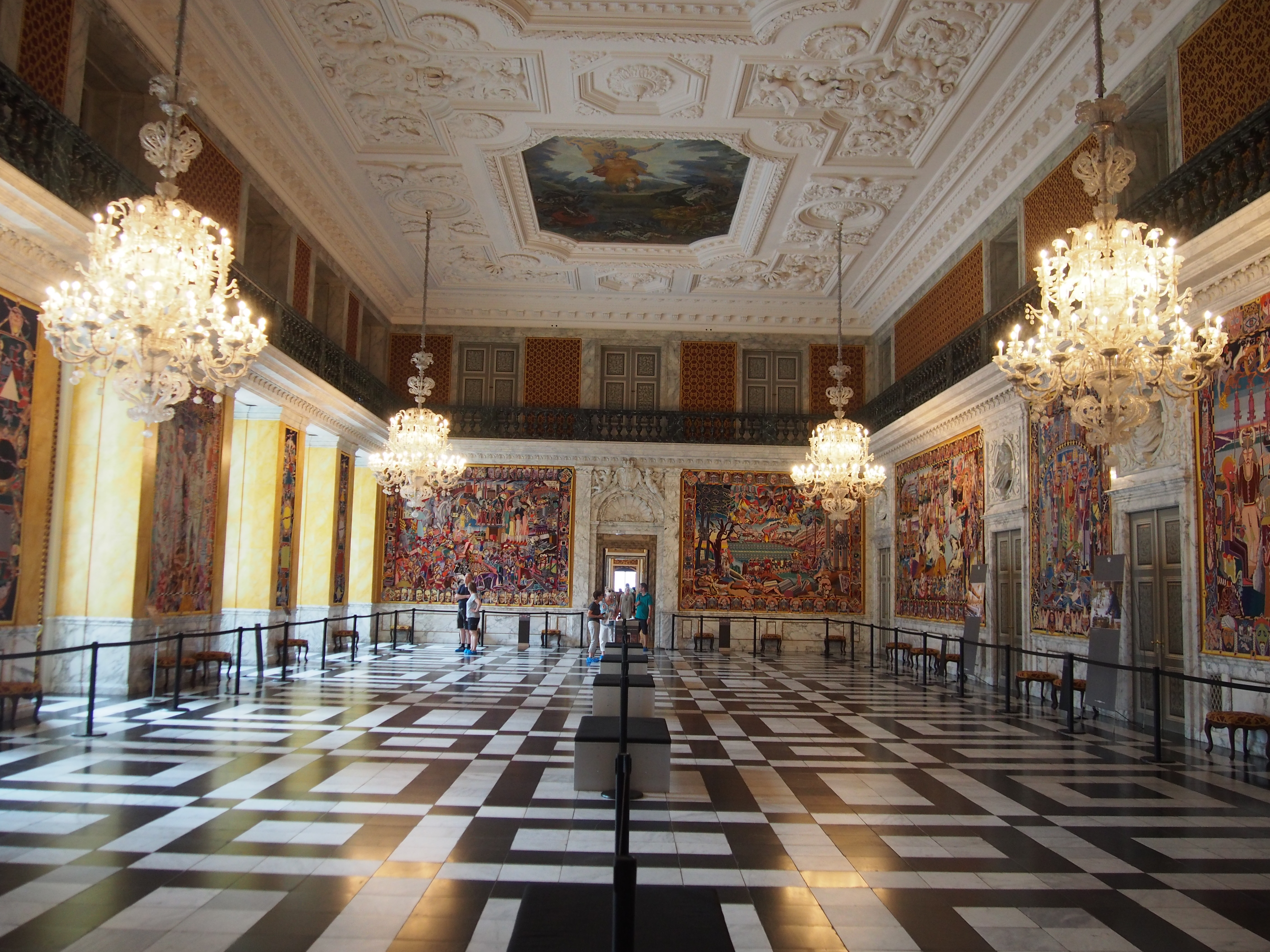
This is actually the rear of the Palace. Still looks impressive, though.The Throne Room – the Royals used to receive guests and notables while seated, the current Queen has done so while standing for her entire reign. It’s little things like that which presumably make them so popular.The Great Hall where large State Banquets and suchlike are held – the smaller hall off behind the doors to the right is less commonly used for smaller functions, mostly it is used for final preparation of food for the banquets in the large hall.In the most recent rebuild (the 1920’s IIRC) they uncovered the foundations of the very earliest palace erected on the site, Bishop Absalom’s Castle (he was the guy who first tried to bring christianity to Scandinavia) amongst other, later, foundations from the several successive castles and palaces erected on the same site.The Palace Kitchens – the copper cookware is ‘on establishment’ (and must be a bugger to keep clean) but the Kitchen is too small to prepare food for the State Banquets any more and it is prepared at one of the other palaces and transported here … though they do use the space for some of the final arrangements and they use the dumbwaiters here to move it to the upper floors.
On the way down from Copenhagen to Hamburg I stopped at Hedeby, which was an important Viking trading centre in what was Denmark until the 1850’s (IIRC). It gets great reviews and the museum is really well presented. But there was virtually no information of any consequence in English … just the odd uninformative sentence or single word.
So, for example, you have a coin or coins carefully presented with three paragraphs (two in German, one in Danish) and the oh so informative English text … ‘Coin(s)’ … OK, it was cheap to get in, around 6 Euro (say about A$11) but it wasn’t worth half the price. Not even a quarter.
The reconstructed buildings were also hugely uninformative. No information of any sort in any language. There were a few completely uninterested costumed ‘inhabitants’ wandering around, and, as far as I could tell, they didn’t seem to be terribly helpful even to those who spoke German.
A place with great possibilities, but an almost complete waste of time. How it got its UNESCO rating is beyond me.
Some of the reconstructed buildings. Basic wattle and daub and thatched roofs.The interior of one of the dwellings (very dark, I know) which was actually reasonably authentic … the lanterns had something like horn instead of glass and seemed to be burning something like fat or butter (but since it didn’t smell, it probably wasn’t) and the ‘beds’ consisted of raised platforms on either side of the structure with bedding on them (probably not skins for most people)A reconstruction of a Viking era fishing boat at the reconstructed Viking era wharf at the site of the original village. As well cared for as the rest of the place (damning with feint praise).
Hamburg
One of the main reasons for going to Hamburg was to see the International Maritime Museum. Also very well presented with nine levels – but as you went higher up the English signage became sparser and scarcer till at the top two levels it was nonexistent. Again, very surprising, since this advertises itself as an internationally important destination.
A model of a Greek Trireme, an early version since there is decking only at the bow and stern with a narrow walkway running down the centre and the rowers completely open to the weather (and easily able to form a boarding party or repel boarders). Later versions were cataphract – that is, they were full decked, bow to stern A Hellenistic (Alexander or post-Alexander) or Roman Trireme – this is a cataphract and has sails set … also note the deckhouse at the stern, with a fighting ‘castle’ on top. The inside of it would almost certainly not have contained accommodation – Triremes rarely sailed 24/7, putting in to shore (often being dragged up on the beach) at night and the rowers, marines and other crew slept ashore. A Viking Longship, probably of the seagoing variety. Yes, the crew slept in the open when it was on long distance overwater voyages. There were often no rowing benches and the crew sat and their wooden sea-chests. Early medieval Cog. More or less full-decked with small bow and sterncastles – though, of course, it would have been a merchantmen rather than a warship. This particular model is based on the most common type of Cog used in the Baltic trade by the merchants of the Hanseatic League. A larger, later period, Cog – but, again, one used mainly in the Baltic trade by the Hanseatic League merchants. The main difference is in the arrangement of the fore- and after-castles.The latter is now two levels, and there is accommodation, probably for the Captain, Officer(s) and wealthy passengers under the top level.
There was a lot more stuff but, unfortunately, it was often behind perspex that was even more reflective than in these shots and almost impossible to get good shots of. That and a lot of it was not interesting enough …
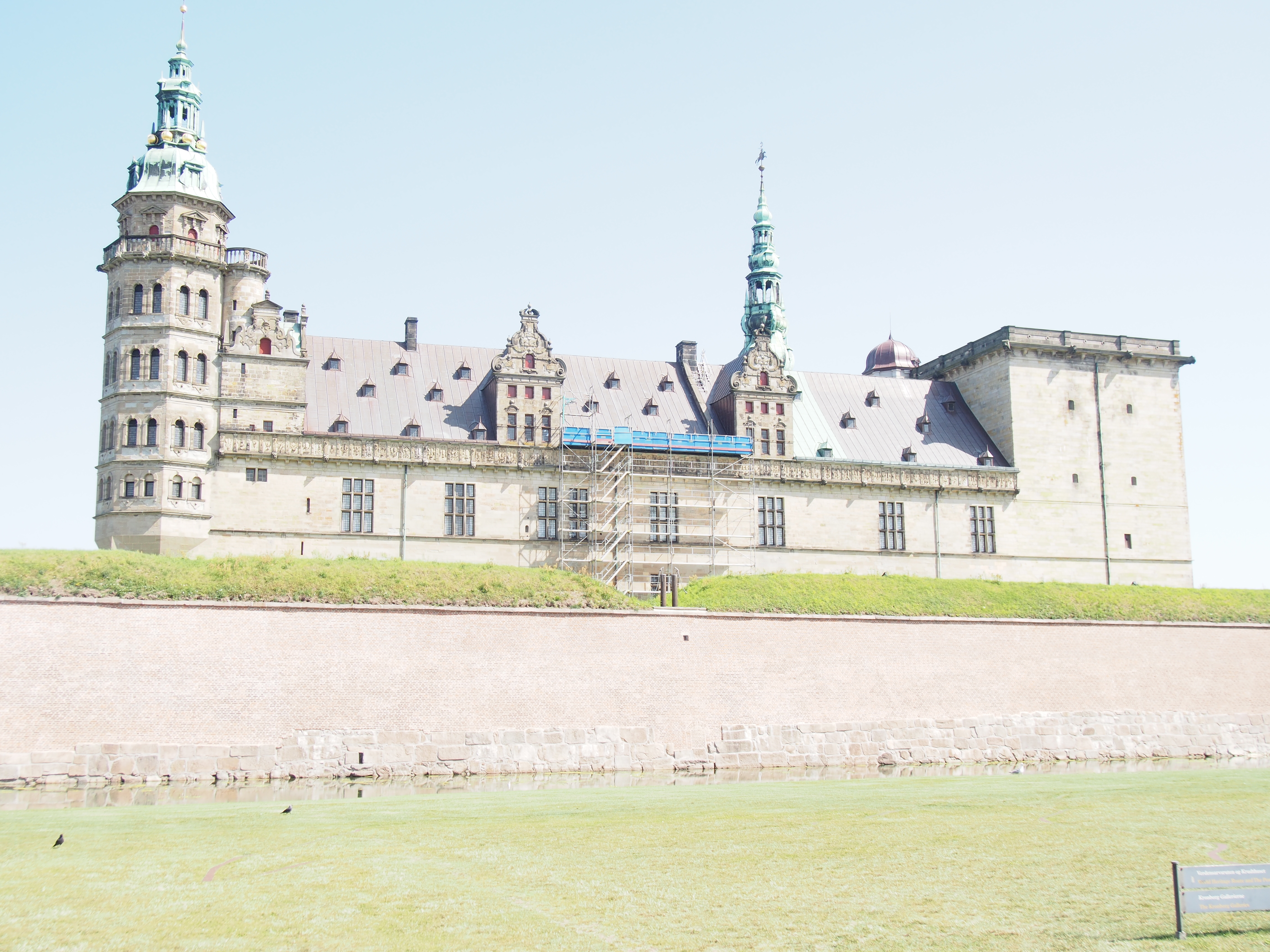
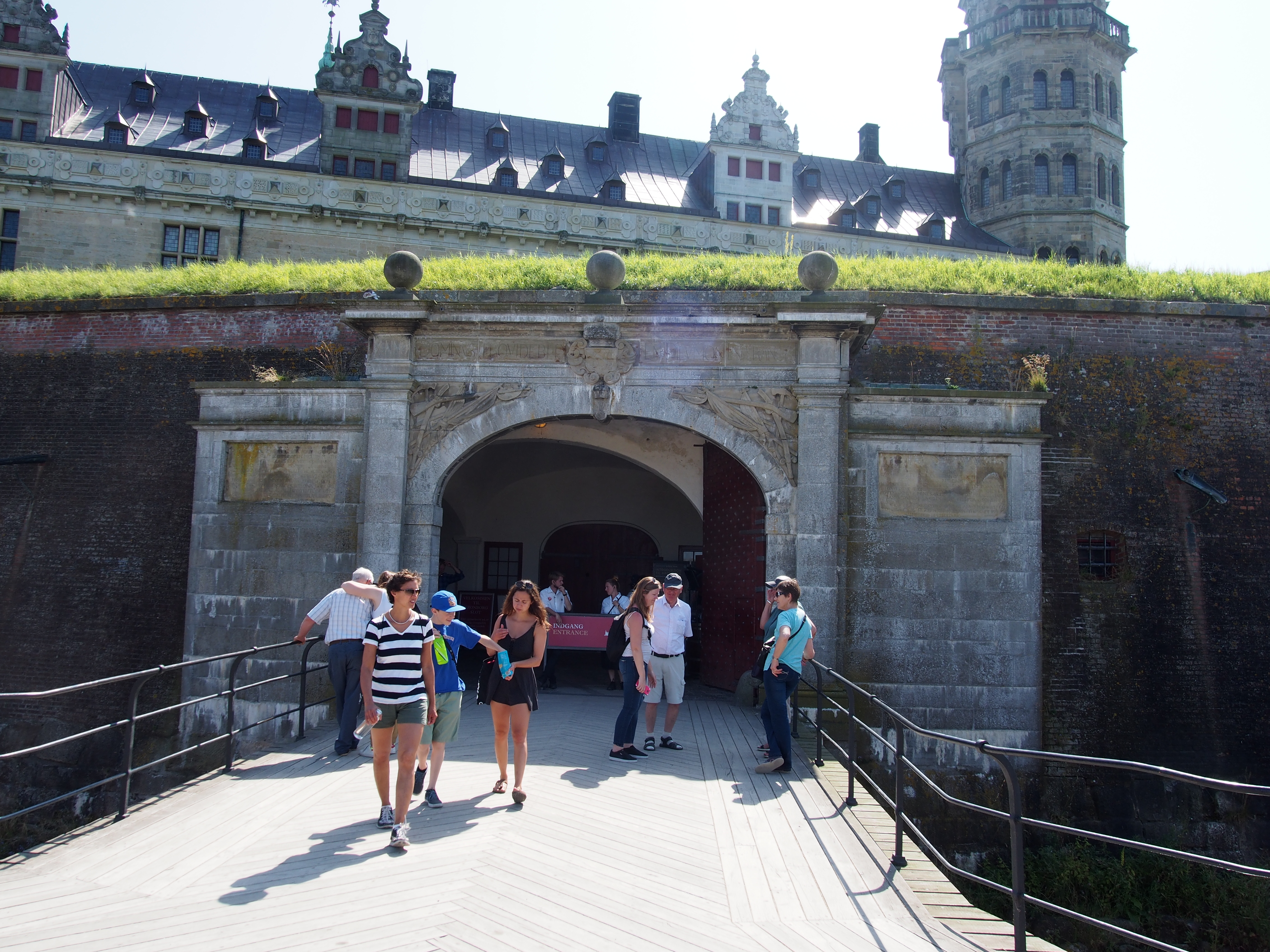
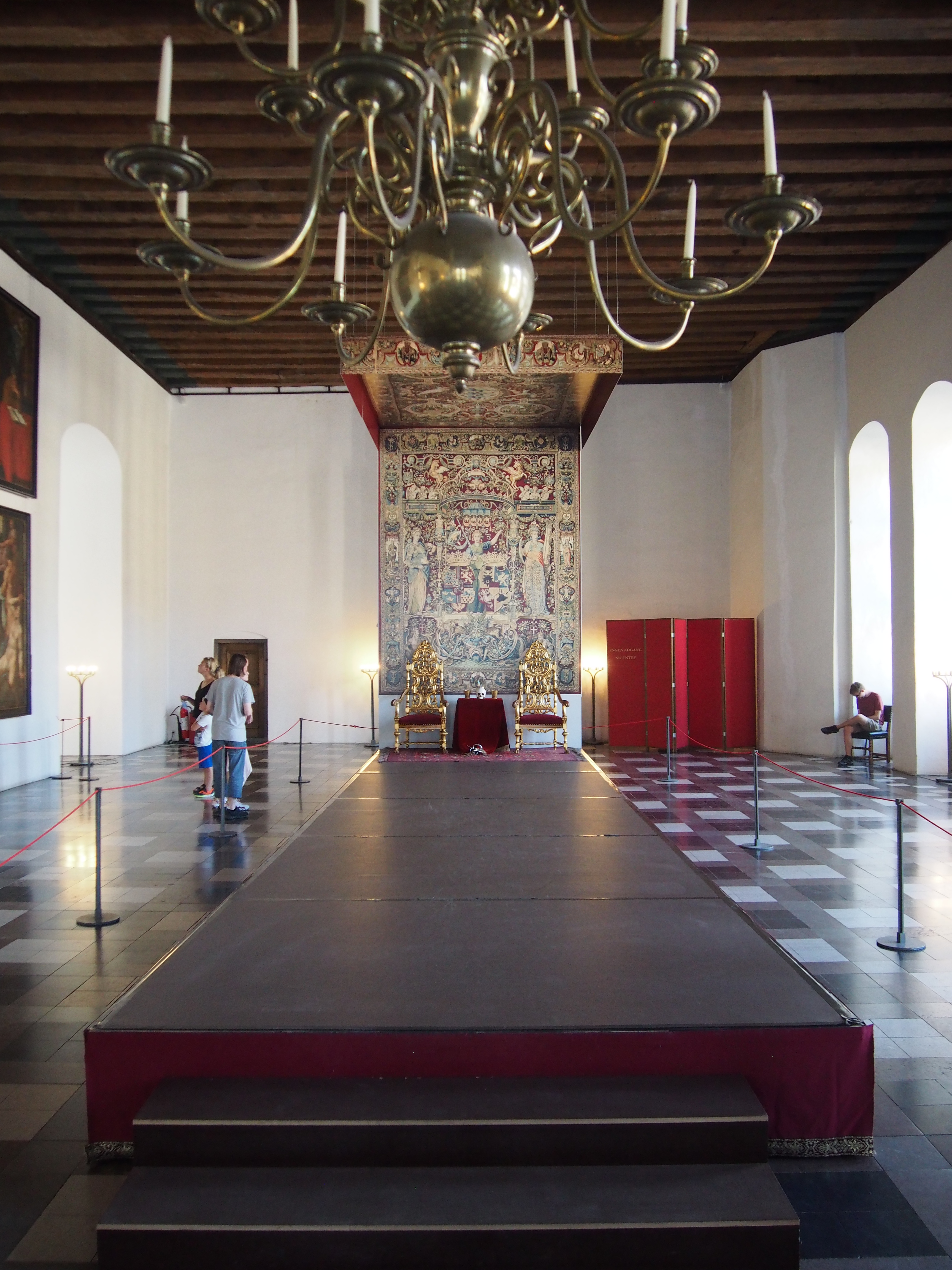
Hamlet’s Elsinore isn’t actually Elsinore … it’s Kronborg Slott. The current castle is on the same site as the one that existed in Hamlet’s (mythical) day, but it isn’t identical … like many such surviving Royal Castles in Scandinavia it has been added to, rebuilt, left to decay, converted to other uses and then, finally, converted back to something like its glory days.
Kronborg from the approach over the moat. It seems everywhere I go things are at least partially covered by scaffolding or hoardings.The current entrance – but the original one – the site of which is off screen. This one is still designed for defence, but modified in more recent times with easier access for tourists in mind.The throne room – which is set up to be something like it appeared when the Castle was still an important Royal residence (the mid 1600s IIRC)A reproduction of what one of the Royal Bedrooms could have looked like in the mid 1600s. Notice the sparse furnishings – we take for granted all the things that mass production have made available for us … in a time of handcraft level production even the wealthy simply didn’t have the quantity of stuff we take for granted.The Queen’s Bedroom – the bed isn’t original, though it is period.
It was basically a 1.5 day drive from Stockholm to Oslo, via the Air Force Museum (see last post) in Linkoping … so I arrived in Oslo early(ish) on that second day and immediately went to Bygdoy, a peninsula about 5 klicks from downtown Oslo where there are a whole lot of Museums … and spent the rest of the afternoon having a look around.
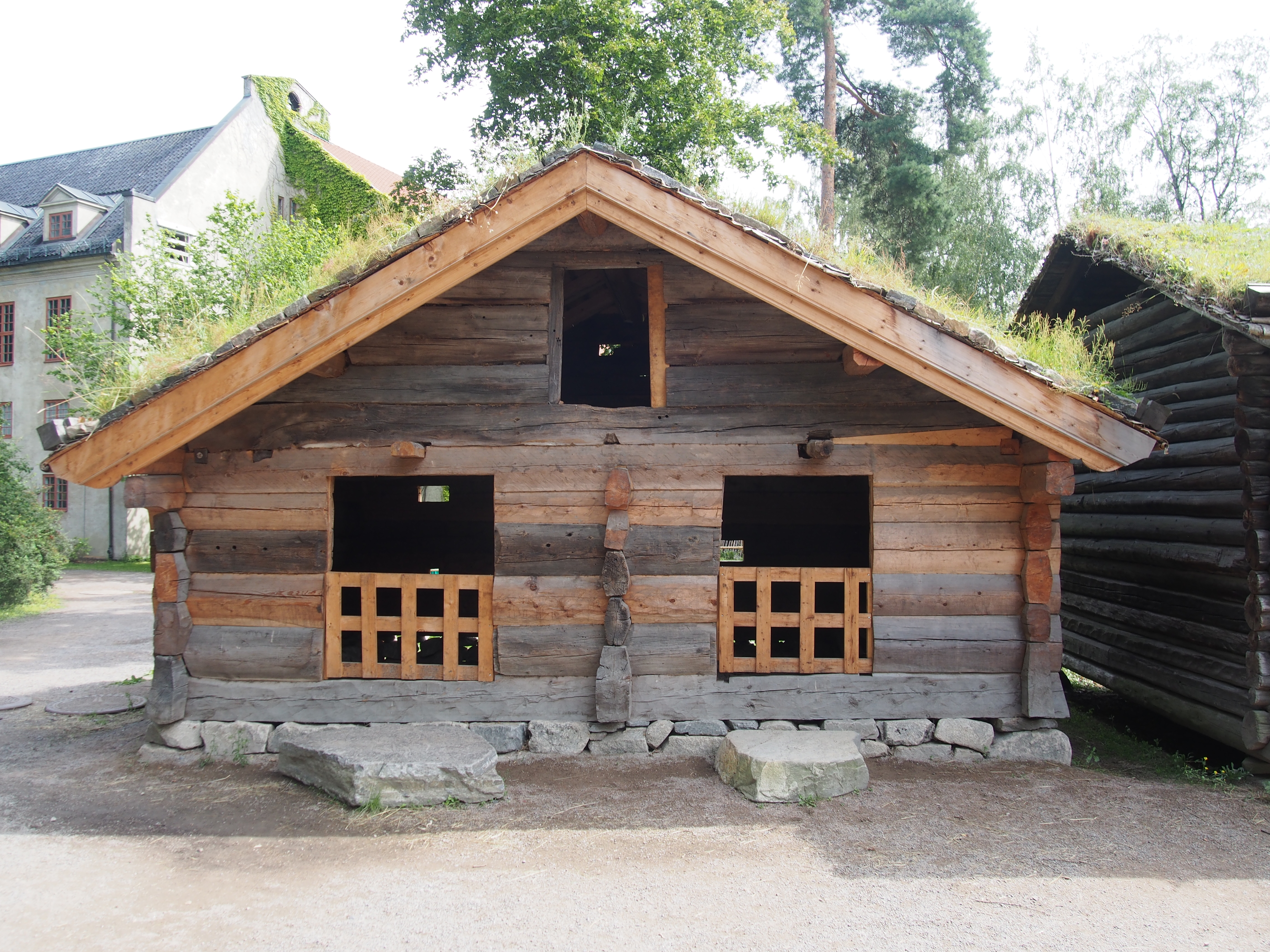
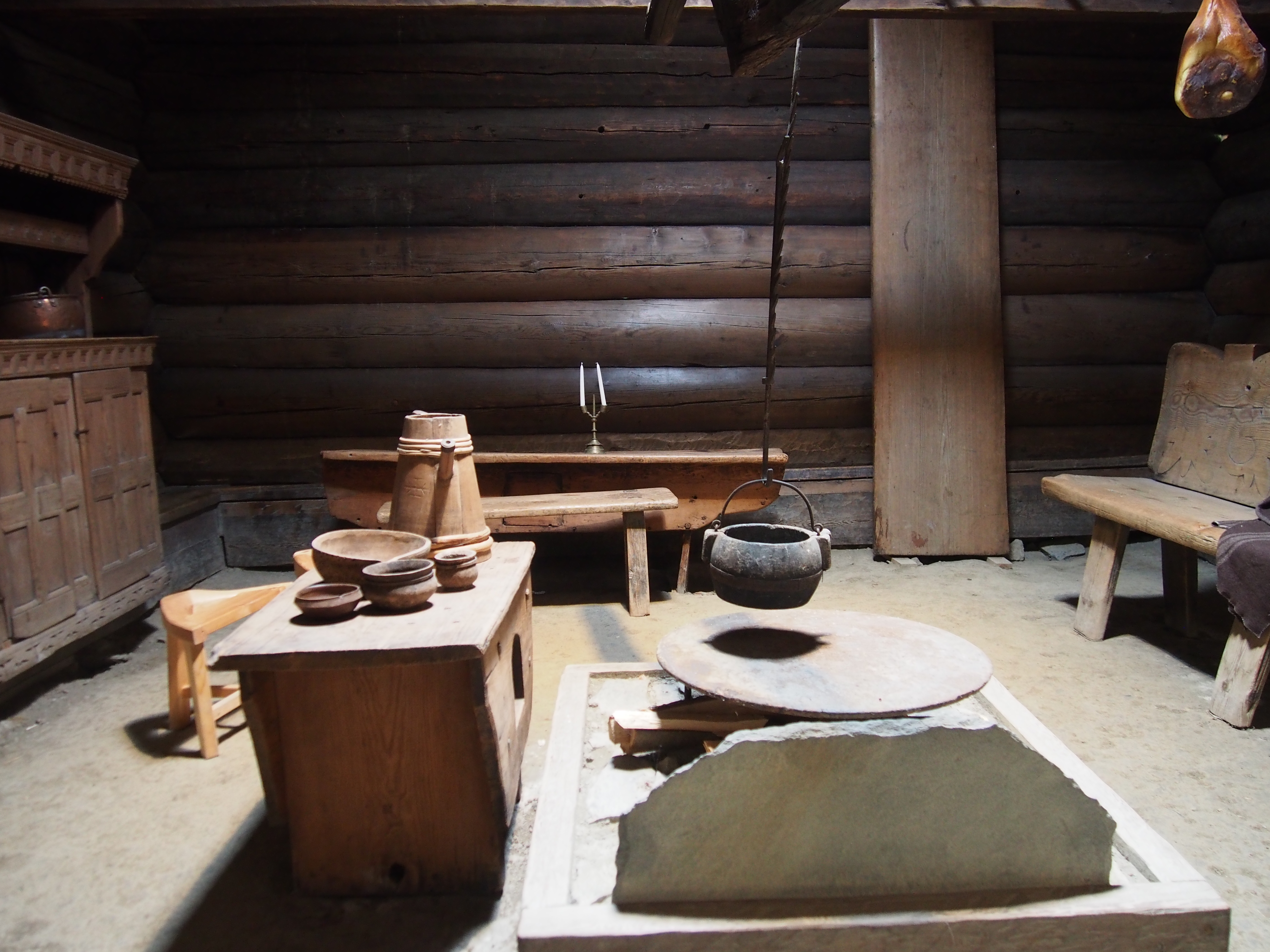
The museum, like Skansen in Stockholm, has structures from all over Norway and from all periods from the 13th century through to the 1950s or so … and, given that the climatic conditions are virtually identical, so are the structures.
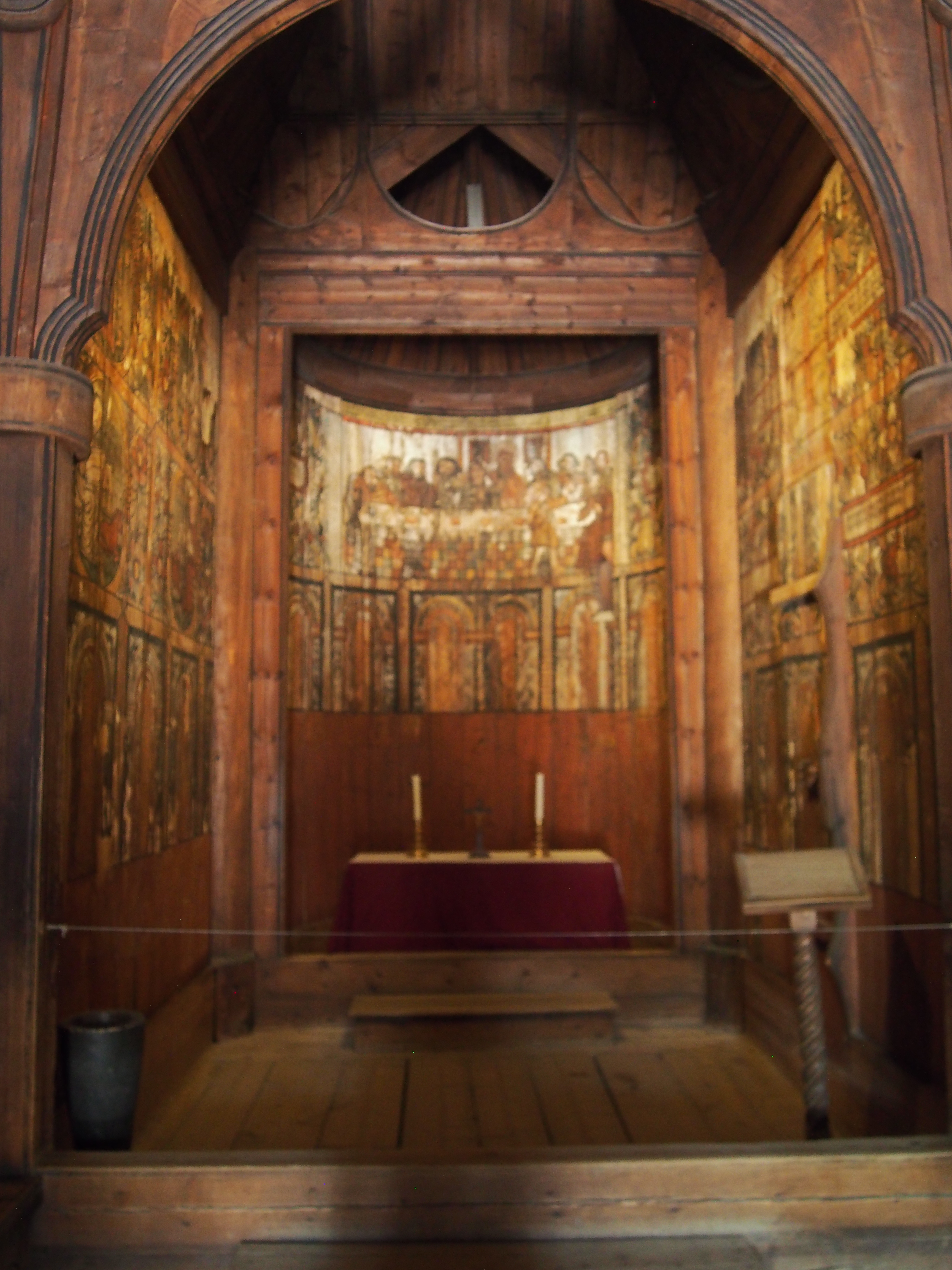
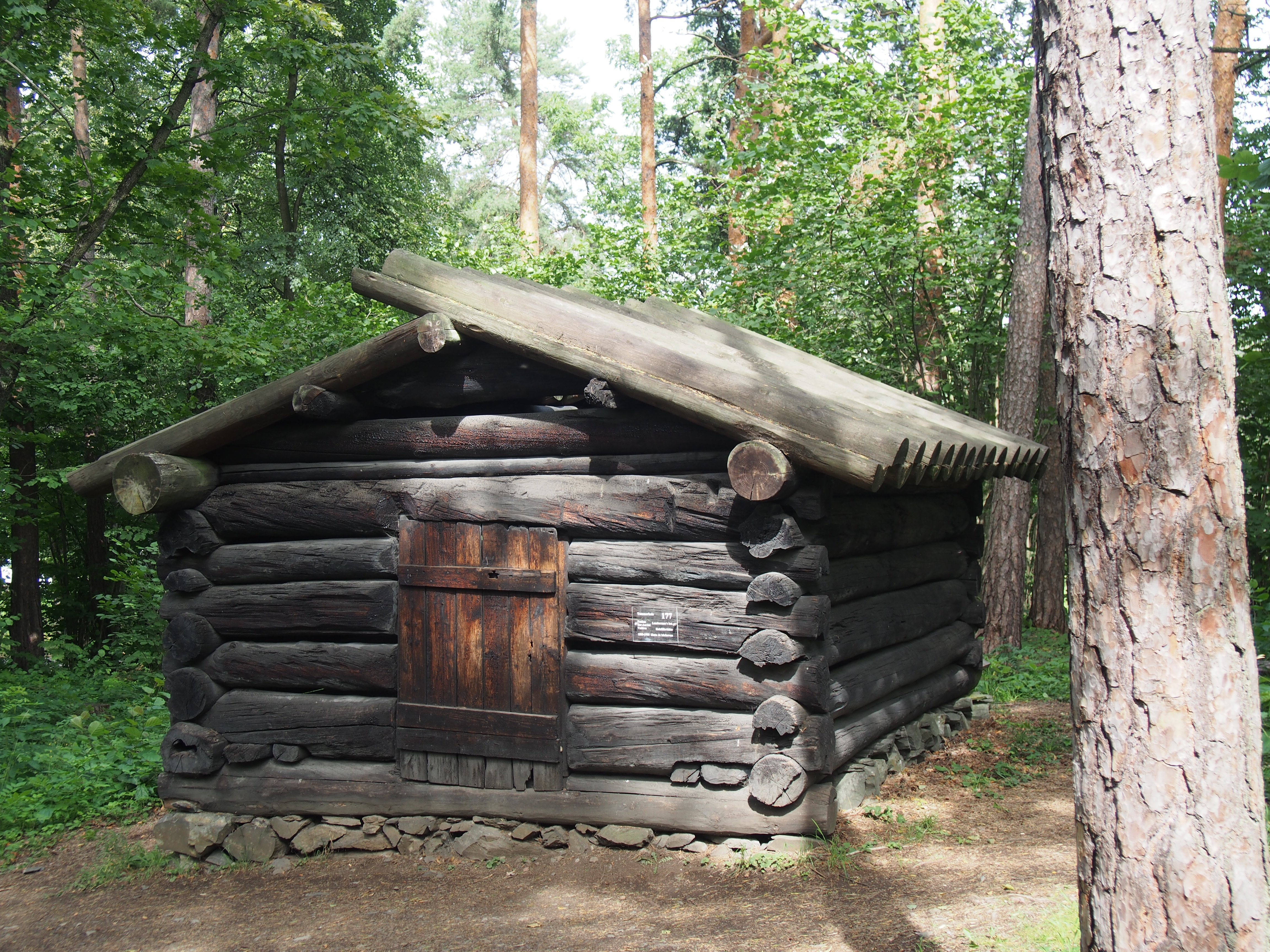
This a Byre from the medieval street – typical of the sort of buildings built during the 13th-15th centuries. This would have belonged to a big and better off farm/farmer as the logs forming the walls are a) on a stone base to keep them from rot and b) stripped of bark and squared off.The Interior of the right (East, I think) wing of the Farmhouse on the opposite side of the street – also a cut above what would have been normal with all those furnishings! Though, as you can see, still with no chimney – just a central fireplace and a hole in the roof with a cunning arrangement to allow the smoke to escape through vents without letting the rain or snow in.Like I said, a cut above. Separate beds and other high status furniture. The glass in the window is, of course, a much much later inclusion. Originally there would have been a holein the wall with a shutter and, possibly, a horn or oiled parchment ‘window’Other farm buildings across the street – with, as is common in Scandinavia, roofs of birch bark strips with sod over to provide waterproofing and water absorbency … as well as a degree of insulation.Some farmhouses and other farm buildings had a projecting to provide some shelter from rain/snow … others had a narrow covered and walled passage running along the main side of the structure facing the farmyard (or, in the case, the street they have been placed on). Inside, however, there are no corridors until much later … rooms open on rooms as is common throughout medieval Europe.One of the relatively few wooden stave churches that have survived … of in excess of 300 I believe that there are now only around 40 or so left. These were some of the very first churches after Christianity arrived and became the dominant religion and were mostly built, and owned, by local magnates … one of the reasons for the low rate of survival.The Interior and the Altar – the wall paintings are original and, though faded and somewhat damaged by age, are still easily visible and discernible … but the lighting inside was terrible and, of course, no Flash allowed.A more typical rural structure, very much like a US-style Log Cabin – this was a Woodsman’s Hut and remained a common style throughout the medieval period and beyond, especially in rural and remote areas.
The Viking Ship Museum
The next day I headed back to Bygdoy and went to the Viking Ship Museum which was literally less than a half a klick down the road from the Folk Museum.
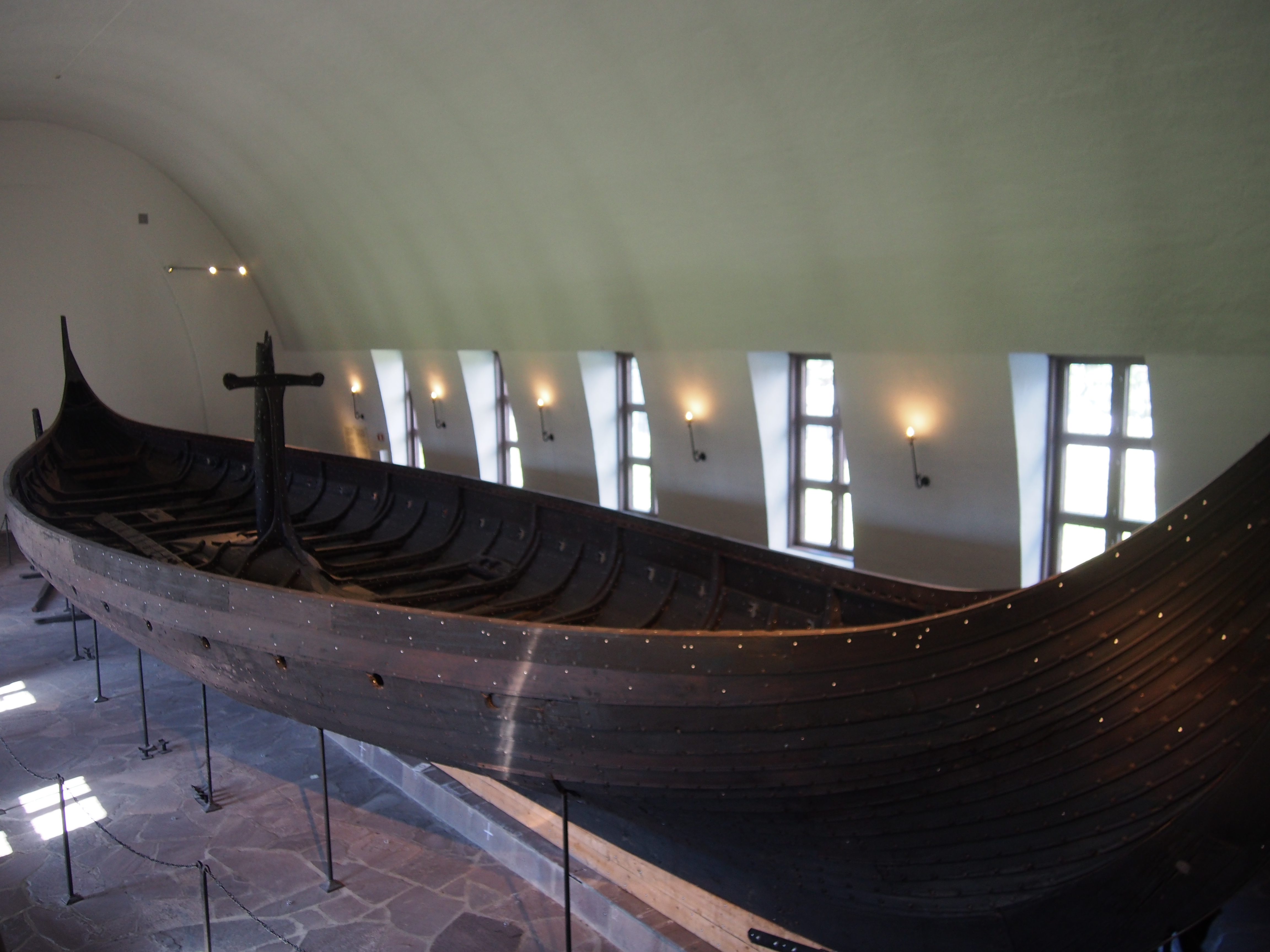
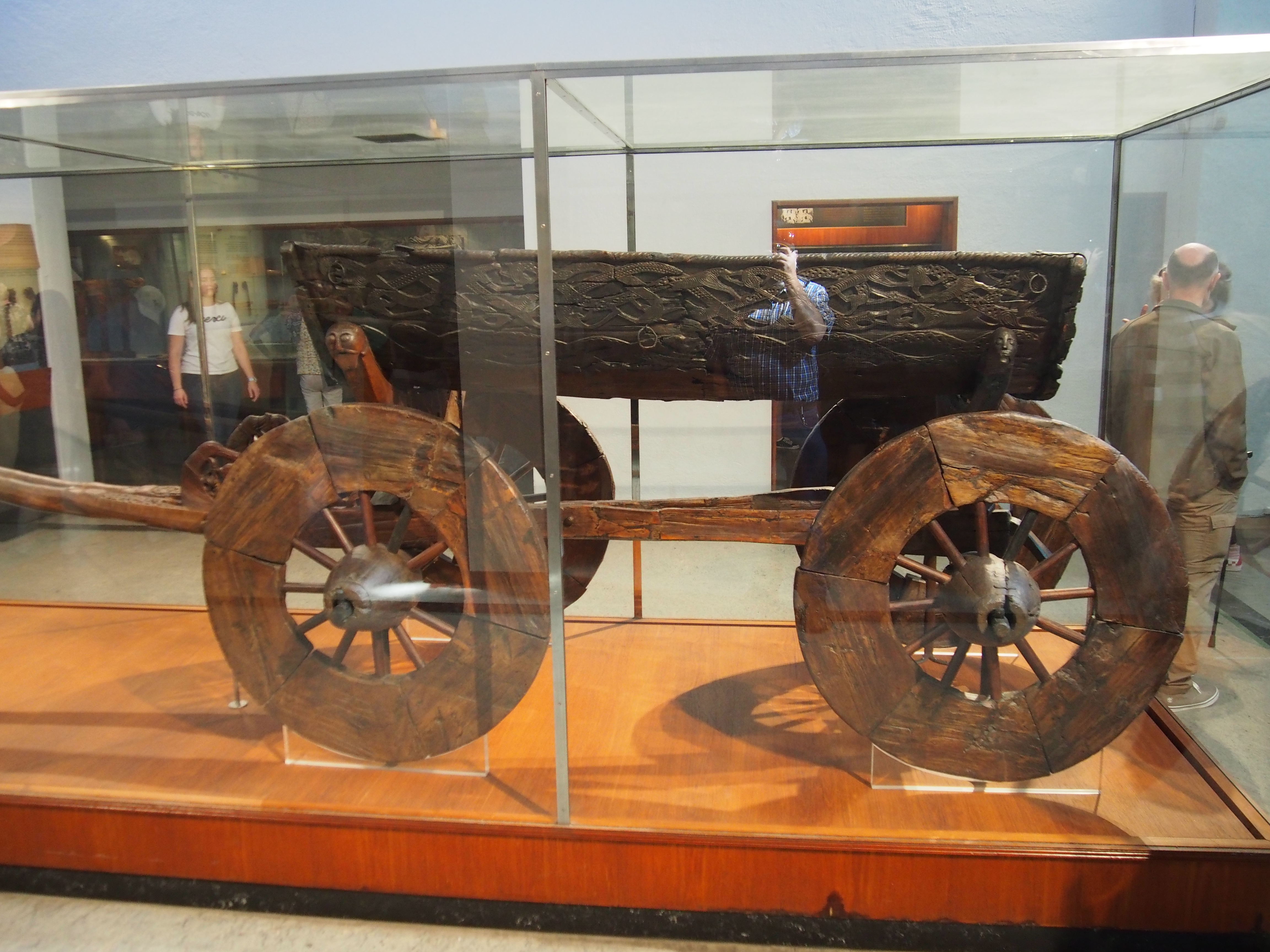
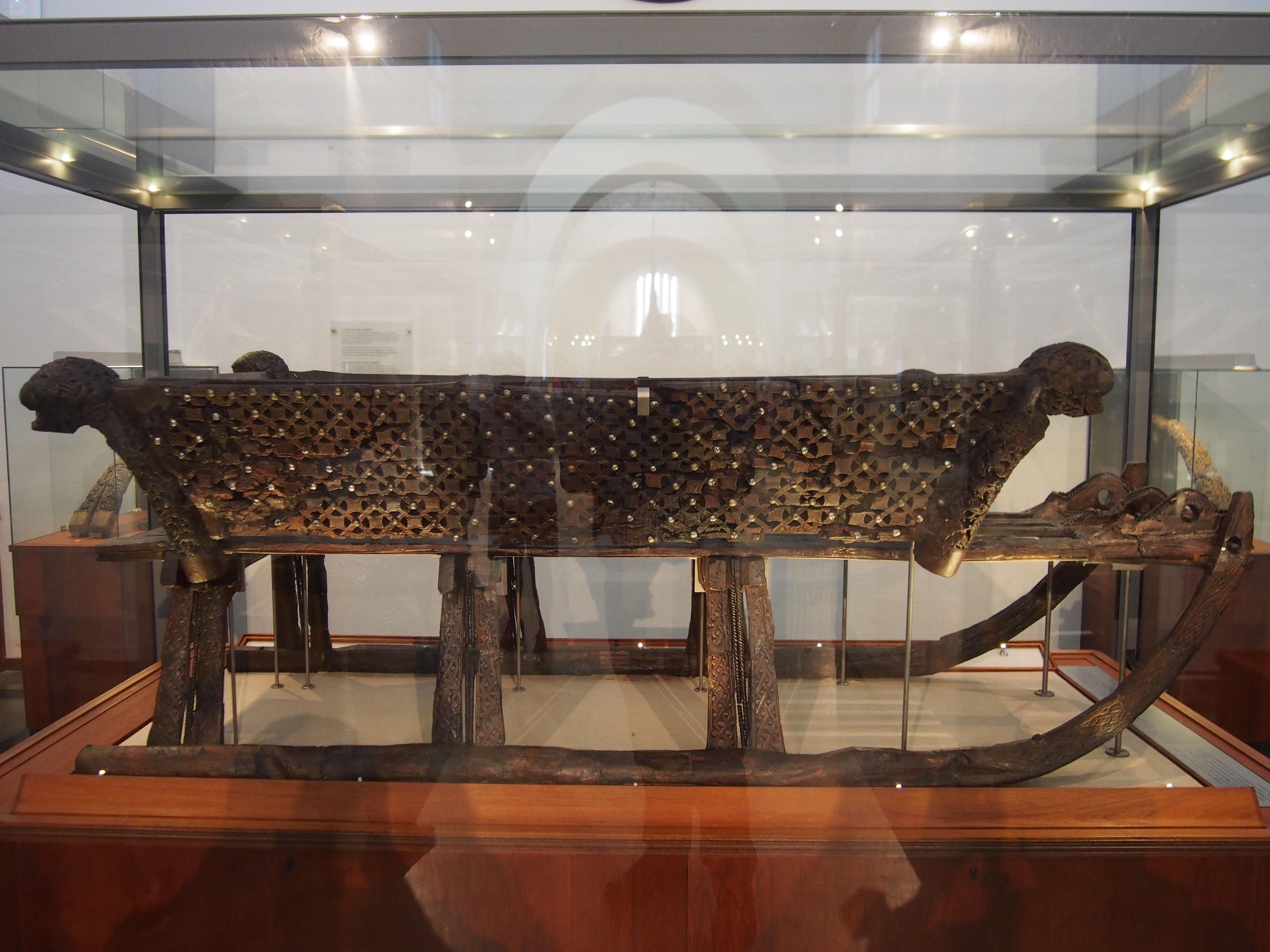
The first of the three ships held in the Museum. This is probably the best preserved (though not by much) and is definitely a warship … and probably not designed for long ocean voyages, so probably a coastal warship.The stern and steering oar of the above, from above.The second ship, from above. Not quite as well preserved, with a wider beam and likely a merchant vessel of sorts … certainly an ocean going vessel.One of the famous Viking era wheeled carts found with one of the ship burials – the highly carved and decorated bodywork indicate that this was never intended to be a mere farm cart, but the prestige transportation of a local notable for use on special occasions.There were also some sleds in the same burial as the cart – and they, too, were obviously intended to be prestige vehicles.
Where’s the third ship, you ask? Well, two things, it is kept in a section of the building that was kept very dark, so there was no way I could get a picture (no flash) and, in any case, it’s the least well preserved, by far … just the twisted timbers and part of the keel, barely recognisable as a boat.
































 phalanxgamesdesign.com