Chester and Wales

Chester (Roman Deva or, as they style it locally, Dewa) is much more commercialised and built up in the old central part of the city than I remember (of course, I was last there in the early 80’s, IIRC) – The Rows (two levels of medieval shops, one at ground level, one above with a covered walkway in front) have been heavily touristified … still interesting, but overdone.

The Grosvenor Museum has a good selection of local finds, mainly Roman, of course, as well as a period house at the rear with each floor/room done in a different period style … I gather the house is old enough for all the stuff from the late 17th century through to Victorian period are things it ‘lived’ through … though, of course, the furnishings aren’t original, though they are period.

One thing they had excavated which wasn’t back when I was here last (or maybe I didn’t head over, as it was winter, and snowing, as I recall) was part of the Roman Amphitheatre … the largest stone built north of the Alps, if the screed is to be believed. They originally (back in the early 80s) thought it originally had a wood superstructure for seating which was only later replaced with stone when the site was expanded … to make it the biggest & etc. Important for a major Legionary fortress and supply base, I guess.
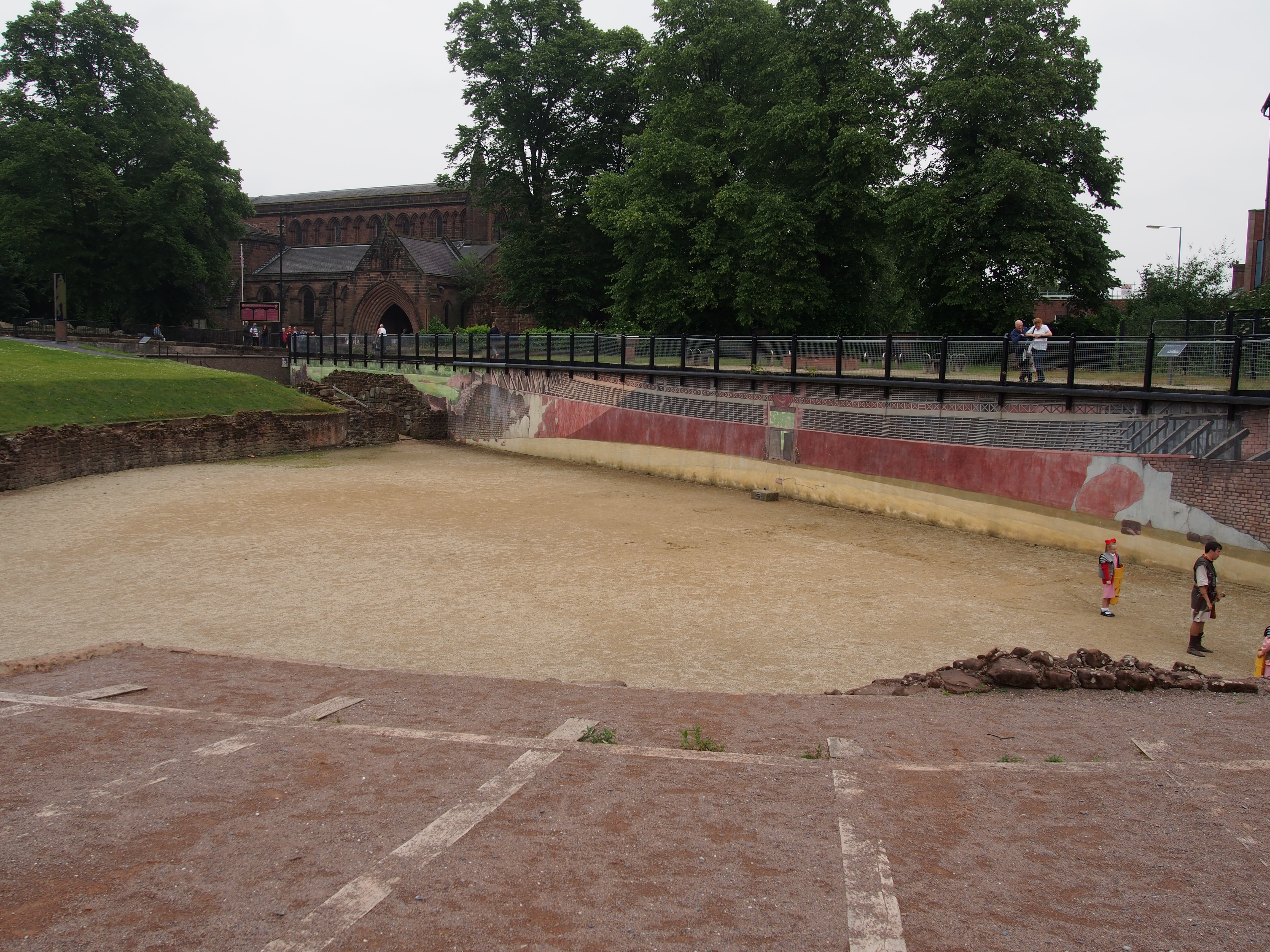
The excavated part of the Amphitheatre

Welsh Castles

The next day I headed off for Wales proper to see some of Edward I’s castles – I headed to the furthest one I wanted to see, Harlech, which I hadn’t seen that last time I was here (it was winter and, driving, the roads beyond Caernarvon were narrow and winding … and snow covered.

They’re still narrow and winding.

Harlech is, of course, mostly ruinous – but truly massive, even with it’s walls partly slighted. It’s now at least a couple of klicks from the coastline, evidently storms in the late 14th and 15th century silted up the inshore approaches and the village of Harlech is down below now on what was once a coastal port which made the castle hard to successfully besiege.
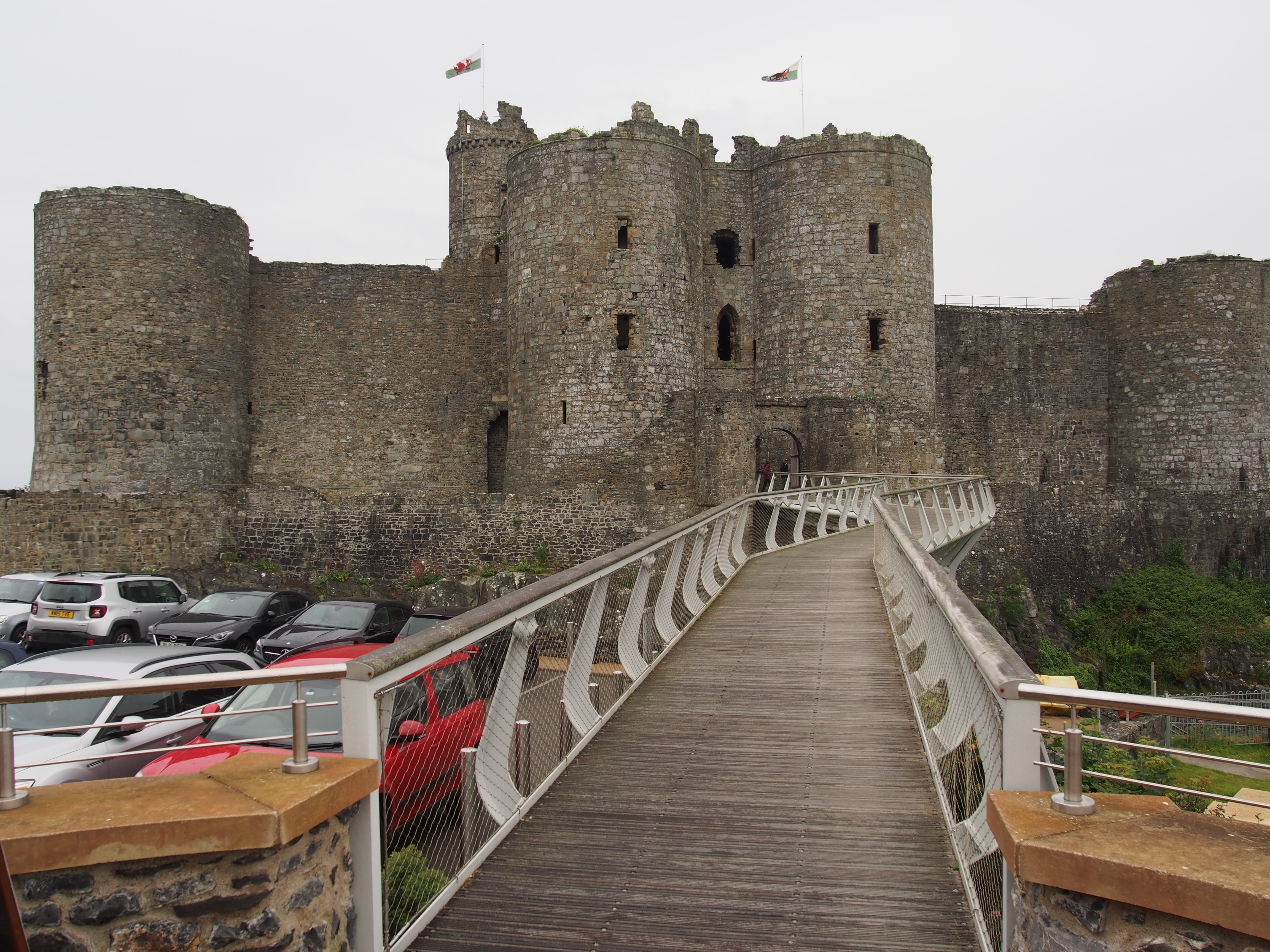
The Main Gate entered over the Dry Moat
That’s the Village below and the Coast in the distance (just short of the hills at the top of the photo)

Then on to Caernarvon which, unlike Harlech, was part of a walled Town’s defences … it’s also massive, but not as brutish and hulking as Harlech. It;s also more intact internally as it has been used much more recently for a variety of military and civilian functions.

The main gate of Caernarvon

Conwy is, like Caernarvon, part of the town of the same name’s defences – but is sort of between Harlech and Caernarvon in the brutishness stakes. It’s also only slightly less ruinous internally than Harlech, though the external walls are in somewhat better condition.
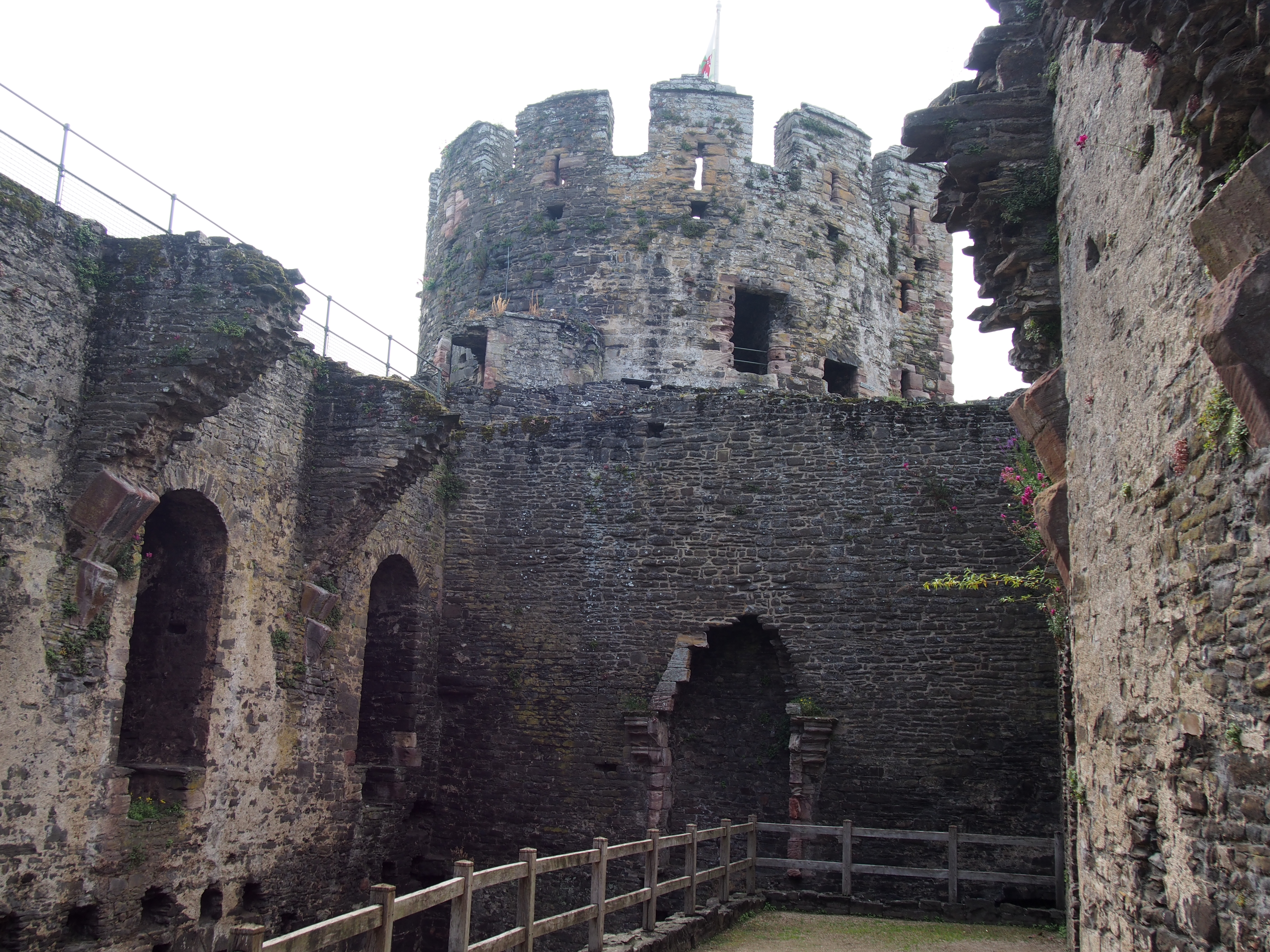
The modern approach to Conwy

It’s amazing that these castles were built, though not to completion (and some were never really used seriously) in such a short period of time (less than 20 years) … but Edward almost literally threw money at them. IIRC Harlech (or was it Caernarvon) cost around 8000 pounds in 14th century money … many many many millions in real comparative purchasing power today! And that was before the costs of the garrisons!
Leeds & The Royal Armouries

I noticed this on the way up to Scotland, but didn’t have time to hit it then – so I made a beeline for it when leaving Glasgow. Long drive. Boring.

Worth it.

The Royal Armouries have lots of medieval and post-medieval (and even a few bits of pre-medieval) armour … lots of weapons also. They have some of the best sets of mail armour I have ever seen, and their collection of partial plate armour from the 13th-14th centuries is also top notch.

These pieces are not at all proof pieces, they were intended for actual use – though in many cases, for the earlier periods, they’re sets or parts of sets that were owned by wealthy nobles simply because they were so bloody expensive.

Later periods, the 15th-16th century, and you start to get ‘munition’ armours – sets made relatively cheaply as the cost of producing iron and steel went down with improved smelting and manufacturing technologies and intended to be issued to the better class of ‘grunts’ … and you also get the really really really nice sets of armour intended for parade or display use by the ultra wealthy … including two sets made for Henry VIII for the famous Cloth of Gold tournament with the King of France.

Weapons are well represented, personal ones anyway – including lots of pistols and longarms from matchlocks onwards, including those intended for use by regular soldiers as well as those prettied up for wealthy hunters or as presentation pieces.

There was even a selection of modern (i.e. 20th-21st century) firearms, mainly oddball stuff or stuff confiscated by the Police or Customs, or used in crimes and seized by the Police as a result.

Manchester

Finding parking was a chore – most of the available spots (and being a Sunday there were quite a few) near to where I wanted to go was a chore, the Pay & Display ticket machines only accepted coins (and wanted ridiculous amounts) or phone apps, but I managed to find a multi-storey car park that had machines which accepted notes and coins and card payments.

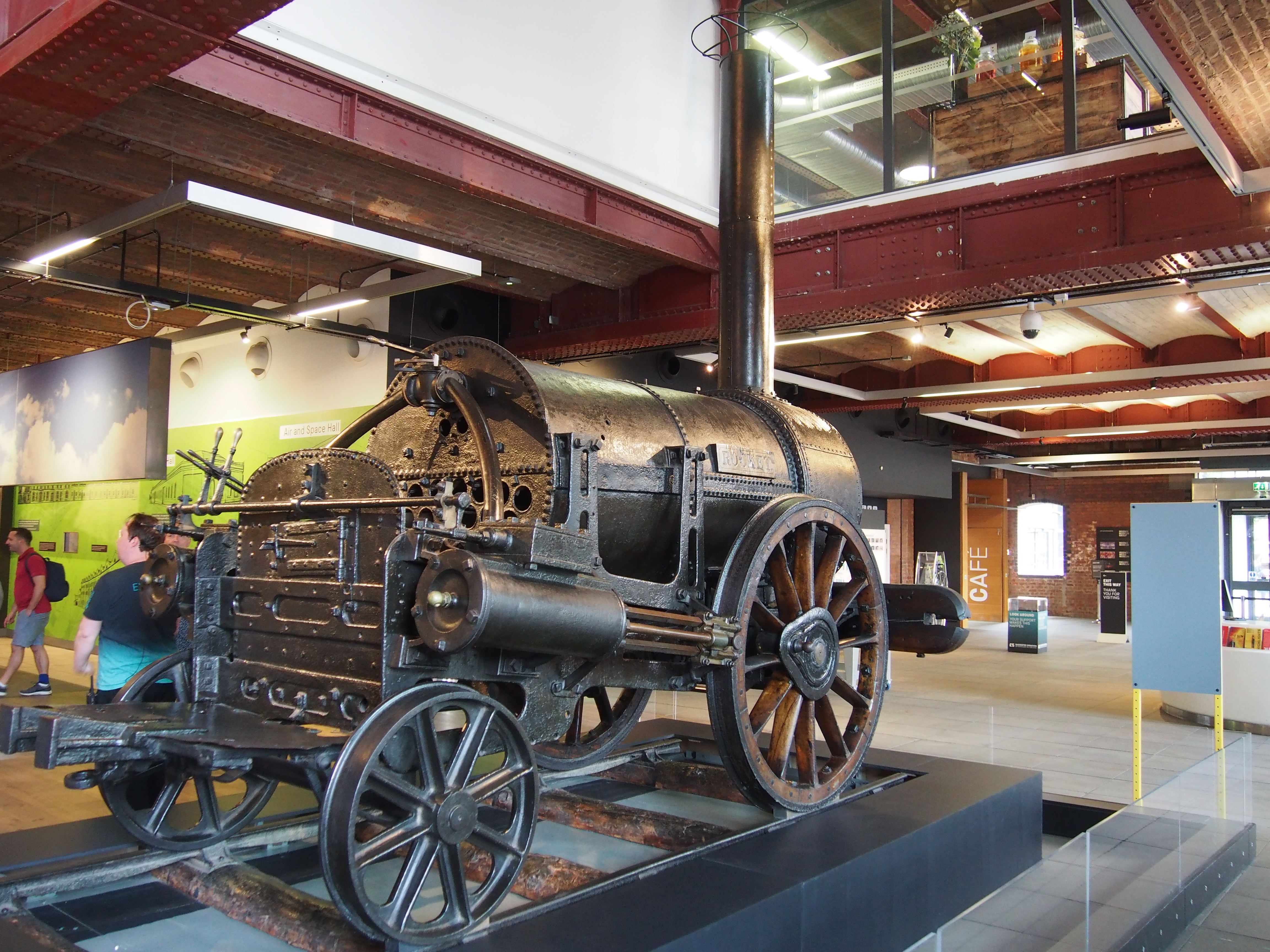
The Museum of Science & Industry, one of the two places I wanted to see, was an almost complete dud. Of the five Halls, three were completely closed for refurbishment and one of the two remaining ones (the Aerospace Hall) was full of displays all right, but a good 40% were either fully or completely covered in tarpaulins and invisible … still, it did have a nice Shackleton ASW/AEW conversion on display, and the other Hall open had the original Rocket on loan from the Science Museum in London.

The Rocket

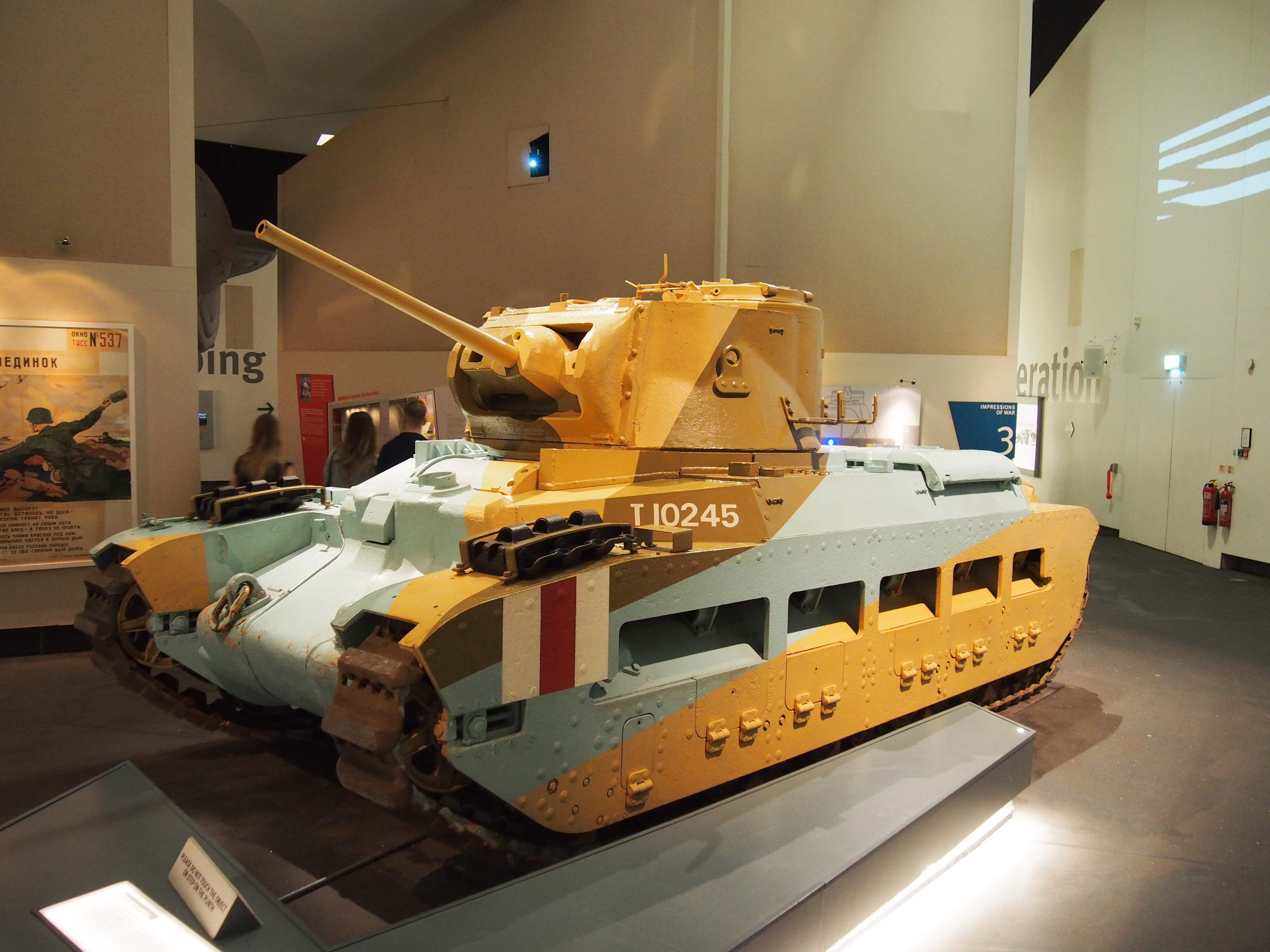
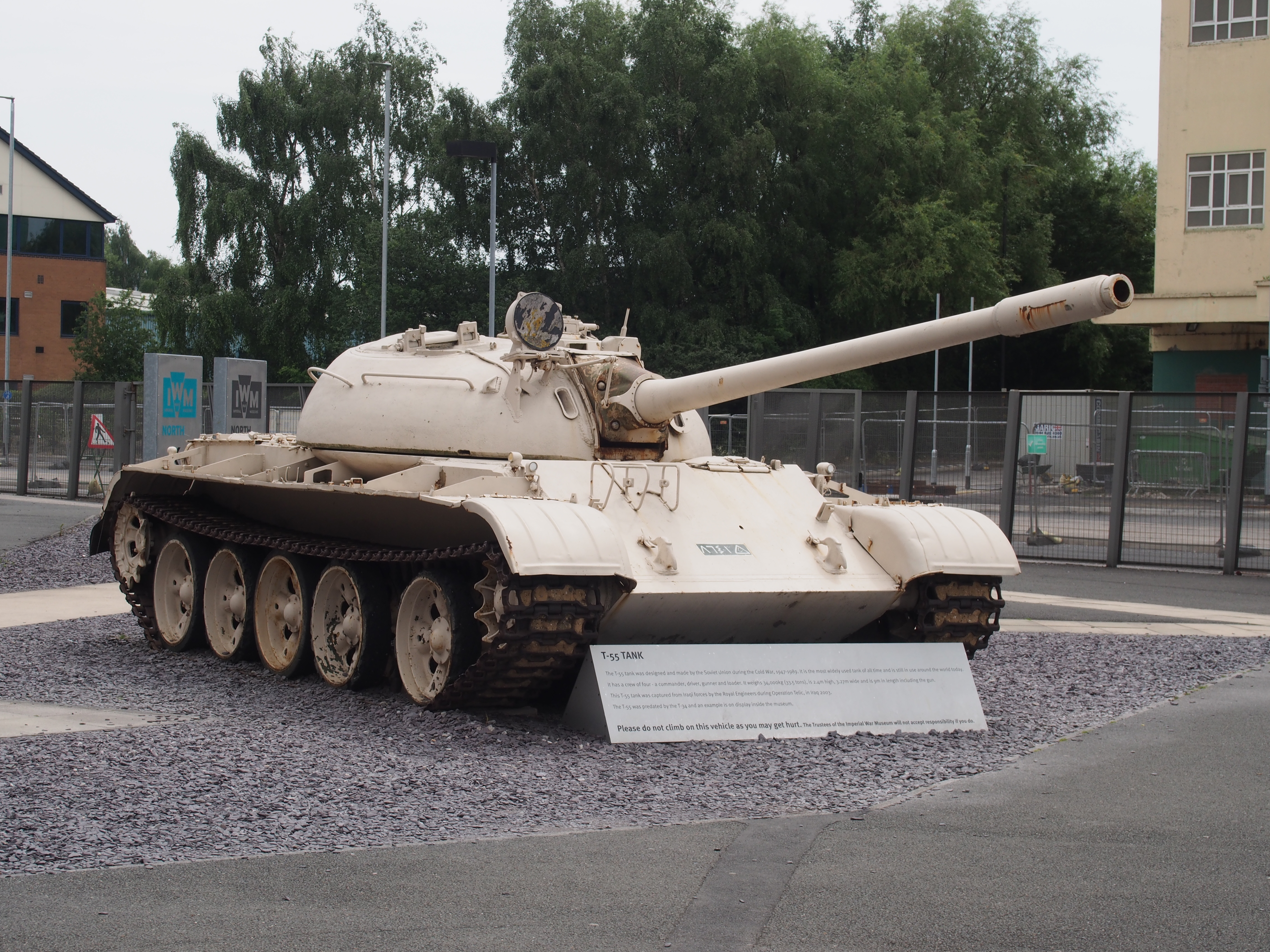
Fortunately the other place I wanted to see, the Imperial War Museum (North) was much better – a T-55 out front and a Matilda in Desert colours inside. There weren’t many big items, it was mostly display cases full of smaller things, but it was comprehensive, covering Britain’s wars from WW1 through to the Cold War, and there was a display on the Fighting (and awful consequences of that) in Yemen as well.

T-55 at the Imperial War Museum (North)
Matilda in Desert Camo

Glasgow

The last time I was in Glasgow (1988) it was so dismal and class-war-scarred that I just passed through.

This time things were very different. There’s been a lot of work done to clean up the city and the old slum(ish) areas are now refurbished (and probably full of bloody yuppies!) and look much more presentable.

My first stop was the new(ish) Riverside Museum which, though it had a fair chunk of Glaswegian historical memorabilia, including a whole reconstructed period street from the early 1900s (mostly), it also had a large number of vintage and veteran cars, trucks, motorcycles and even trains (including a apartheid era South African one!), buses and trams.

Unfortunately I wasn’t able to spend as much time there as I would have liked as the bloody Pay & Display machines only took coins (I didn’t have enough for their extortionate charges for long enough) and the only other alternative, voice recognition (so-called) on phone simply didn’t recognise Strine …

The next stop was the People’s Palace, built in the late 19th century to edify the lower orders … the front half houses an excellent social history museum looking at working life in Glasgow in (mainly) the 19th and early 20th centuries.

While some nod is made towards the ‘captains of industry’ who were involved in the development of the city, much more space was given over to a very left-slanted view of life and the struggle against said ‘captains of industry.’ Suffice it to say that ordinary people had it tough … even laws allegedly passed to help them (by putting limits on room occupancy for residences to prevent overcrowding, for example) were handled in the least intelligent and overwhelmingly insensitive way possible (for example, instead of building more inexpensive housing to deal with overcrowding the powers that be put in place a system of inspectors who had the right to enter any [lower class] rented premises any hour of the day or night to physically check the number of people present didn’t exceed the number that it was supposed to have … and they evidently routinely rousted households out of bed to do so every night of the week!).

No sign of Nessie!

Mainly because the parking lot at Urquhart Castle was full. The road through the Great Glen runs alongside the lake and there is limited space between the lakeshore and the steep hills on the north side, so if the parking lot is full, that’s that.

Fortunately there were the odd lay-bys here and there and a few were both empty (or nearly so) of vehicles and had a good view of the Loch …

It was cold and dismal and there was a bit of a wind-induced chop on the Loch … so either Nessie was sitting in her centrally heated underwater cavern or, well, she was keeping her head low … like a U-Boat schnorkel.

Dundee & Scone

Heading north from Edinburgh I drove to Dundee where there is a brand new (January 2019) branch of the V&A (Victoria & Albert) … unfortunately it was much overhyped. A biggish modern building but it seemed to be mostly empty space. One free exhibit on the second floor about Scottish design that would have fit into one of the medium sized rooms of the real V&A back in London was OK, but rather underwhelming.

There was also a paid for exhibit on Video Games … maybe that took up the remaining 50% of the space, but I suspect not (no, I wasn’t that interested and didn’t fork out the money).

On to Perth (well, Scone Castle, rather) and the Stone of Scone – the little mausoleum Chapel where the original was held before the damned Sassenachs stole it … and where many Scottish Kings were crowned, married or buried. Tiny little place in the grounds of Scone Castle

This is a early 18th century (with later additions) Gothic style baronial mansion rather than a castle, though it has castle-like features (which is what this gothic style is all about anyway) and looks the part. The original Lord, when what was the first stage was finished, decided that the village of Scone (about 100 meters down the road, on his land) was too close, or the villages were not tugging their forelocks sufficiently or sufficiently frequently, so he had a new village built several miles down the road and then had the old one levelled … except for the Mercat (Market) Cross and the Old Graveyard.

Nice work if you can get it, being Lord of the Manor, hey?!?!

The Mausoleum/Chapel
The main Front (the building extends off to the right) Entrance to the ‘Castle’

Edinburgh – Monday and Tuesday

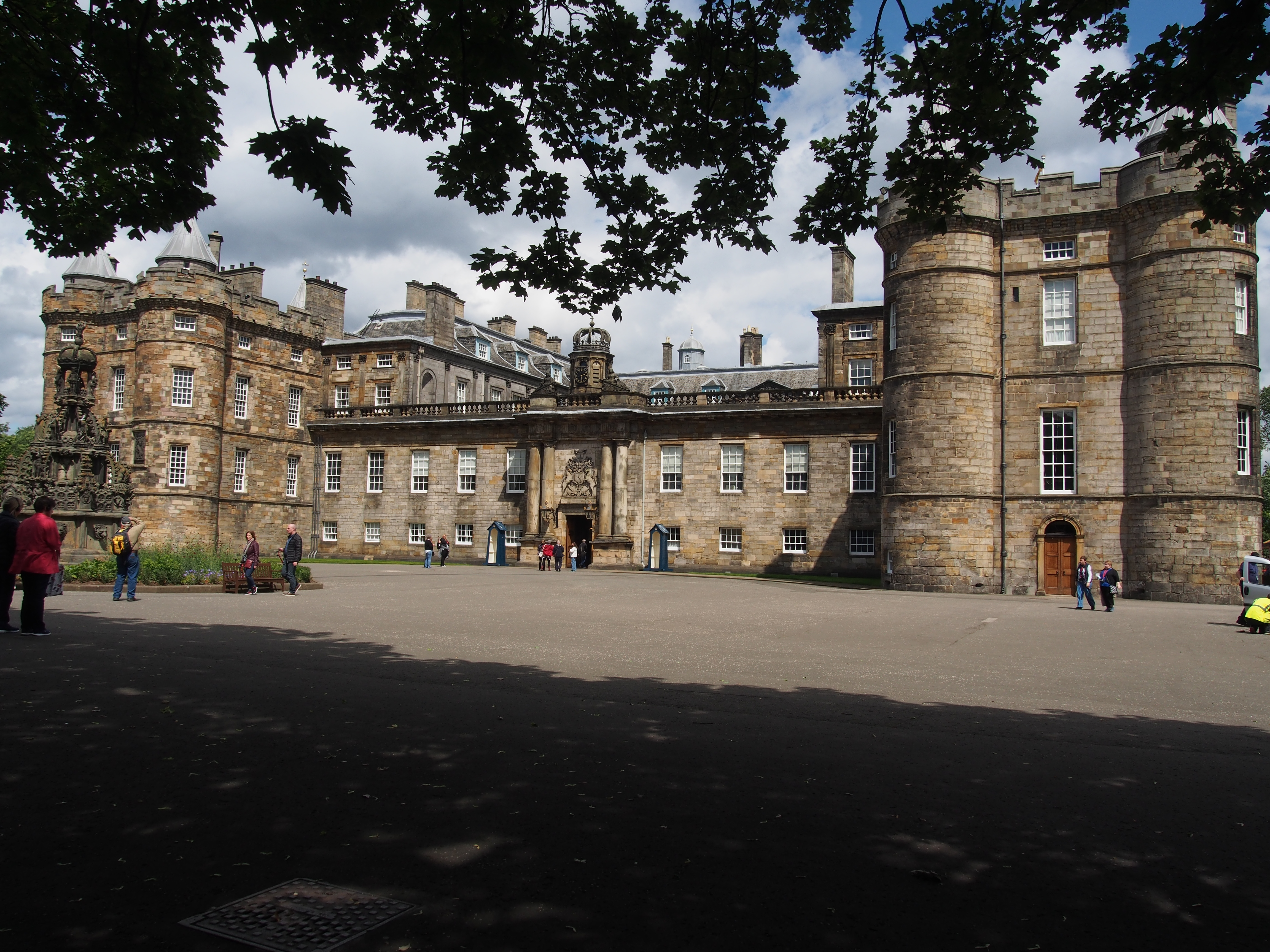
I headed north from Carlisle to Edinburgh and arrived early enough to leave my car at a Park & Ride and take the Bus into town, where I spent a leisurely afternoon strolling down the Royal Mile and doing a tour (self guided audio) of Holyrood House/Palace including the room where the bloodstains from the murder of Mary I’s Italian secretary took place (her husband, Lord Darnley, was a real piece of work – a drunken bastard who got into his head that the secretary was a threat somehow, so he and a whole bunch of drunken friends burst into Mary’s private chambers and stabbed him to death with dozens of blows).

the main Front Entrance to the Palace

Holyrood was originally a Monastery but was much more comfortable than the nominal Royal Palace at the top of the volcanic outcrop incorporated in Edinburgh Castle and so always had rooms (comfortable ones, of course) for Royal guests … and gradually developed into a very nice (and quite comfortable, for the period) Palace … and has been the Royal’s Official Residence in Scotland since, I think, Vickie’s day.

The next day I headed back and headed up the Royal Mile – visiting the National Museum of Scotland which is quite large, perhaps not as large as the British Museum, but pretty darn close. Even confining myself mainly to the North Wing and its examination of Scottish History since the earliest times meant I could only do a survey.

Lots of things. For example, a complete Newcomen Steam engine of the same type as the one in the Powerhouse (and they actually mentioned that!), weapons from the medieval era, relics from Robert the Bruce and William Wallace’s struggle against the bloody Sassenachs, even relics of the Witch hunting craze (somehow RCs were behind it all, in an attempt to undermine the Kirk … these days they’d blame it on the ALP!)

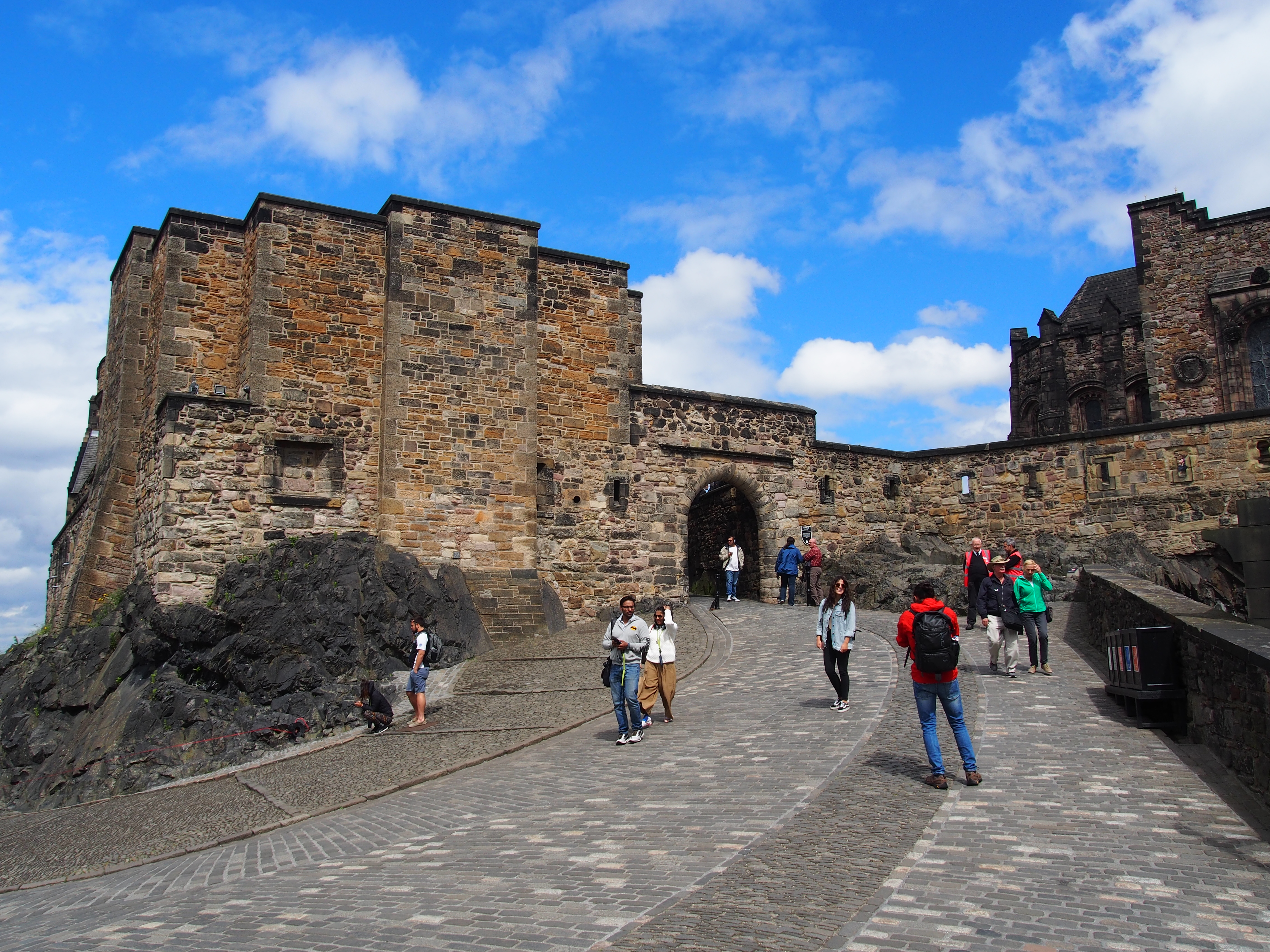
Then off to Edinburgh Castle which was horrendously crowded … and this isn’t even the beginning of the peak tourist season. Cold, windy and exposed – you can easily see why Holyrood House was the preferred residence. Most of it is post-medieval, dating to after the ’45 or even later, but it still feels cold and medieval.

The main (modern – 18th/19th century) Gate to the Inner Bailey of Edinburgh Castle (and, yes, the slope is that steep or steeper all the way up, pretty much … see why Holyrood was preferred?)

Beamish

Nope, not a quote from Lewis Carrol – not a Snark or Jabberwocky anywhere in sight.

Beamish (Saturday 16th June) is The Living Museum of the North just outside of Durham. Think something like an oversized Old Sydney Town done with a heck of a lot of money and time (it was evidently open when I was last through here in 1988 but it can’t have been fully registered on thr tourist trail … or at least it didn’t register with me).

Set on a massive site there are several themed areas – a 19th Century Pit Village (showing the working conditions down Mine … and there’s a section of an old drift mine [i.e. one driven into the side of a hill rather than down a shaft … it gets down to 4’8″ and I can tell you that as 6’1.5″ that was bloody uncomfortable. Some of the mine faces (not there, but in the same coalfields) got down to 18″

Mine owners were, of course, complete utter bastards … all piecework rates, and they didn’t pay for travel time from the mine head to the coalface which could be a two miles or more. So that nominal 8 hour shift might be closer to 10 hours with travel time. Miners had to buy their own tools, even!

The Lamp Store/Workshop for the Drift Mine (i.e. driven into the side of a hill and all on one level) – the first generation of Safety Lamps couldn’t be re-lit in the mine, so the Miners had to walk all the way back to where they were issued and repaired if they went out … and were docked time for doing so (the coalface could be up to a couple of miles in from the entrance)
Steam Engine house at the shaft Mine (off frame to left).

A 1900’s Town and Railway Station with shops chock full of actual 1900’s brand goods (not for sale) plus the usual touristy repro stuff … Co-Op stores for Groceries, Clothes, Hardware … a fully equipped Garage with a fair chunk of era appropriate Motorcycles on display.

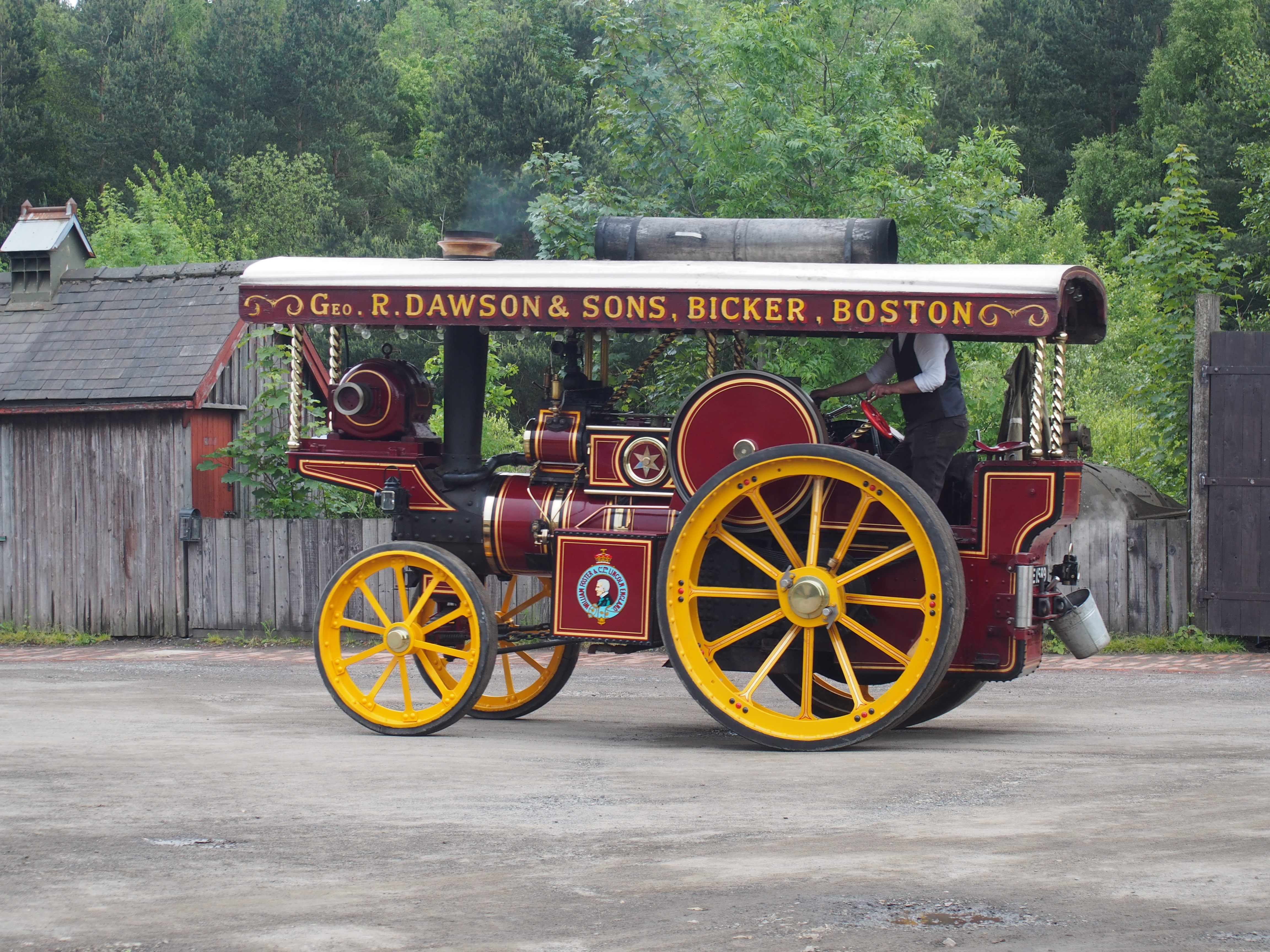
One of two Traction Engines that were actually driving (slowly) around the front courtyard of the Shaft Mine facility while I was there.
The train Station … the train works but there’s only around 150 meters of track for it to run on (off frame behind me)
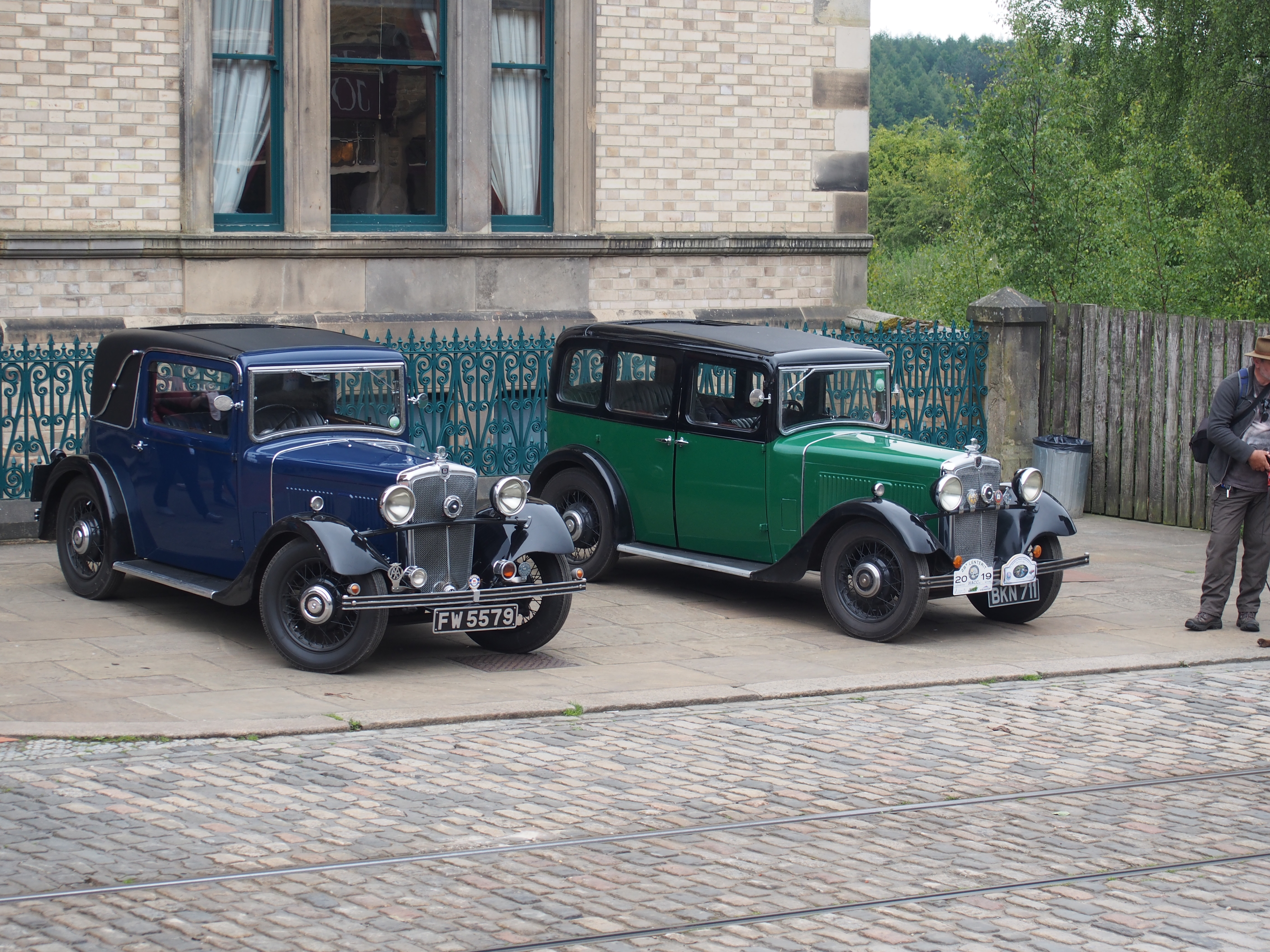
Some of the Veteran cars onsite

Then there’s a 1940’s Farm showing the joys of working on the land in wartime with rationing etc.

A 1820’s Manor House with a Tramway using a very early steam train. The Manor House was dark and gloomy on the ground floor (not or little artificial light) as were the servant’s quarters squeezed in at the rear of the 1st Floor … but the family rooms were both spacious and well lit with large windows. Furnishings were sparse – this being just at the very beginning of the Industrial Revolution when ‘things’ hadn’t quite yet become so widely available and cheap that you could fill a room with them.

The Tramway – like the Steam Train, it runs on only about 150 meters of plateway.

There were parts of some of these where expansion work was going on and a large central portion is a 1950’s Town under construction.

I only wish I could come back and see it all in several years time. <sigh>

Yorkist or Lancastrian?

On Friday I headed off to York and arrived at the Park & Ride where I left the car and took a bus into town …

First stop, the Minster … the Minster itself is pretty ho-hum. It’s nice enough as far as late Medieval churches go, and well enough preserved, but its real selling point is access to the Undercroft.

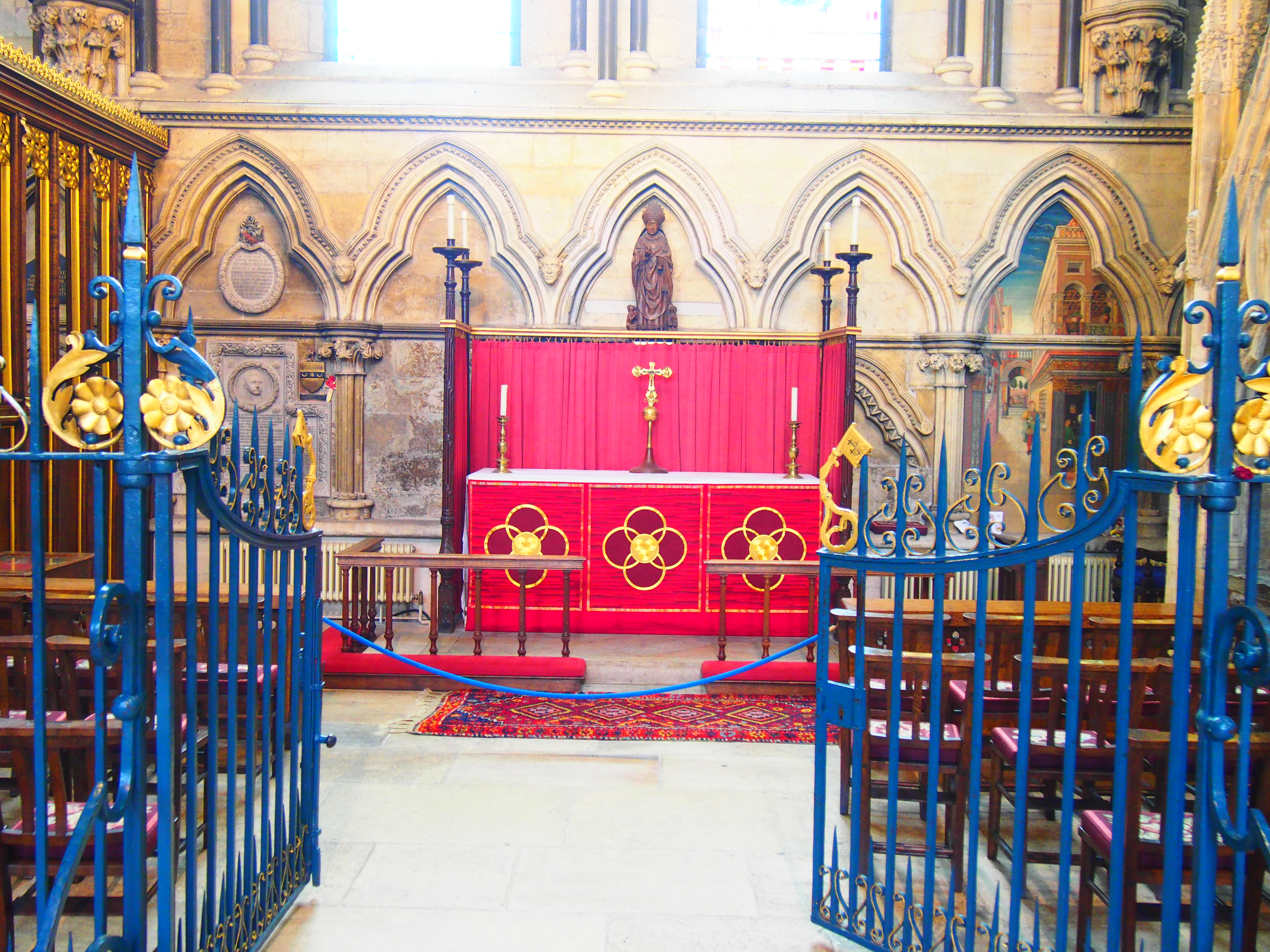
An example of the interior – a Late Medieval Chapel still in use.

In the 1970s they had a real problem, there was a real danger that the central spire would collapse because the foundations for the Minster were built on foundations of earlier, smaller, iterations and were a mix of too small and not strong enough to support the weight.

Engineers were called in and they basically excavated down underneath and poured concrete collars around the pillars supporting the tower, running thick steel reinforcing bars through them secured by giant bolts.

In doing so they uncovered a lot of unexpected things … bits and bobs from the earlier (smaller) iterations of the Minster and even the corner of the old Praetorium (HQ Building) of Eboracum, the Roman Fortress that was the centrepiece of Roman York … the Undercroft lets you see a lot of the foundations in situ as well as presenting some of the more interesting remains also found, such as bits of wall paintings, the usual broken pottery, coins, bits of ornamental stone carvings etc. It’s a fascinating walk back through history (well, to me it is!).

Then I headed off to the Jorvik Viking Centre which was full of animatronic whizz-bangery depicting reconstructions of some of the buildings found on the site 40-50 years ago. Very Disney-ish.

The attached museum was much better in some ways as it had a large chunk of the finds made at the site and tied them in to Jorvik’s place in England and the wider Viking (and Western) world.

Finally, to round the day off, I headed over to the British National Rail Museum which had expanded markedly since I was there in 1988 – several Royal Trains (well, the Carriages, at least, the Rail companies provided locomotives as needed) from Queen Victoria through to the one inherited (and at least in the past) used by Lizzie II. Oh, to travel in style!

The Flying Scotsman, two different replicas of The Rocket (one cutaway, one actually used in re-enactments). Lots of other historic (well known and otherwise) locomotives … a WW1 Ambulance Train display, one of the engineering vehicles used in the construction of the Chunnel, one of the Eurostar trains, a Shinkansen … and much more.

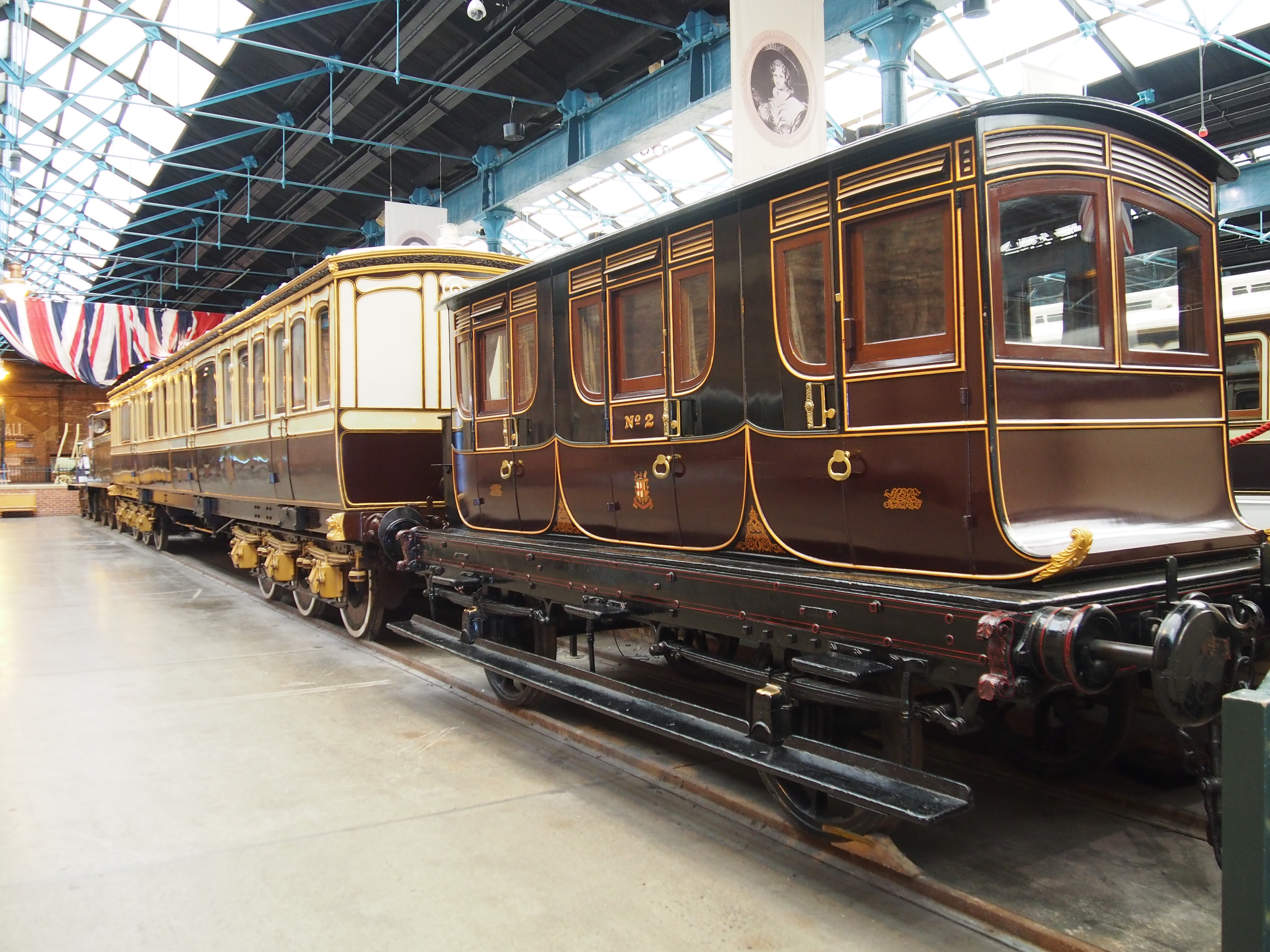
Two Royal ‘Trains’ – the rear one was the first one ever used by, IIRC, one of Vickie’s relatives. The one in front was a later one used by Vickie and at least one of her kids.
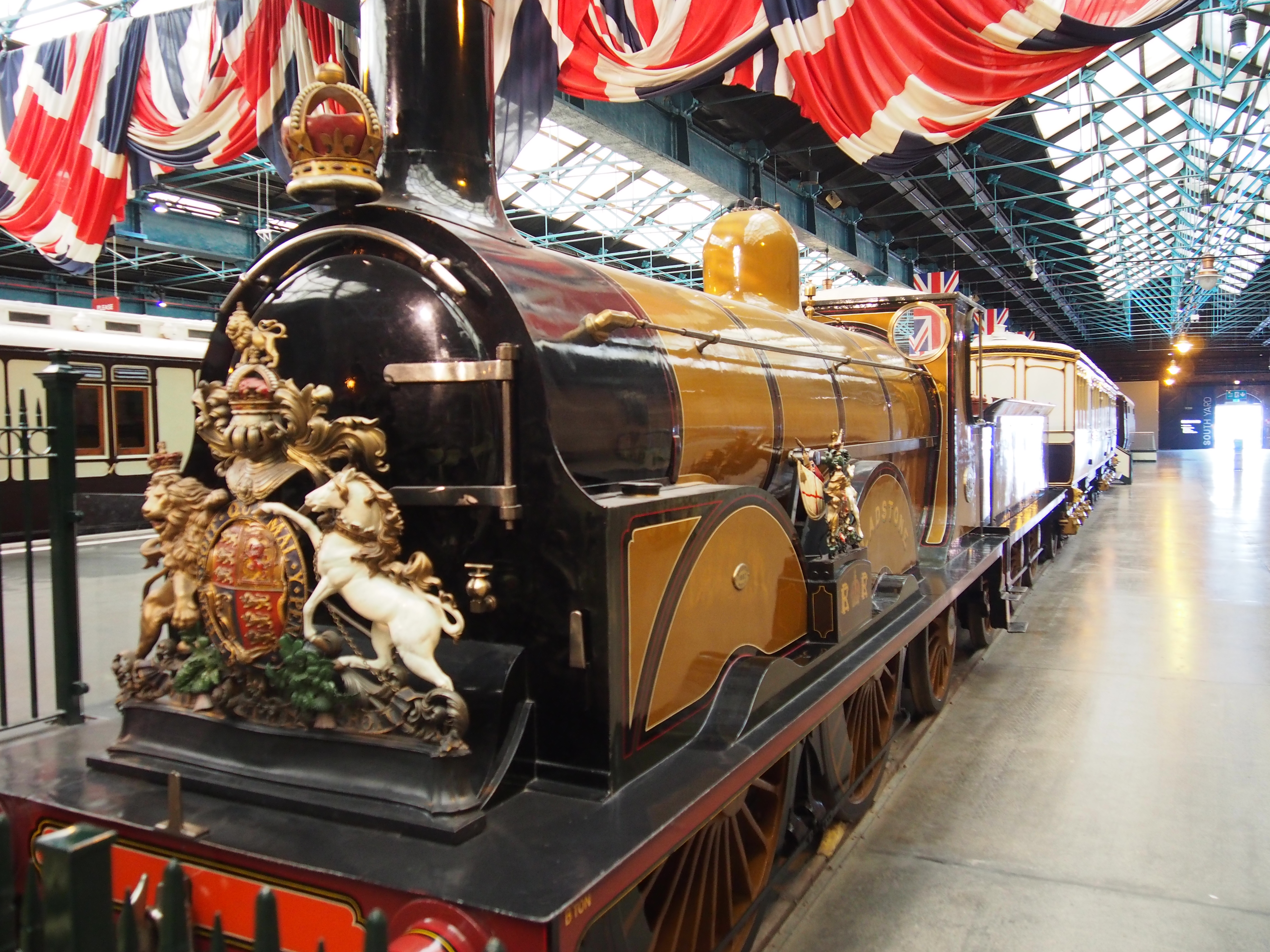
The Royal ‘Trains’ were merely the private carriages – the Royals paid the RR Companies to allow them to use their track and the RR Companies provided an ‘appropriate’ Locomotive (aka whatever’s available) … it could be a fancy named speedster such as the one above or it could merely be a general workhorse more used to pulling goods cars.

King’s Lynn (Porthaven)

Wednesday 12th and I head off for King’s Lynn, the medieval port town on which Porthaven (from the Ithura & Porthaven book, the third of the Orbis Mundi2 Kickstarter rewards) was modelled.

Not a lot of the medieval town survives … only one of the churches (St. Mary’s), all the others were associated with various Monasteries and were destroyed in/during/after the Dissolution.

Still, I saw the old Hanseatic League HQ building and one of the (repurposed as a Wine Bar and Function centre) other Warehouse Buildings and spent an interesting 45 minutes in their Civic Museum … pride of place in which is Woodhenge a circle of wooden posts ringing a massive tree stump all erected for an unknown purpose ~4000 years ago, covered over by climate change in the intervening period and uncovered by climate change more recently.

Then on to Leicester – and, bloody hell, along the way a stone must have been thrown up at the windscreen of the rental car and cracked it on the offside, around 12″ across, so I had to head into Leicester proper (traffic as bad or worse as a Sydney rush hour) and have it swapped over … so now I have to wait to find out what the cost will be so I can claim the excess back from my insurance (I didn’t go with the Avis insurance, which would have been easier, but about 30-40% more expensive).

Anyway, I have some gaming related business to do tomorrow and then on to York where I will spend two nights and at least one full day!

Phil

Colchester

Headed off to Colchester today – the site of the Temple of Claudius erected by the Romans to commemorate the invasion under that Emperor’s auspices, destroyed during the Boudiccan revolt and then rebuilt by the Romans to last until it fell into ruin as their control of Britannia waned.

Completely ruinous by the time the Normans came along, they built one of the largest castles (of the time) on the remnant foundations.

It’s still in pretty good nick, too.

The Castle itself has formed the basis of a well regarded archaeological collection of local iron age, Roman, Saxon, Norman and more recent finds and the Curators have been involved in authoring or co-authoring a number of important archaeological works on the region.

Lots of broken pottery and, indeed, broken bits and bobs in general. A fair chunk of coin and jewellery from hoards, some dating back to the Iron Age, some to the Boudiccan revolt, and even one to the Civil War.

One of the better preserved pieces – a Roman mosaic from one of the regional finds held in the museum, not something found on the site of the Castle/Temple

Then on to Norwich.