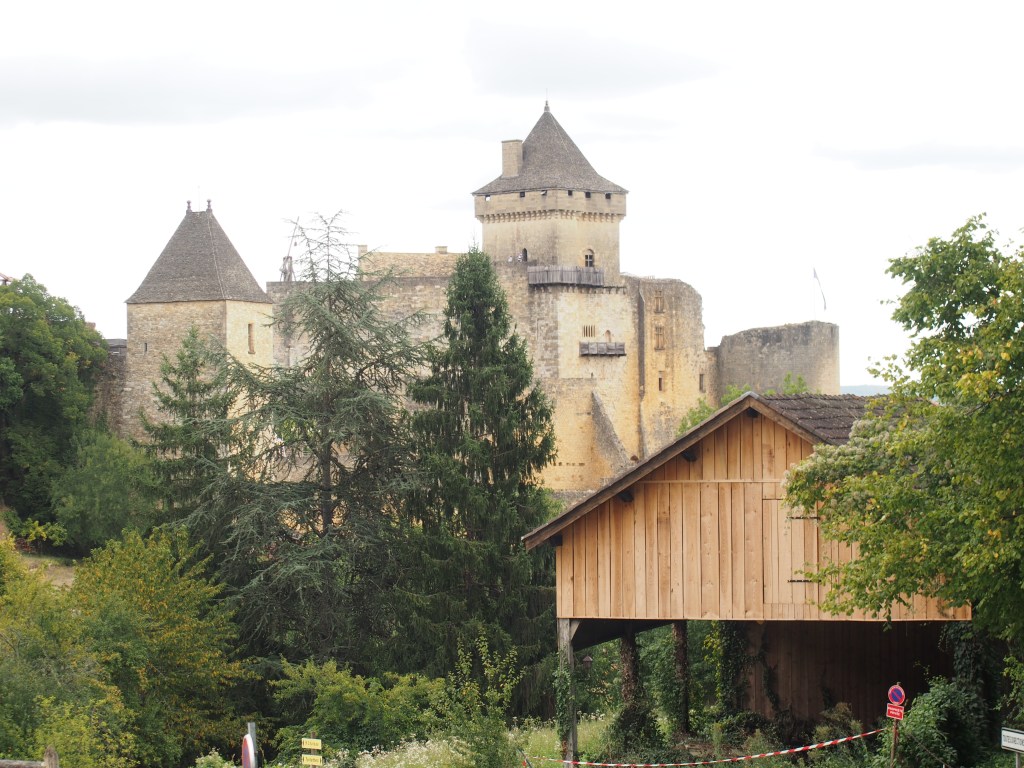
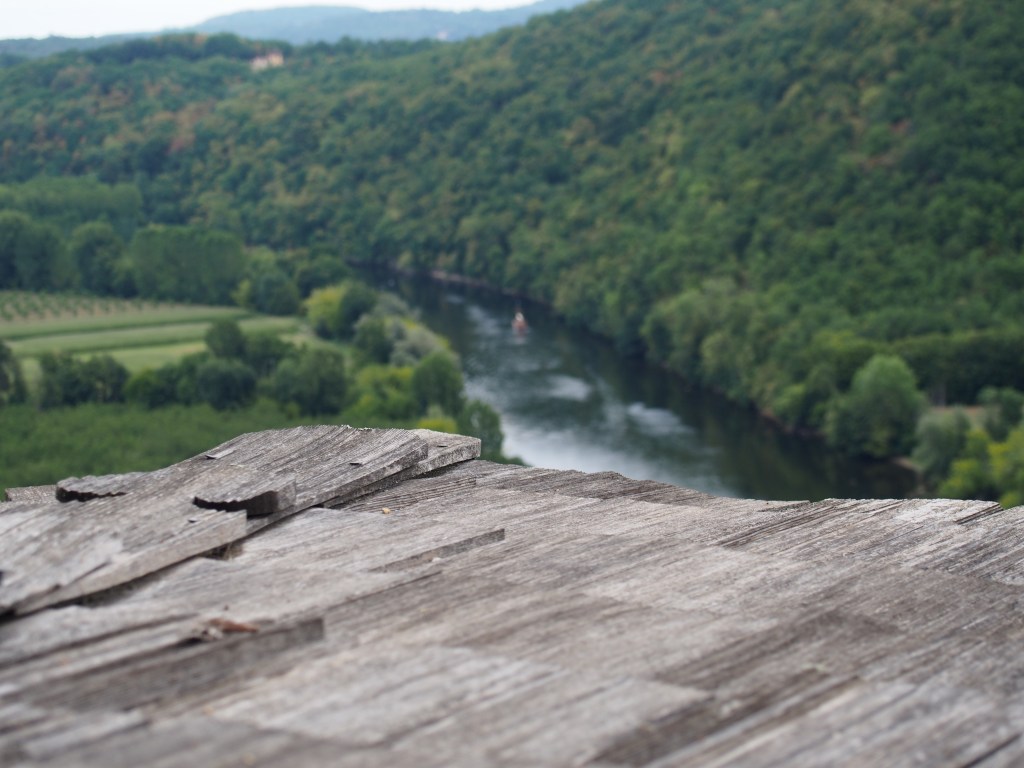
This castle sits on a crag that overlooks the Dordogne River and has an interesting history – it was used during the Albigensian Crusade and was taken from the Cathar supporting de Casnac family by Simon de Montfort’s forces … then retaken, and the defenders all executed by the de Casnacs.
Later, during the Hundred Year’s War it was held by forces loyal to the Plantagenets facing off castles over the river who were loyal to the Kings of France … but, eventually, of course, it was rendered irrelevant and gradually abandoned and fell into ruin.
In recent decades the owners (it’s privately owned, not a state monument) have restored it to how it would have looked during the late medieval period and have turned it into a sort of half-baked museum to medieval weapons and siege equipment (it’s OK, but it’s a bit hit or miss).
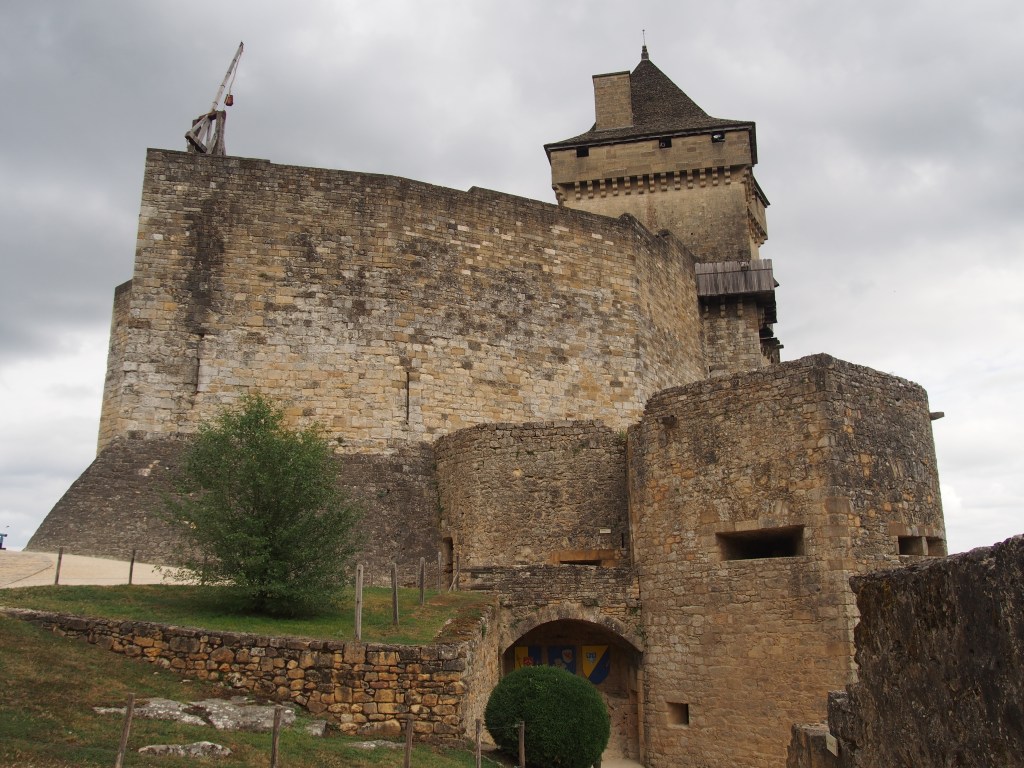
The Castle from the car park, slightly above and behind it … the slope down is bad, the slope up to the Castle entrance is horrendous … and let me tell you, the return up the slope to the car park was horrible. Anyone who tried to take this place had their work cut out for them even just getting themselves and their gear up the great bloody hill!View down to the Dordogne valley below.The current main entry – which wasn’t the main entry back in the day.The entry to the Inner Bailey and the Keep(the square Tower) from the Outer BaileyTwo Trebuchets from their collection of working Siege Engines, sitting on a platform above the Inner Bailey. They evidently work … but not being high tourist season, they weren’t being worked while I was there.
Abbaye de la Sauve Majeure
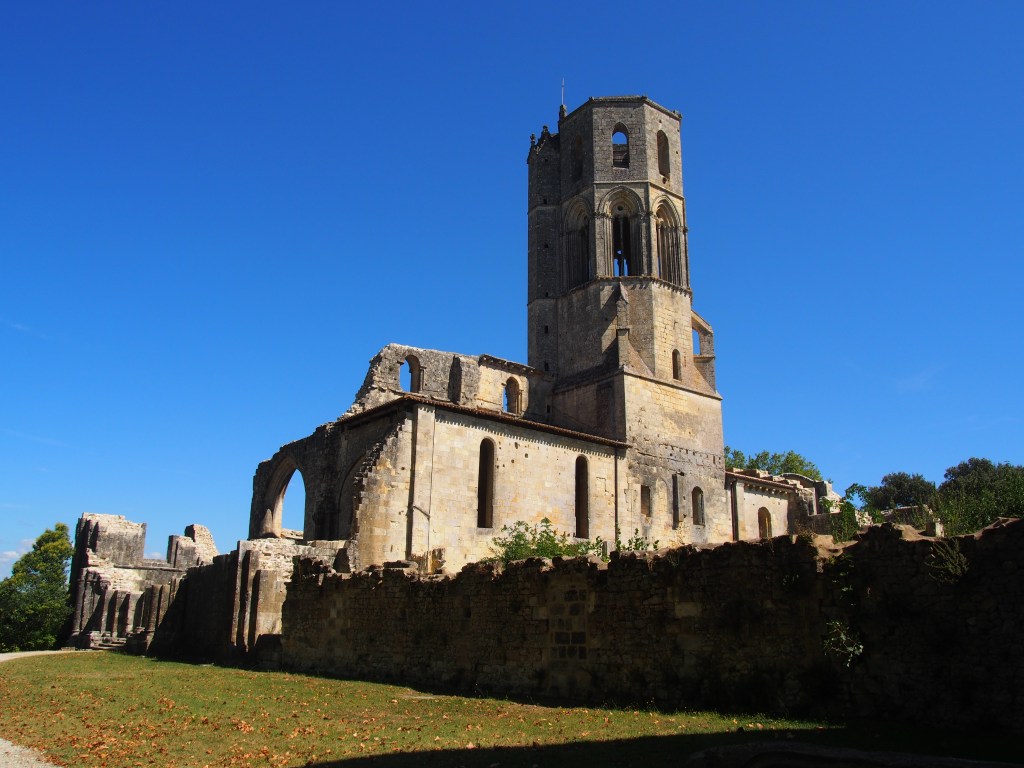
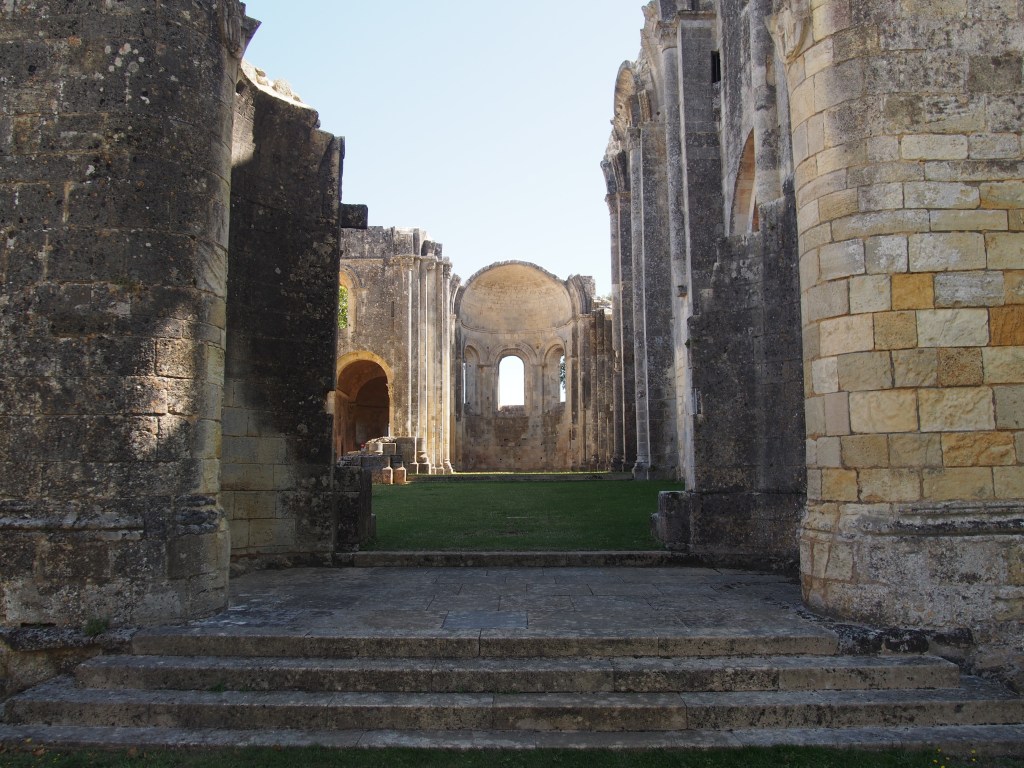
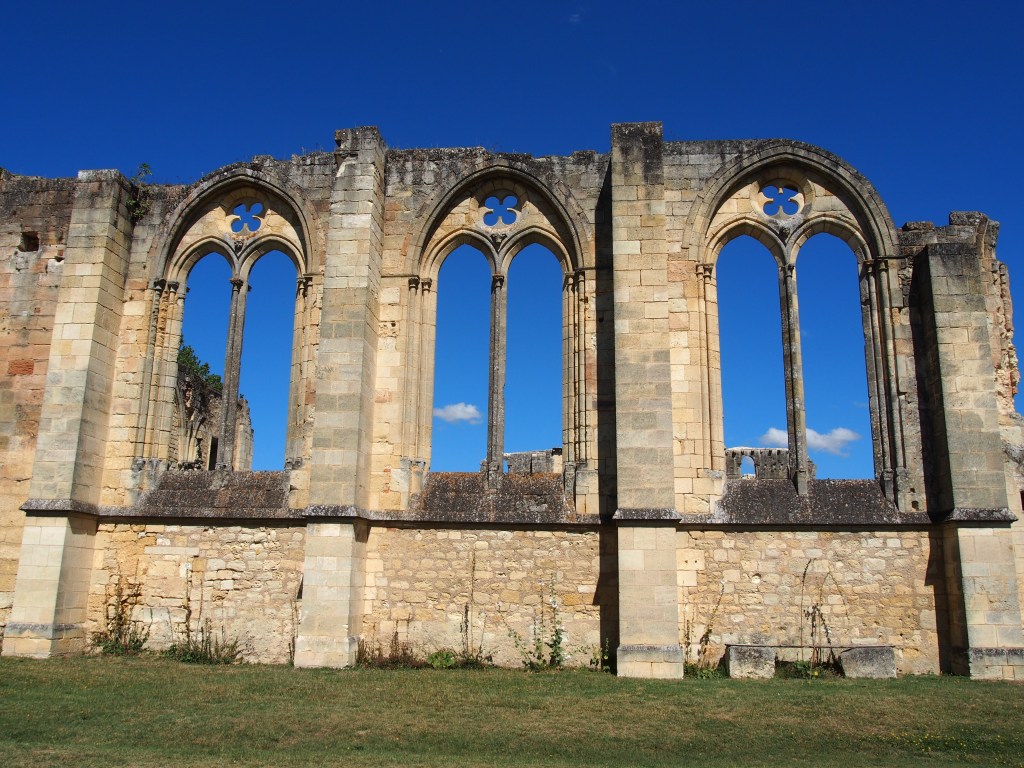
This was an important Abbey on one of the main pilgrim routes to Santiago de Compostela (outside of Bordeaux) … but fell on hard times during the Hundred Years War when the lands that it had acquired and which supported it were ravaged by both sides and, of course, was basically taken out of business completely as a result of the French Revolution … the main part of the Abbey is in ruins, but the one of the medieval outbuildings is still partly intact and used as the main entry.
The Romanesque tower is the most intact part of the Abbey Church still standing.Looking down the remains of the Nave to the remains of the Chancel, where the dome that formed the roof over the Altar remains partly intact. Neglect or not, they built them to last back in the day.Another, closer, view of the Tower.This wall and the windows is all that remains, apart from foundations and few courses of stonework, of the walls of the buildings which surrounded the Cloister of the Abbey – they are behind me in the photo of the Tower immediately above.
Basques in France
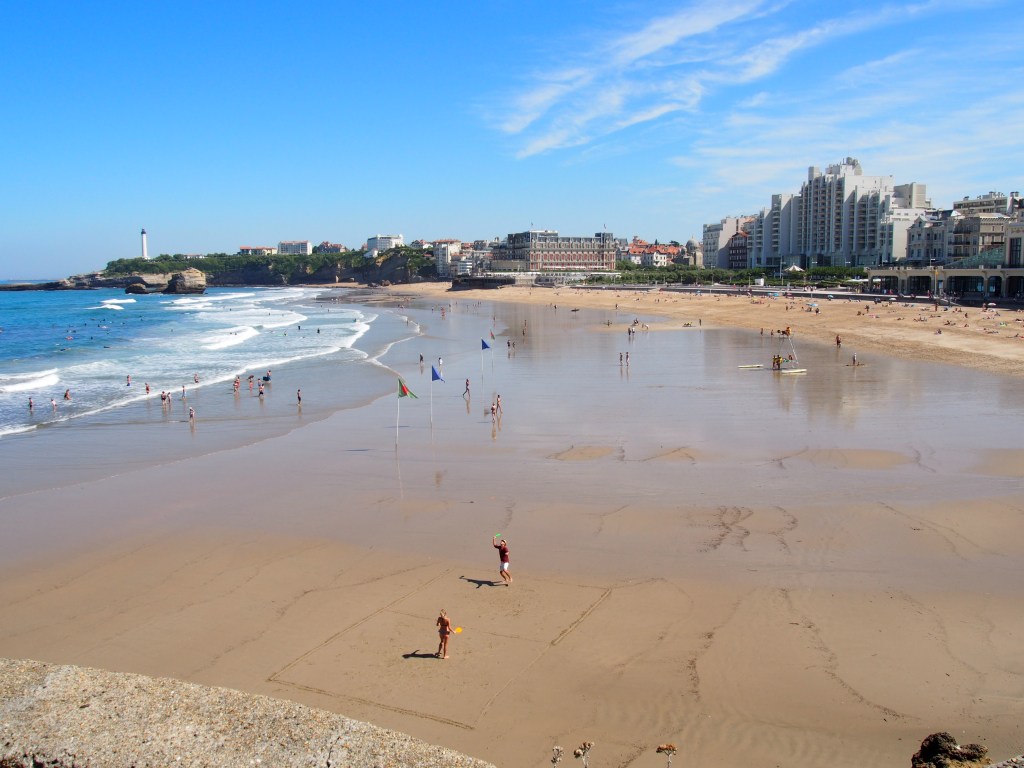
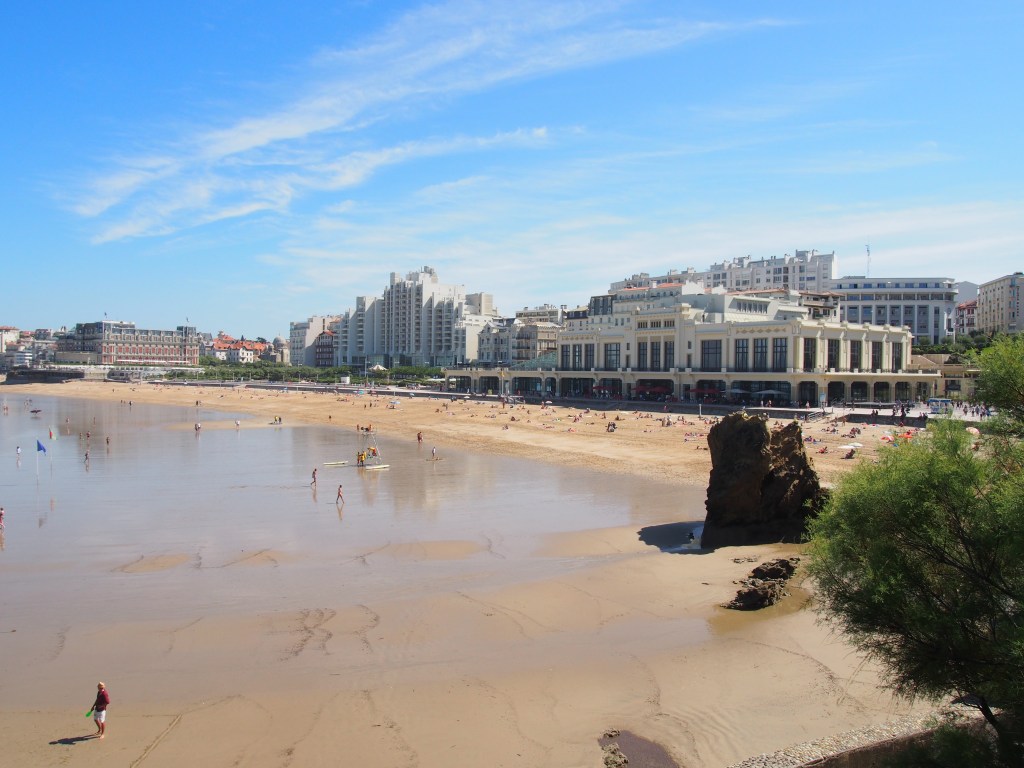
No, they’re not all in Spain and causing all sorts of troubles … there are a considerable number of them down around Bayonne and Biarritz and the SW border regions with Spain … heck, some of them may even be in the photos below of …
The Grande Plage at Biarritz … had to go there just to say I’d been. It’s a bloody beach … we have as good or better in Australia.The Casino (or one of them) – the town became the ‘in’ place when Empress Eugenie (Napoleon III’s wife) decided she liked the quaint little seaside village/town in 1854 – which meant things such as upmarket Casinos to tempt the rich and useless.
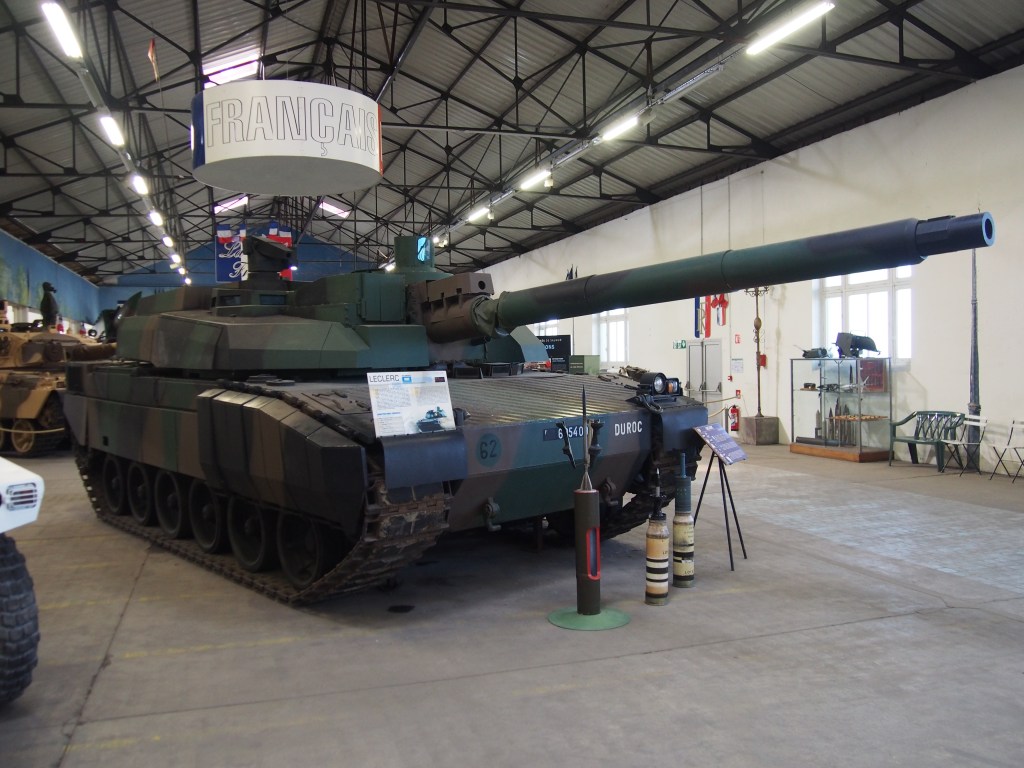
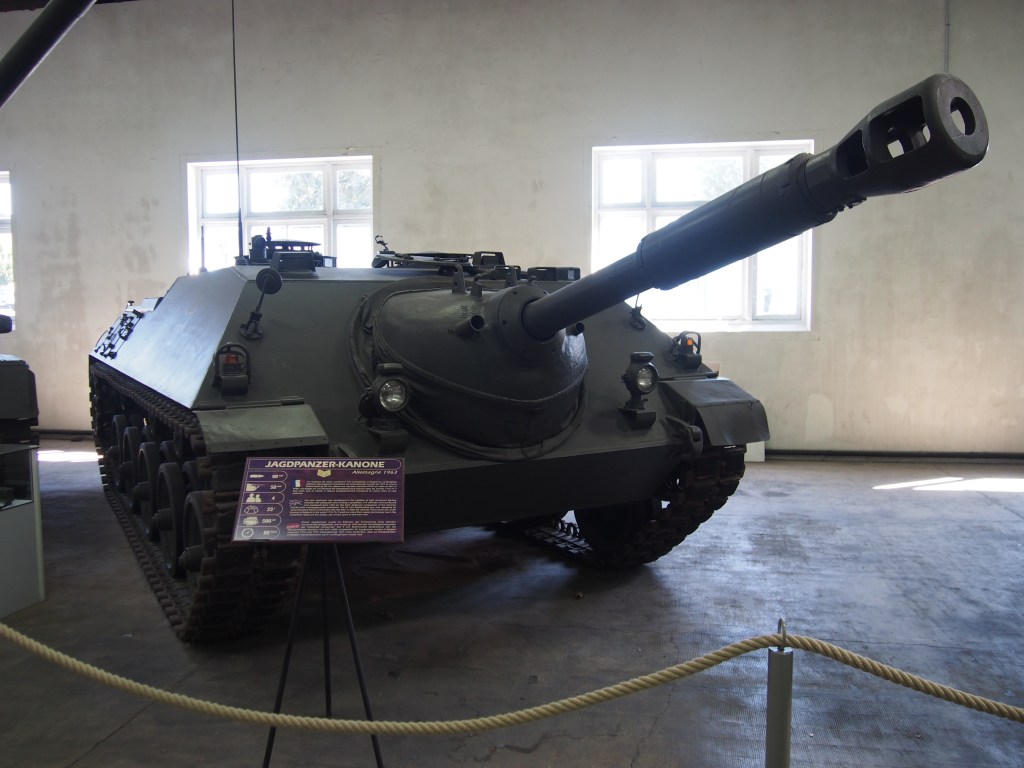
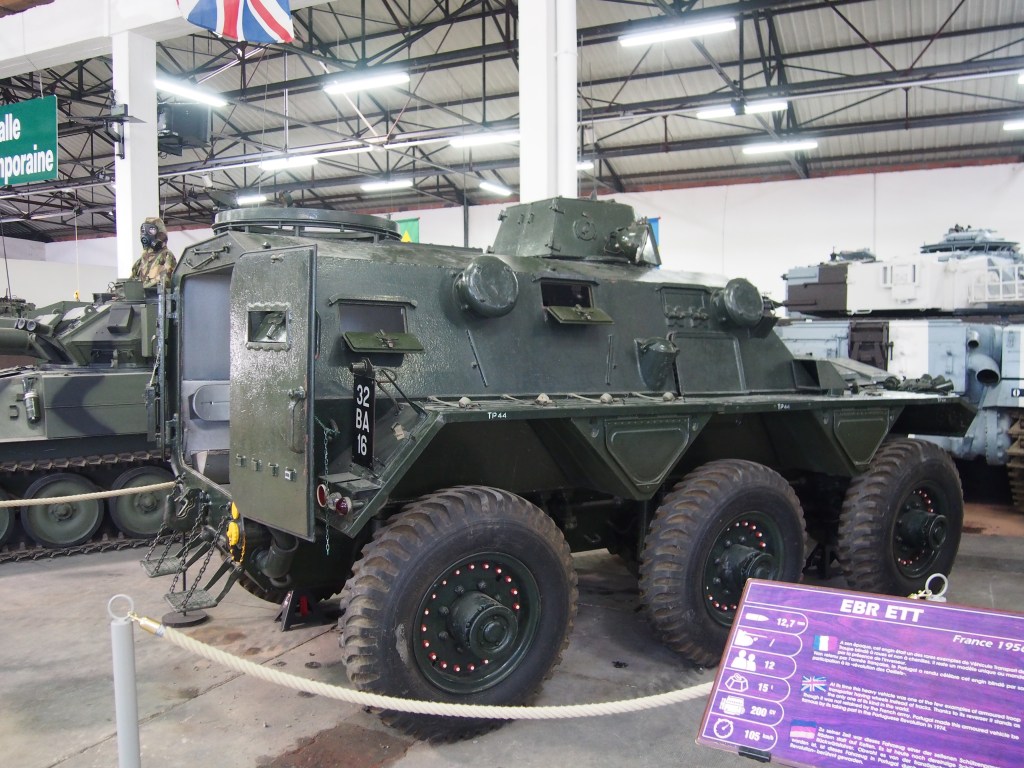
The museum also has an excellent collection of post WW2 stuff … including, as you might expect, a fair chunk of obscure and less than obscure French stuff which, of course, was often modified US stuff to begin with … a selection of some of the display vehicles follows …
The Leclerc MBT – the latest French MBT, replacing the AMX-30 … even the upgraded versions … in the French Army.The Swedish turretless S103 ‘S’ Tank … replaced by modified Leopard IIs.Brazilian EE-9 Cascavel Armoured Car, widely used by a number of Third World countries as well as, of course, by the Brazilian army. Popular because it uses many standard truck parts for engine, transmission, suspension etc. simplifying maintenance and keeping procurement costs way down.Bundeswehr Jagd Kanoneself-propelled gun/tank destroyer … phased out in the 1980s when some had their cannons removed and were fitted with ATGMs … the latter called Raketenjagpanzer and phased out in the 90s.Alvis Saracen Armoured Personnel Carrier … a familiar sight on the streets of Belfast during the ‘Troubles.’French Pluton Short Range Nuclear Missile on a modified AMX-30 chassis.French AMX-10 RC Armoured Car/Recon Vehicle.
As usual, there’s lots more photos but so little time to upload … and tomorrow I have to return the Lease car and head in to my Parisian Hotel. I will be there until Saturday week when I fly back to London, one day there and then I fly out of London for Singapore and then for Oz on the Monday … arriving back on the Wednesday thanks to the magic of international time zones (and reclaiming the day I gained flying to Europe).
More later, hopefully from Paris, but it depends on what the WiFi is like at the Paris Hotel …
The WW2 collection was, of course, much larger than the one for WW1 – after all, French troops helped occupy Germany, unlike WW1, so there are a fairly large number of German tanks.
I’m sure some of you recognise this … it’s a German Goliath remote controlled demolition charge in the form of a mini-tank-like thing. I saw others at Bovingdon, the German Tank Museum, and the Army Museum in Dresden but I think this is a better shot than I got at any of those venues …Panzer II Luchs (‘Lynx’) a late war (1943 to early 1944) recon version of the Panzer II. The differences are that it is slightly bigger in all dimensions and that it has interleaved road wheels rather than bogies (it’s faster, too).Kettenkrad half-track motorycle – several thousand were produced during the war (which shows how desperate the Germans were for motor transport of any sort) and they produced several hundred after the war for agricultural use. The motorcycle wheel front end could be removed and the tracks only used for traversing really soft ground … but at a much reduced speed.Bridge-carrying engineer version of the standard German Sdkfz-25x Halftrack. Yes. That’s a Pantherturret you can see in the background (attached to a Panzer V chassis, of course, which you can’t see)German Maultier heavy cargo halftrack truck (the almost vertical front grille is a dead giveaway that this isn’t a vehicle originally intended for combat) with a 10 tube Nebelwerfer launcher mounted on the back.King Tiger – there are a few of these still getting around, it seems!German Brummbar (‘Grizzly Bear’) Assault Gun – really an engineer vehicle, as the large calibre gun was intended as a demolition charge firing weapon rather than as a tank destroying one … but needs must when the devil drives, and you’re perennially short of armoured vehicles of any sort.
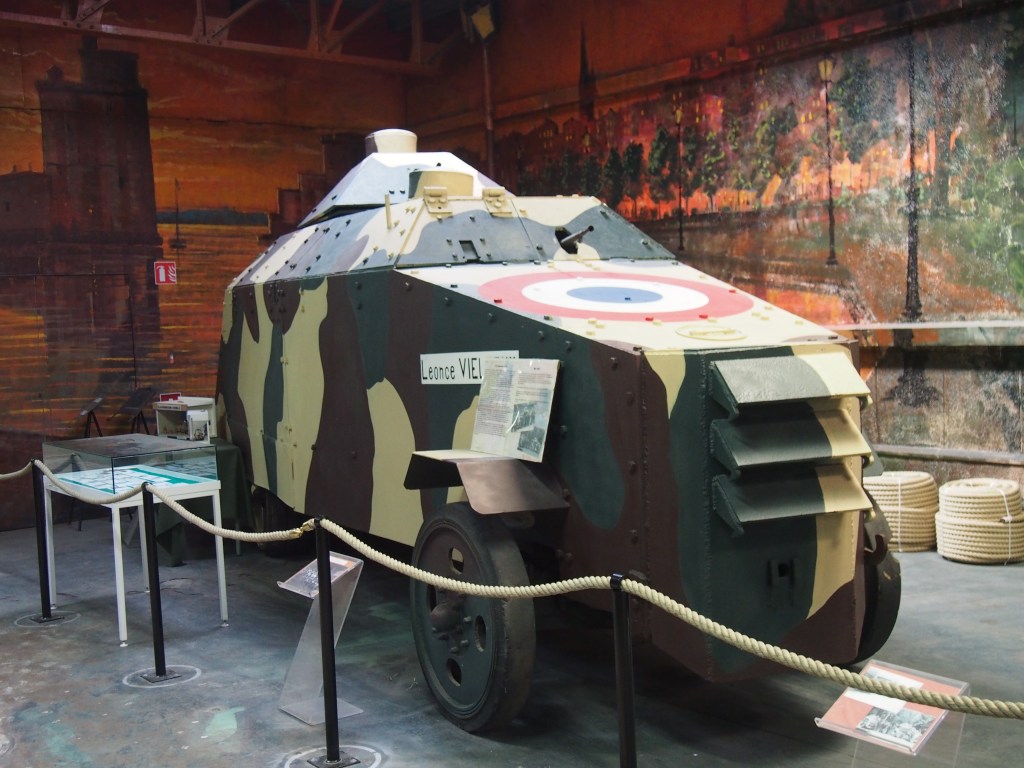
There were, of course, vehicles belonging to other nationalities … some French, some Axis, some Allied … an eclectic mix, as you might expect in a French museum.
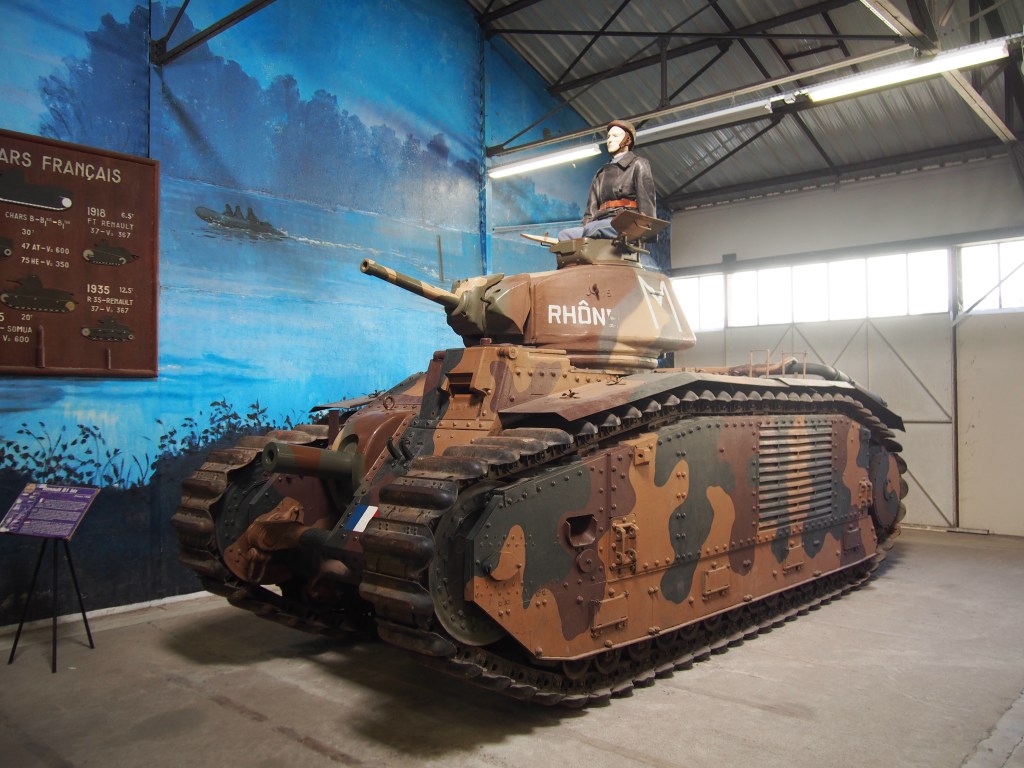
Home made French armoured truck used by the FFI (French Forces of the Interior – the Resistance) … dunno more than that as, unfortunately, the description for some display vehicles (of which this was one) were entirely in French … quelle horreur!Italian Semovente 75mm Self propelled gun. Notice all the lovely rivets – making the fighting compartment a death trap from ricochets if they were hit by anything even as small as a 50 cal machinegun round (or Boys AT Rifle)Panhard AMD-178 Armoured CarRenault R-35 TankFrench Char B-1 bis. This is on permanent display, but the museum has one in running condition that is trotted out for their yearly Carrousel (which, sadly, I could not be there in time for as I was in Scandinavia or Germany).
There’s more, of course, too many to upload … these are simply some of the more unusual or more interesting ones. More modern tanks tomorrow …
Started by a group of French Armour enthusiasts, the collection of armoured vehicles at Saumur is second only to the British one at Bovingdon … and, of course, has some rare French vehicles.
World War 1 Room
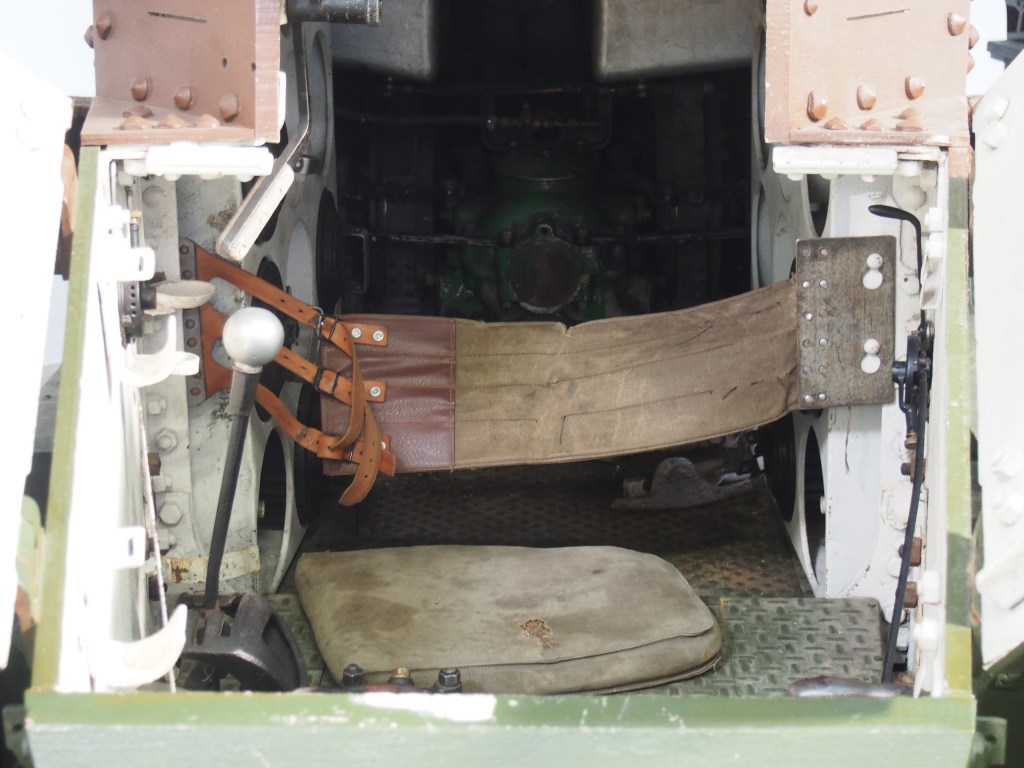
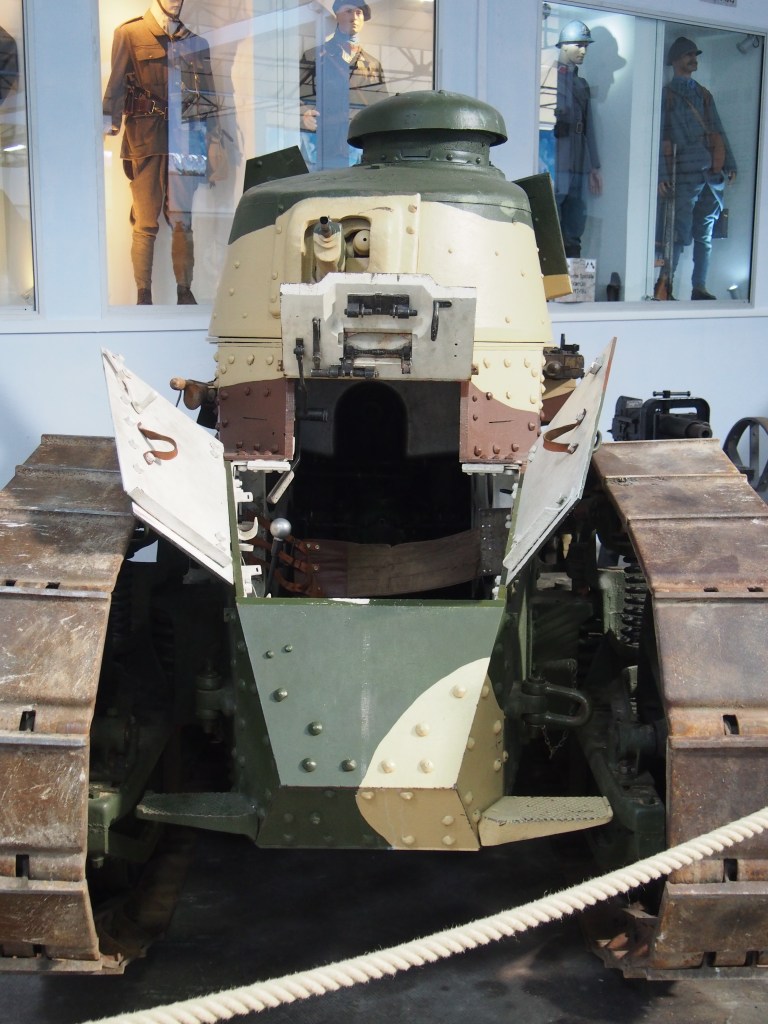
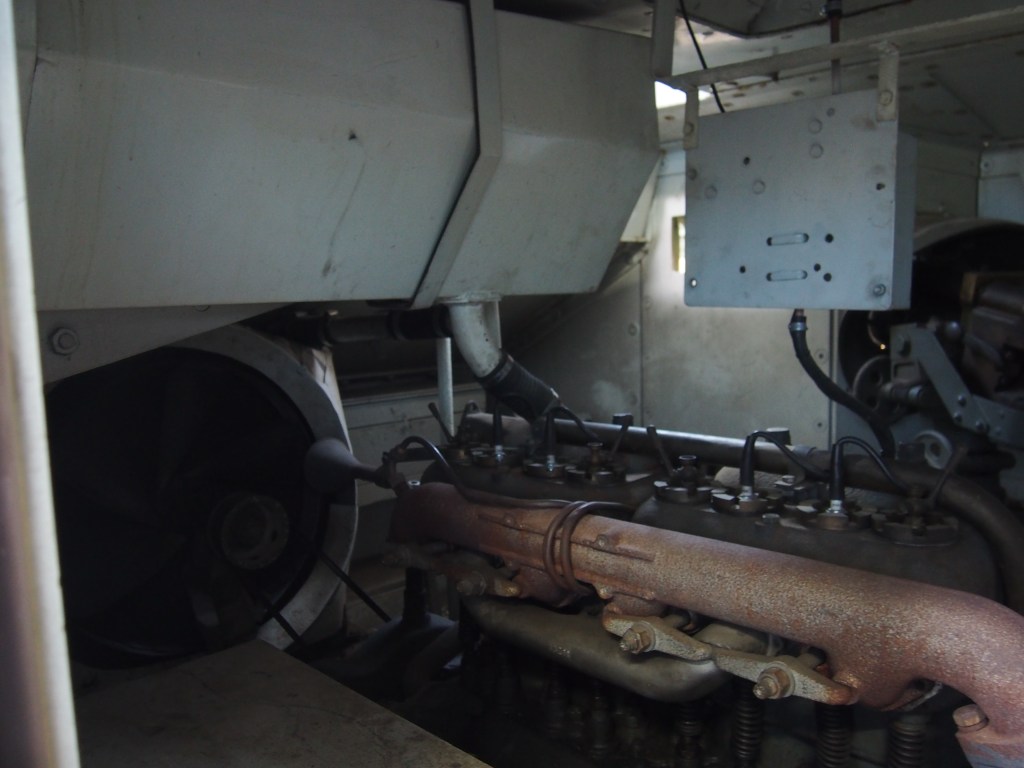
Renault FT-17 … seen it before, have you? Well, look at the next photo!That’s a sight you’ve probably never seen … the Driver’s Position … note the ‘high tech; seating!Not a lot of room for him, is there?The Schneider CA-1 (1916) which was a really bad design, like most early tanks … nicknamed the Mobile Coffin because of its external fuel tank!The interior of the Schneider – showing the engine and the front driving position … a little better than the FT-17.The St Chamond – built on the same Holt Tractor chassis as the Schneider, the protruding front made it front heavy and it tended to get stuck when trying to cross trenches … though it was better designed protection wise.
Unfortunately the upload speed of the wifi at the hotel is, while not as woeful as it was yesterday when I tried to do this and could barely upload the first picture, still sub-par … so the WW2 and later stuff will have to wait for a better connection down the track … hopefully tomorrow!
Nantes is a river port, and, during the pre-modern period, was a major player in sea trade as it was about as high upstream as ships of the day could go. When the Industrial Revolution led to the possibility of iron hulled ships which soon became bigger than any wooden hulled ones, Nantes found it couldn’t handle the larger vessels … and that’s where St. Nazaire came in … it was just a sleepy fishing village until the merchants of Nantes decided to turn it into the front end of their trade.
Anyway, I stopped overnight and hit the Ducal Palace and Museum …
The Chateau walls – this was originally an important part of the town’s defences and its defences were first rate … for the medieval period. Unfortunately, the Dukes ran out of male heirs and the last female in the line was married to the King of France and thus Nantes, and Brittany, became a French Royal possession and lost much of its previous importance as a semi-independent province.One of the major Towers that formed part of the Chateau’s defences. The wooden structure arching up along the wall on the right is a giant slippery dip that leads down around the walls to just near the main entrance. The moat … dry and wet … is now mostly grassed and (evidently) a very popular recreational area.
There were some interesting Roman, Medieval and Modern (WW2 German occupation & Resistance) displays in the museum … but, as is all too common, they were poorly situated and badly lit, so no photos of the interior, sorry.
Puy du Fou
This is a French ‘historical’ (for some limited values of ‘historical’) theme park that is, evidently, much better than Disneyland Paris … and on the recommendation of one of the backers of Orbis Mundi I spent two days there …
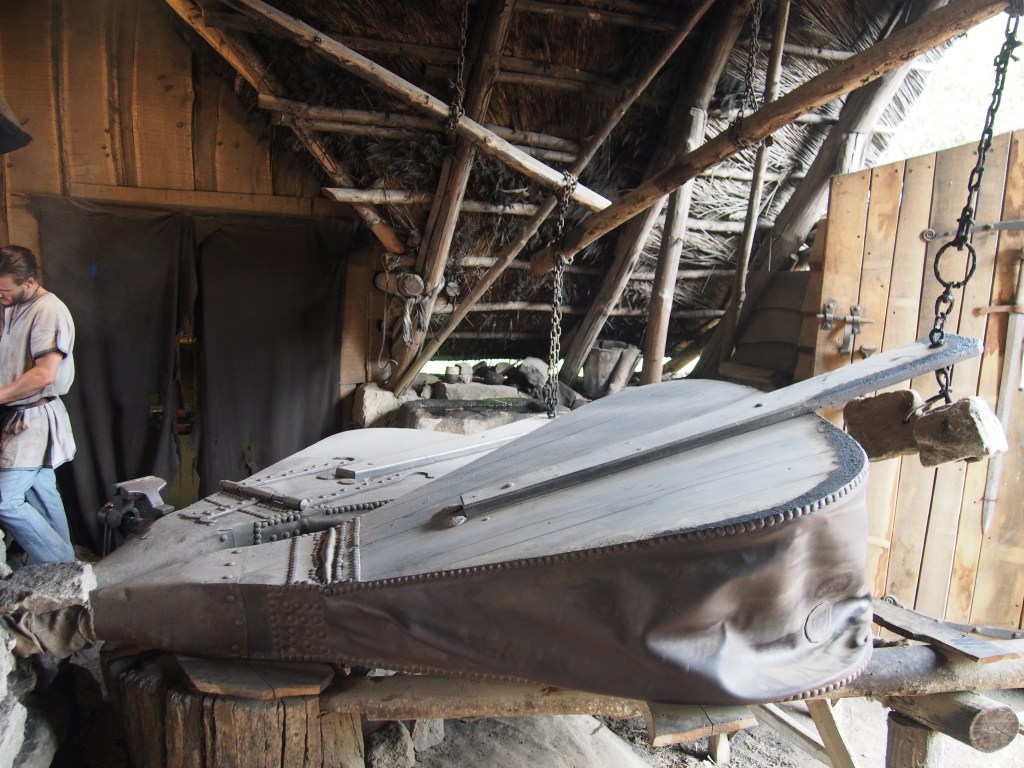
Oh Deer! This is the interior of a ‘reconstruction’ of a 10th-11th century peasant’s home. Notice the glaring error? No? The Fireplace has a chimney. BZZZTTTT!. No Chimneys for several hundred years yet, guys. Sadly, a lot of the ‘historical’ stuff was like that … history only for those who haven’t got a clew about history (probably, I suspect, because the creators either didn’t have a clew either [most likely] or didn’t care [also possible]).The 13th-14th century Village Church is somewhat better done … except for the fact that the altar would have been screened off from the congregation by a screen, and they wouldn’t have been able to see the Priest perform Mass … and, even if they could have, he would have had his back to them. Wall paintings and other decorations seem reasonable … but I am sure a specialist in medieval art could easily tear them apart.The Blacksmith’s shop in the 10th-11th century village … and another massive fail. The dual bellows and their cunning arrangement that (if it had been hooked up properly – as far as I can tell seeing it in operation, it wasn’t) allowed a continuous (sort of) draft to feed the furnace is way anachronistic. Probably late 13th and more likely 14th or 15th centuries. Far too technologically advanced for the alleged period.
Sure, it’s a theme park. I get it. But it was annoying.
The real reason for being there was, anyway, the live performances – which were amazing … at least the ones with English commentary (or English commentary that worked) were … around 10 or 11 and it took me two days to manage to squeeze them all in as the place was hugely crowded both days (the end of August and just before most French schools outside of Paris and the deep south went back.
Of course, the performances were even less historical than the villages … but, what the heck, they were huge fun.
The next post will be about the Musee des Blindes (Tank Museum) at Saumur followed by two Loire Chateaux.
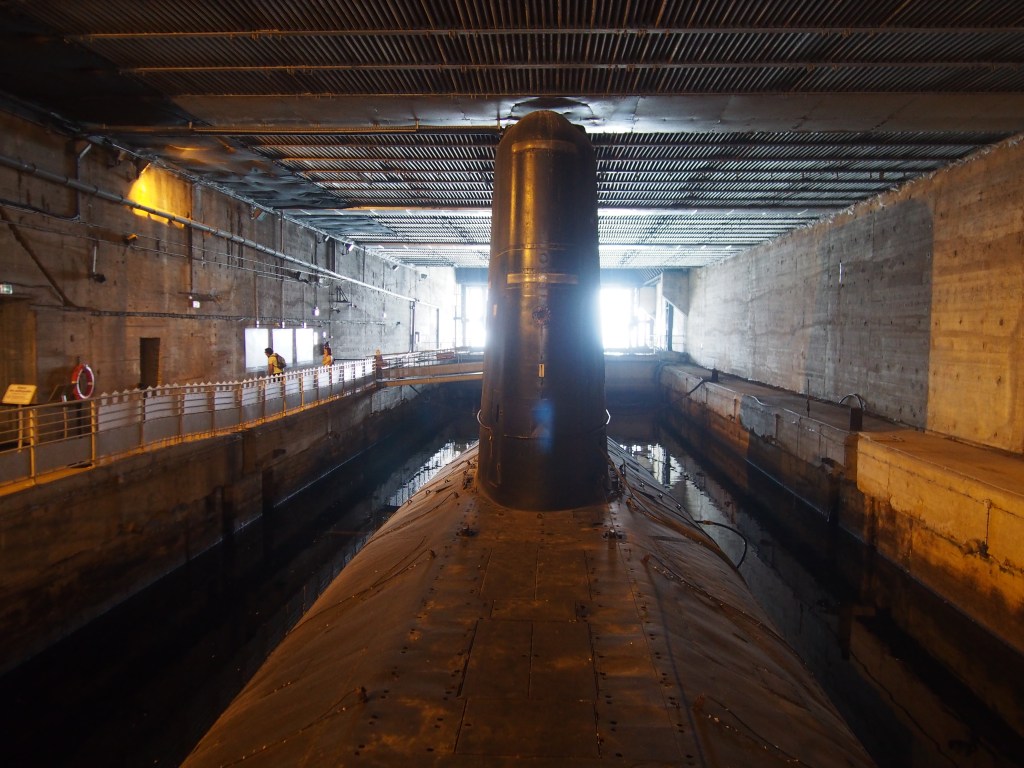
The site of some of the German WW2 U-Boat Pens … so big and made of such thick concrete that they are still there … too bloody hard to demolish!
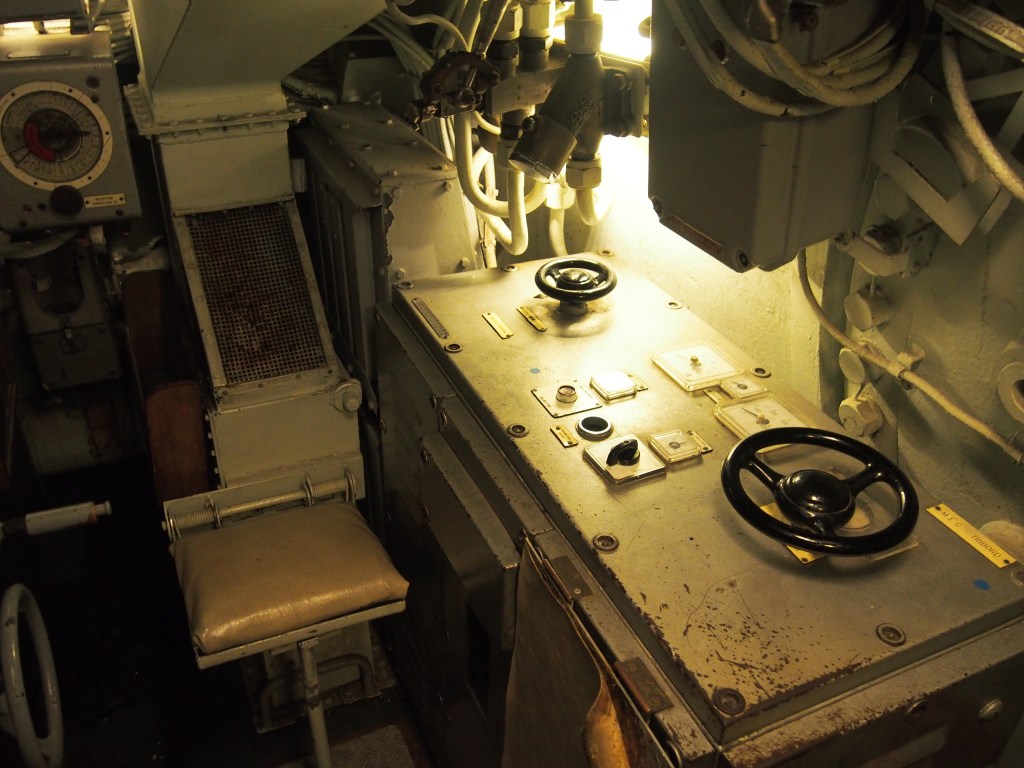
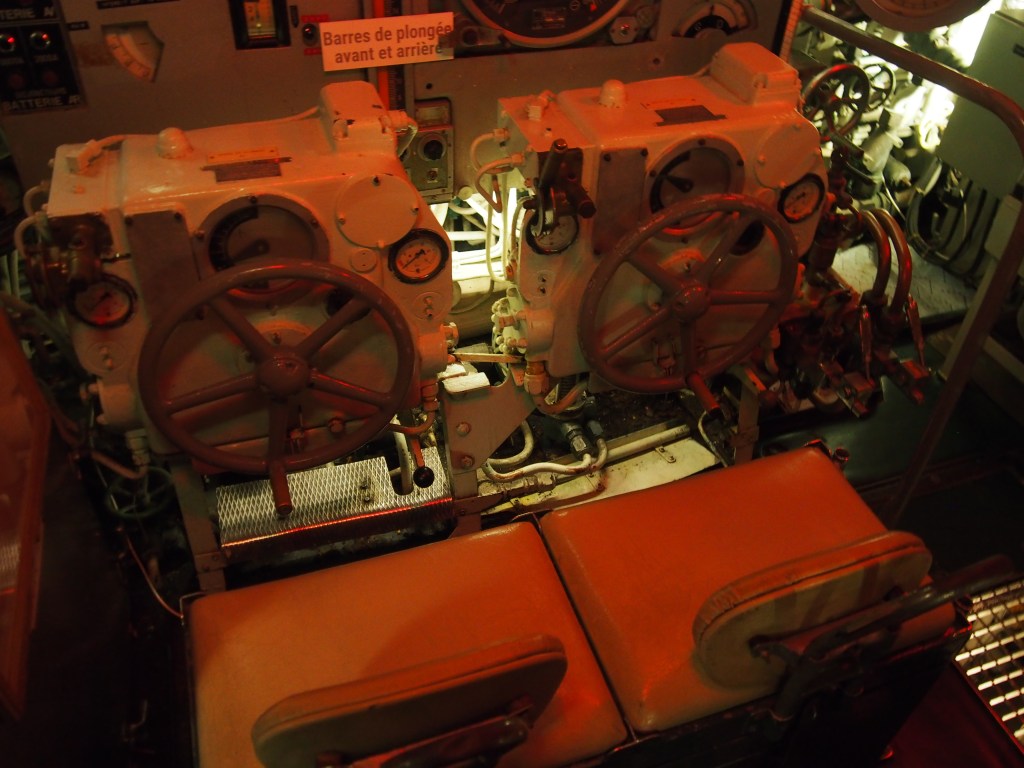
The U-Boat Pens from the entrance to the inner harbour.The Espadon (Swordfish) a French Diesel-Electric submarine of the postwar period. And bloody cramped inside, like all such boats.Look cramped? If you’re tall, you have to duck … a lot … and it’s barely enough to squeeze through.One of the control positions … compare this with le Redoubtable, the SSBN at Cherbourg. Like I said, huge difference.The Helm – note how cramped it is compared to le Redoubtable – the reason I took the photo from such a close angle is that there wasn’t any space to do any different!Cramped? Bloody hell yes. And these are the officer’s quarters!The Galley – hardly bigger than a closet … yet to cook had to prepare meals for 65 crew!I seriously doubt they had fresh Lobster except on the first night out! If ever.The Head. ‘Nuff said.
You seriously wouldn’t want to suffer from even mild claustrophobia if you had to travel or work in one of these things … or any of the WW2 or immediately post WW2 diesel-electric subs. SSNs and SSBNs, however, are a different kettle of fish … as Le Redoubtable (Cherbourg) shows.
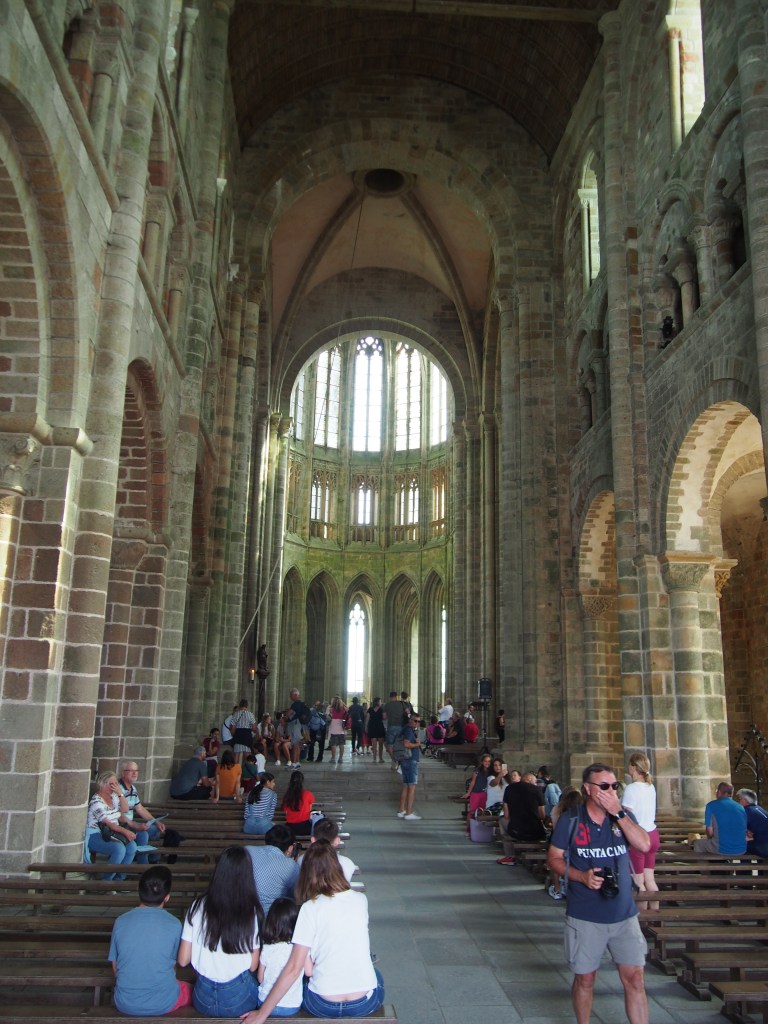
Famous? Sure! A small island off the coast of France and the site of a famous Monastery … and connected to the mainland, historically, only at low tide.
These days it’s connected by a permanent causeway/bridge and recent works have reversed and will, in future, prevent the silting that the causeway was causing and which threatened to make the island permanently (at least in human chronology) connected to the mainland.
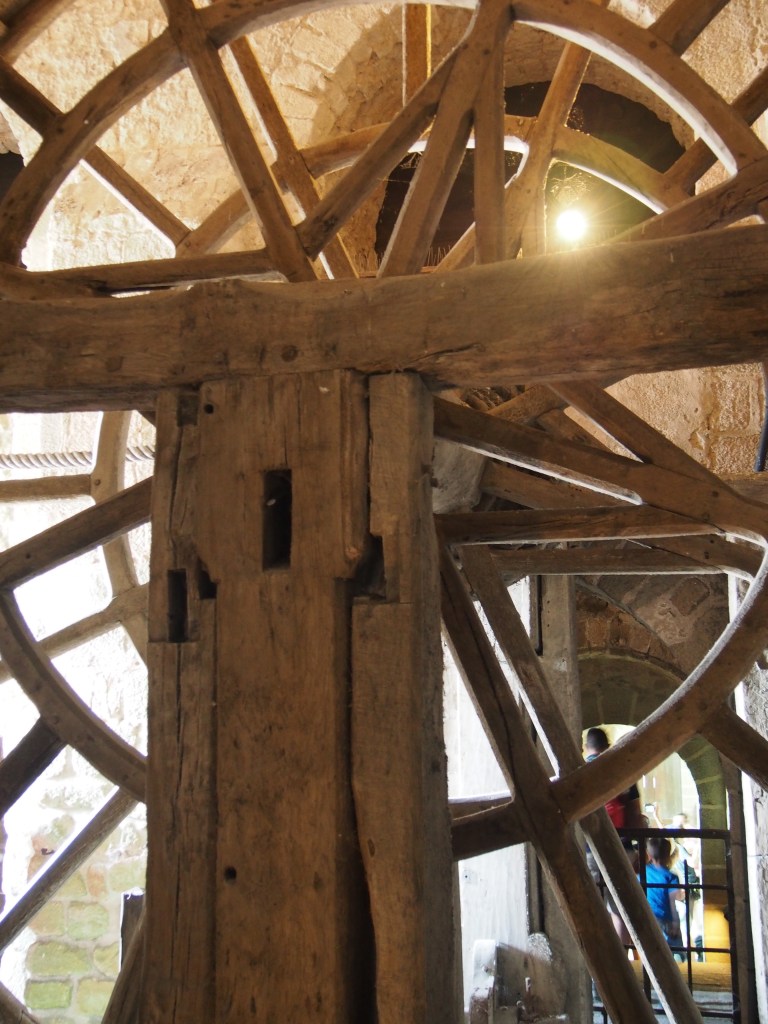
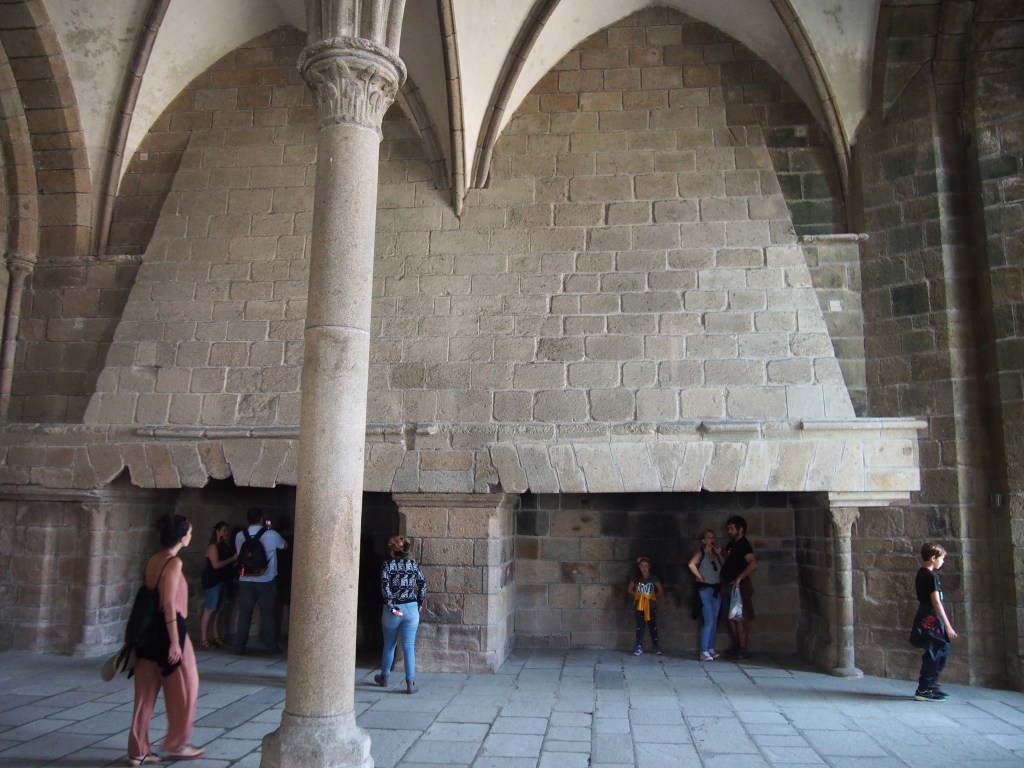
This is the view from near the end of the Causeway where the Navettes (shuttles) from the Parking lots (a good half hour or more walk away) drop you off. The ground level walls on the right circumscribe the main drag winding up to the Abbey on top … and the civilian settlement (now a collection of tourist trap gift shops and restaurants).That’s the causeway from on top of the mount. You can see that it’s low tide … or all those people just to the left of the end of the causeway would be being swept out to sea!Interior of the main chapel – there are older ones, but this was the last major one created.Partial view of a treadwheel used to bring loads up the almost sheer side of the mount back in the day … the room in which it is emplaced is so narrow that this was the best I could do. Believe me, this would have been a godsend … I walked up the 99% tourist free ‘easy’ route to near the entrance to the Abbey and I was pretty buggered. It was *steep* … I guess the higher ups back in the day rode horses or, more likely, donkey or mules.Double fireplace of the old Kitchen area.
Walking back down the bloody hill was as bad, worse in some ways, than walking up … I went down the main drag, which is narrow, chocka with idiot tourists who thing it’s their absolute right to walk three or four abreast going in either direction, and unwilling to stand aside unless you simply stand your ground and don’t give way … considering the main drag is only 3-4 people wide for 90% of its length, this makes negotiating it a chore.
St Malo
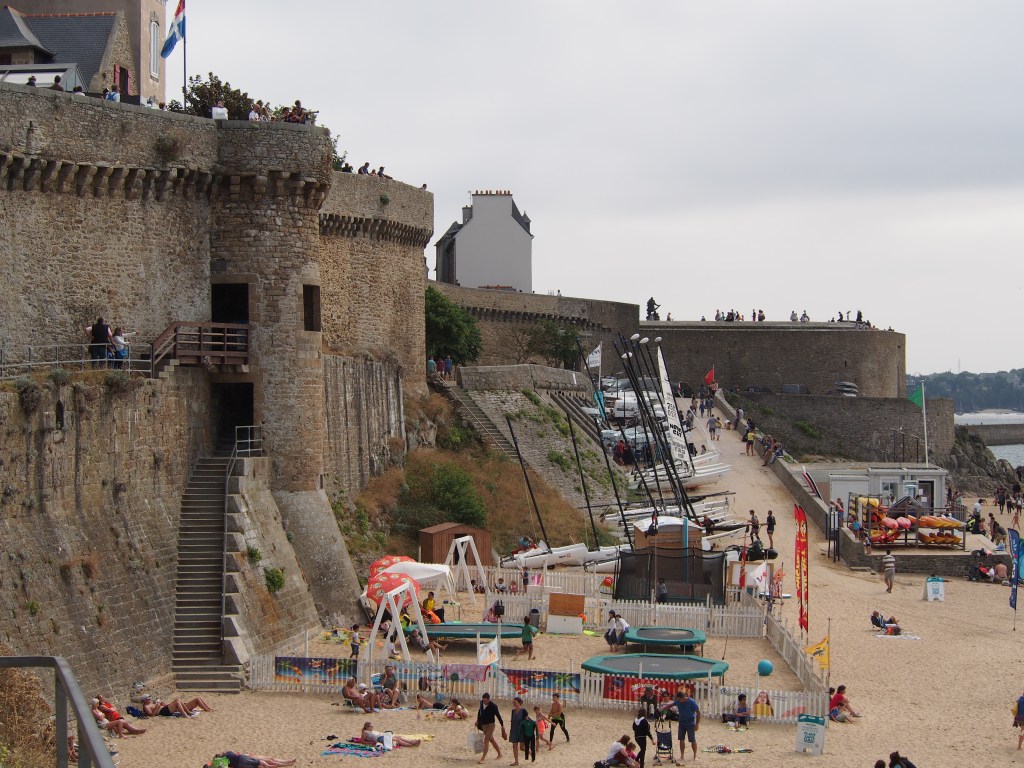
Not as famous as St Michael’s Mount, but an important Breton port with a well preserved old walled town.
The Main Gate (well, one of them, I suppose) from where I parked on the narrow neck of land that connects the city to the mainland from the east.City wall to the east of the Main Gate … the end of the wall on the right side is actually where it turns 90 degrees or so and runs along the sea front.The nearer of two close inshore offshore forts – it’s accessible when the flag is flying, at low water basically … not while I was there, of course.What passes for a beach … and the seaward walls.
The Old Town was full of narrow, cobbled, streets … what is it with Europe and cobbled streets? The uneven surface is enough to cause severe danger of twisting or breaking ankles … gimme tarmac any day! Still, it looks touristy, I suppose. I understand they are a bugger to maintain and replace as well.
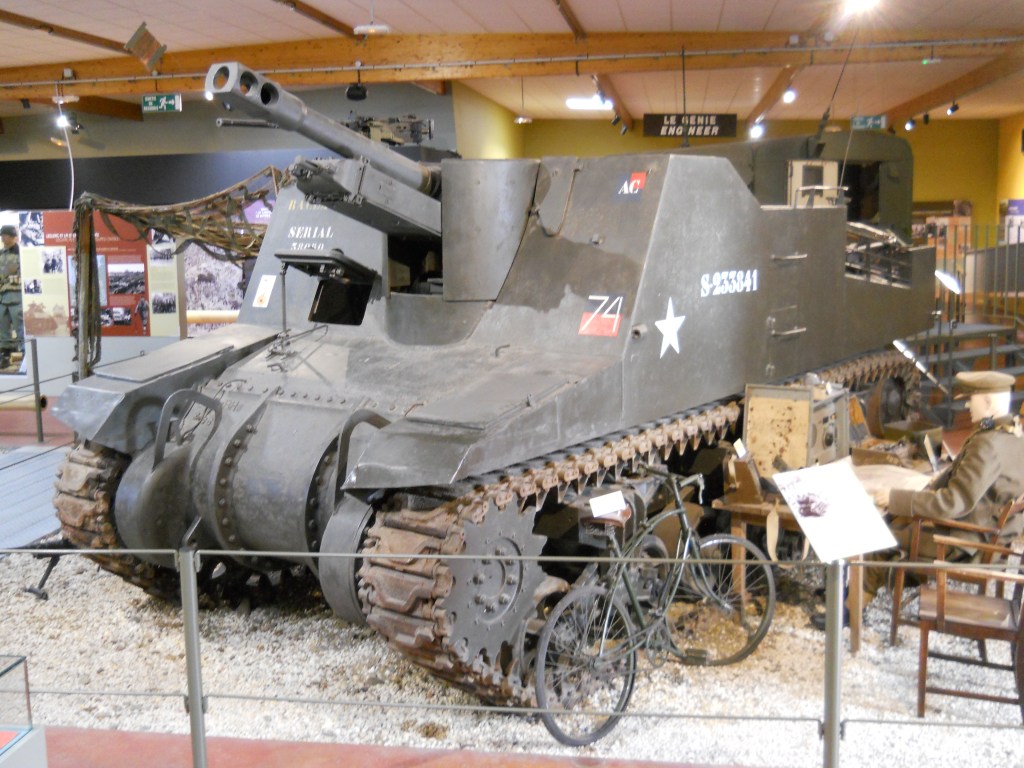
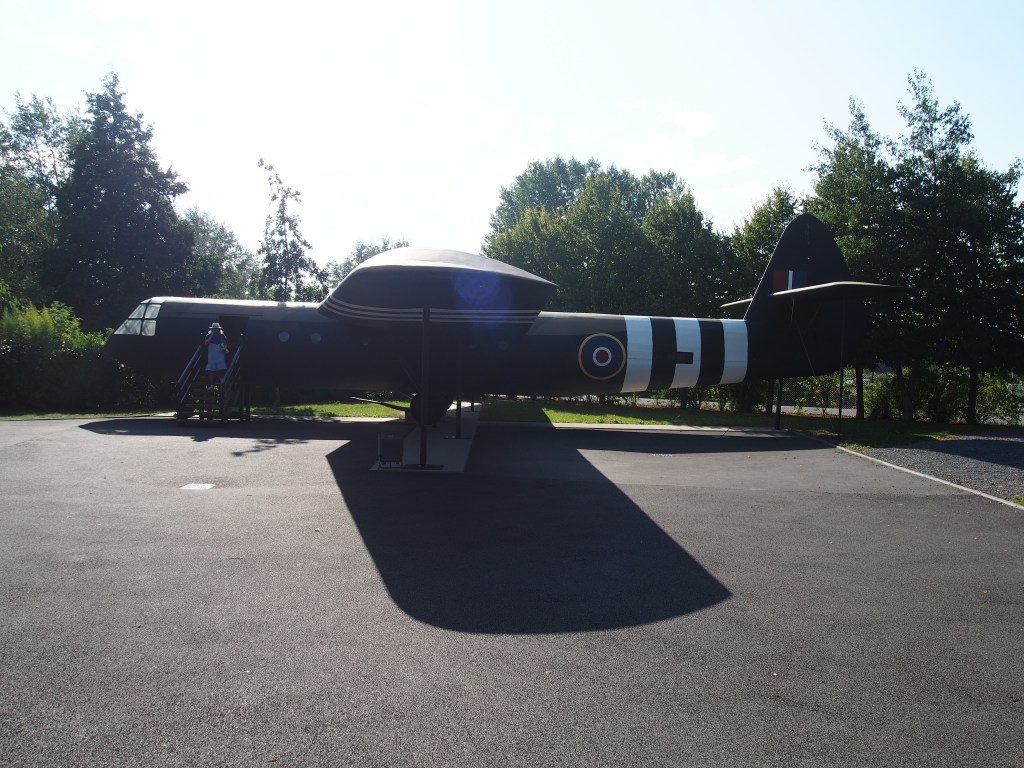
This the last of the D-Day/Normandy stuff … some of the vehicles on display at the various museums as well as the site of the famous Pegasus Bridge which the British Paras took and held against German counterattacks …
US M-10 Tank DestroyerUS Cast Hull ShermanBritish Churchill TankGerman HetzerBritish Sexton self propelled gun – 25 pdr on a Canadian Ram tank chassis.Life size replica of a Horsa glider such as was used at the Pegasus Bridge … none survive in the real world, so this was built using period documents and the examples of the few surviving parts found in the UK.The original Pegasus Bridge – it was replaced in 1994 and moved to the museum a short distance away.The replacement in action … same basic design, but … bigger …
There is an excellent WW2/D-Day Museum in Caen, well worth a visit … but a lot of what’s inside, most of it actually, is audiovisual … so you’ll just have to take my word for it.
About 30 klicks or so outside, however, is La Coupole, the remains of the prime German V2 site in France … where rockets would have been assembled from components brought in from elsewhere, prepared and then rolled out to twin launch sites in the adjacent quarry.
Or it was … until about 2-3 months before it would have been completed in early 44 when the Allies bombed the crap out of it. They didn’t destroy it, actually, but it was damaged badly and, after the war, they did do a number on it for security reasons (afraid the French were going to be taken over by the Commies, I guess … reds under the beds … )
In the last decade or so the locals have excavated it and opened up the main levels under the damaged dome as museums … one on the V weapons and the Resistance in the area during WW2.
That’s the dome/cupola of the Bunker and its damaged surrounding supports from the car-park. Massive bugger. They built it by moulding earth in a cupola shape, pouring the concrete over that, then removing the earth from underneath. Pretty smart, actually. The main entry tunnel.V2 from the V Weapons display.
Again, a lot of the stuff inside the museum was audiovisual and the few physical artifacts were poorly lit or in cramped spaces that made it impossible to capture accurately. Couldn’t get an angle on the V2, for example, no matter what I tried.
The D-Day Beaches
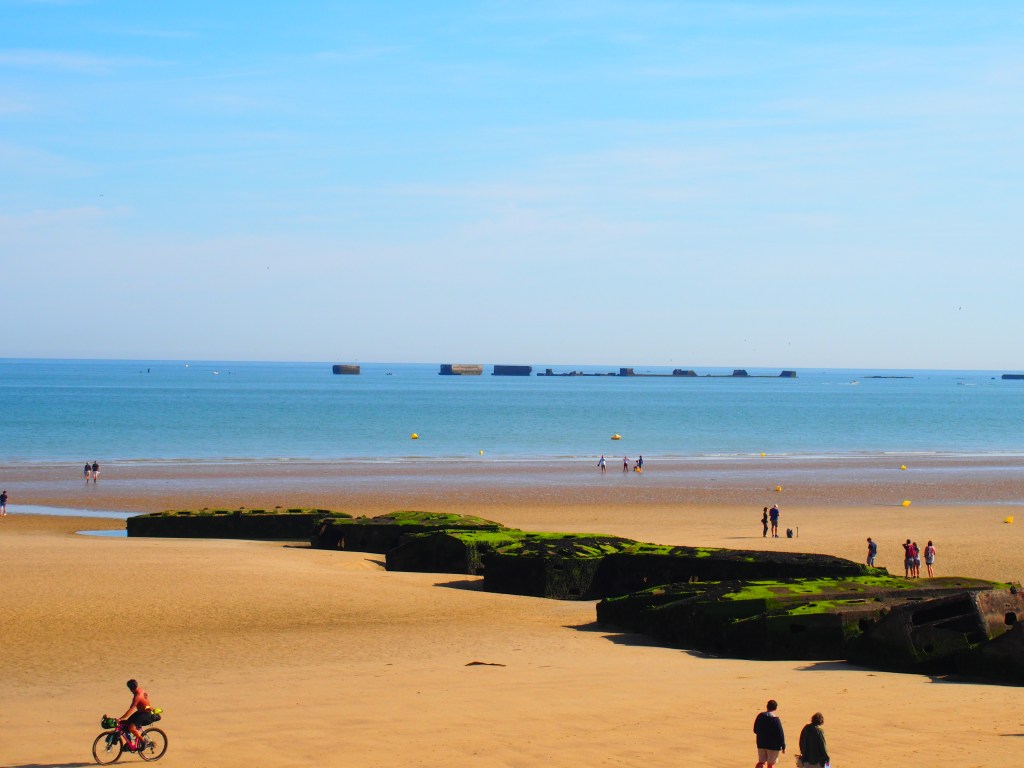
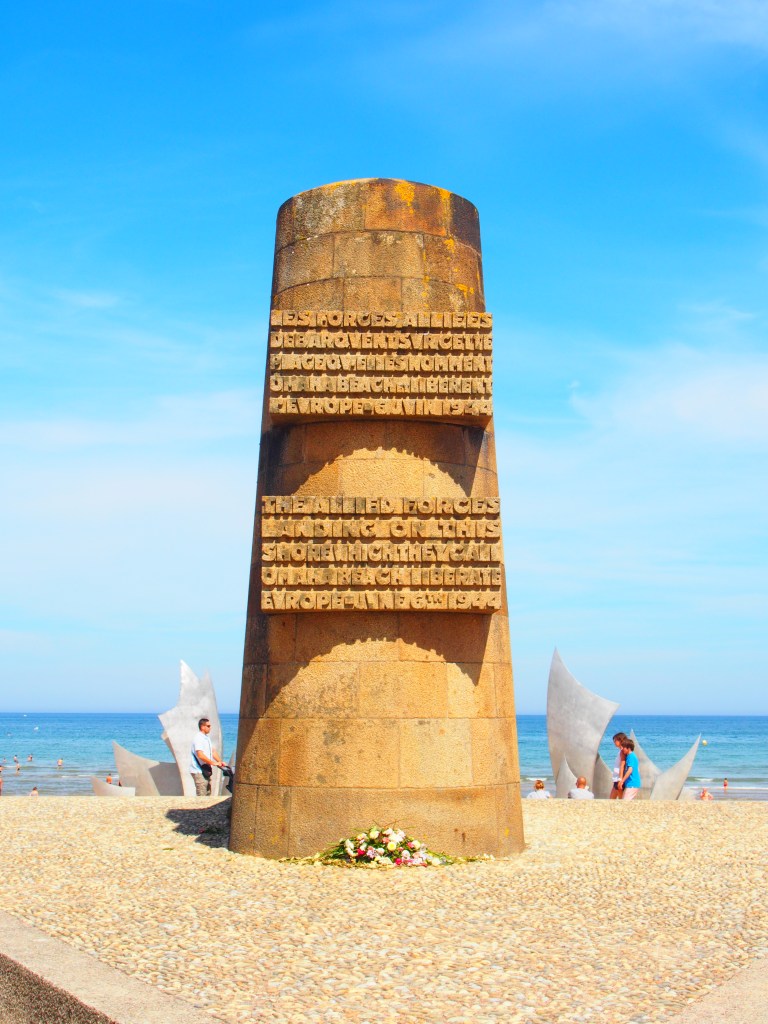
The next several days I spent hitting the various D-Day Beaches (not all by any means) and on a trip up to Cherbourg.
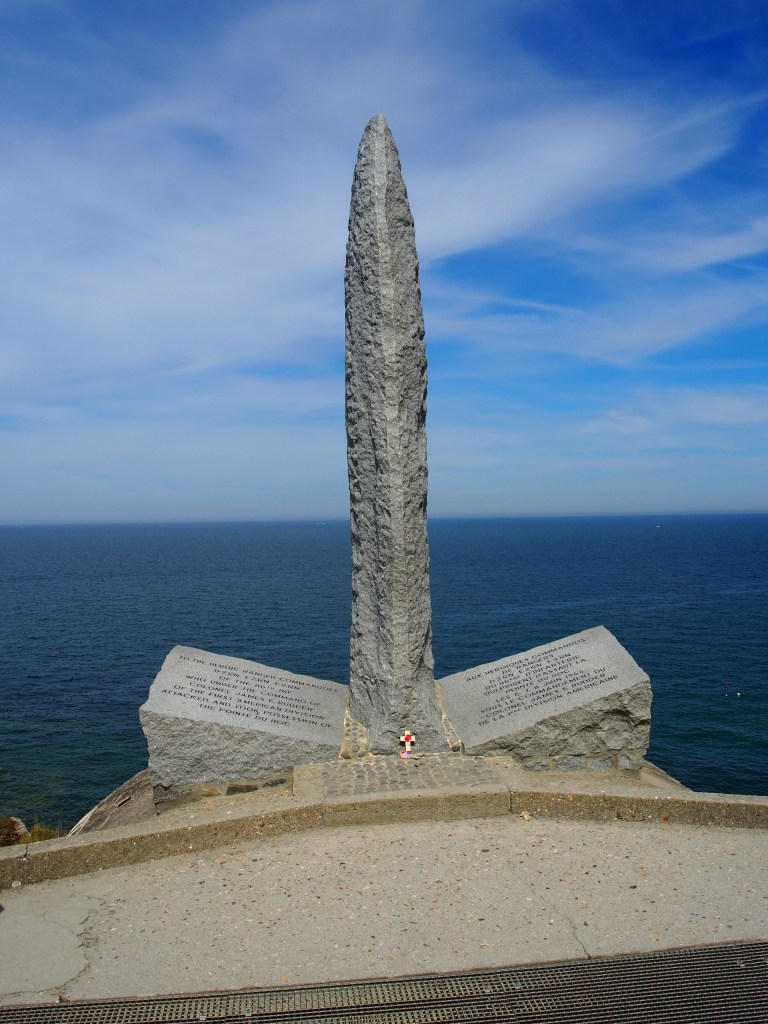
The main memorial at the US Cemetery near Omaha Beach.Remnants of Port Winston (the Mulberry harbour) at Arromanches … both on the beach in the foreground and in the middle distance in the channel.The memorial on Bloody Omaha.Point du Hoc – notice the massive cratering from the pre-invasion allied bombing. This is where the Rangers came up the cliffs to find there were no guns! Fortunately, they found them a few hundred meters inland, unmanned, and destroyed them,The Ranger memorial at the point of Point du Hoc. A stone dagger thrust symbolically into the earth.One of the two completed Casemates (of four planned) destroyed by Allied bombing.
Bayeaux
The location of the famous tapestry … rubbish lighting make it impossible to capture on a camera. However, there are some displays in the museum upstairs that are of interest.
A reconstruction of a Viking inshore craft. Not a Drakkar.Preparing the invasion fleet – no, not from the Tapestry proper, from a blow up of important sections in the museum upstairs.The final stages of the Battle of Hastings. The Norman cavalry are charging through the English lines (over dead Englisg Fyrdsmen, bottom left and centre) …supported by Norman Archers (below right)
Cherbourg
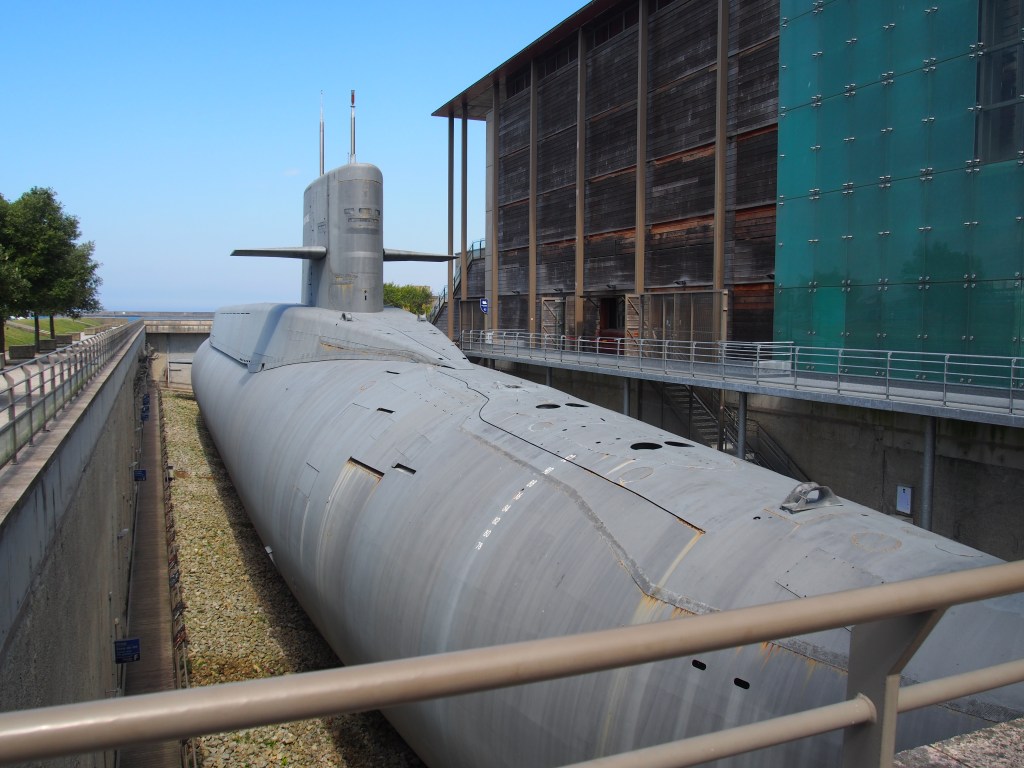
Not much in the way of easily accessible WW2 stuff there … but the Cite de la Mer had Le Redoubtable on display, one of the very first French nuclear ballistic missile subs.
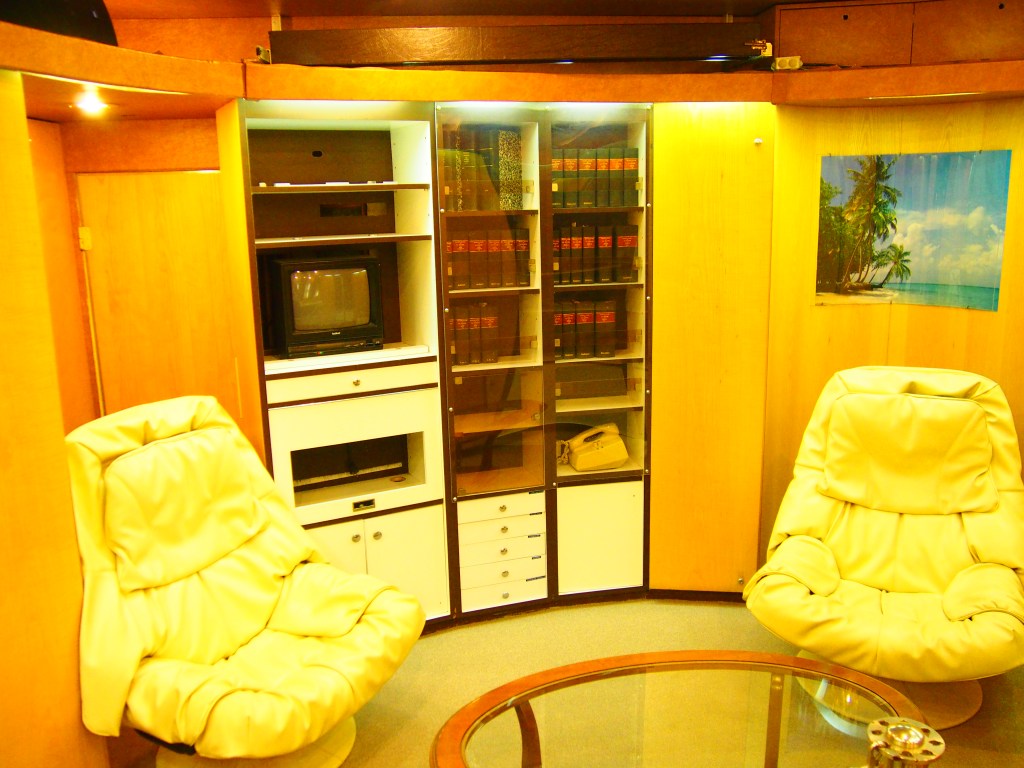
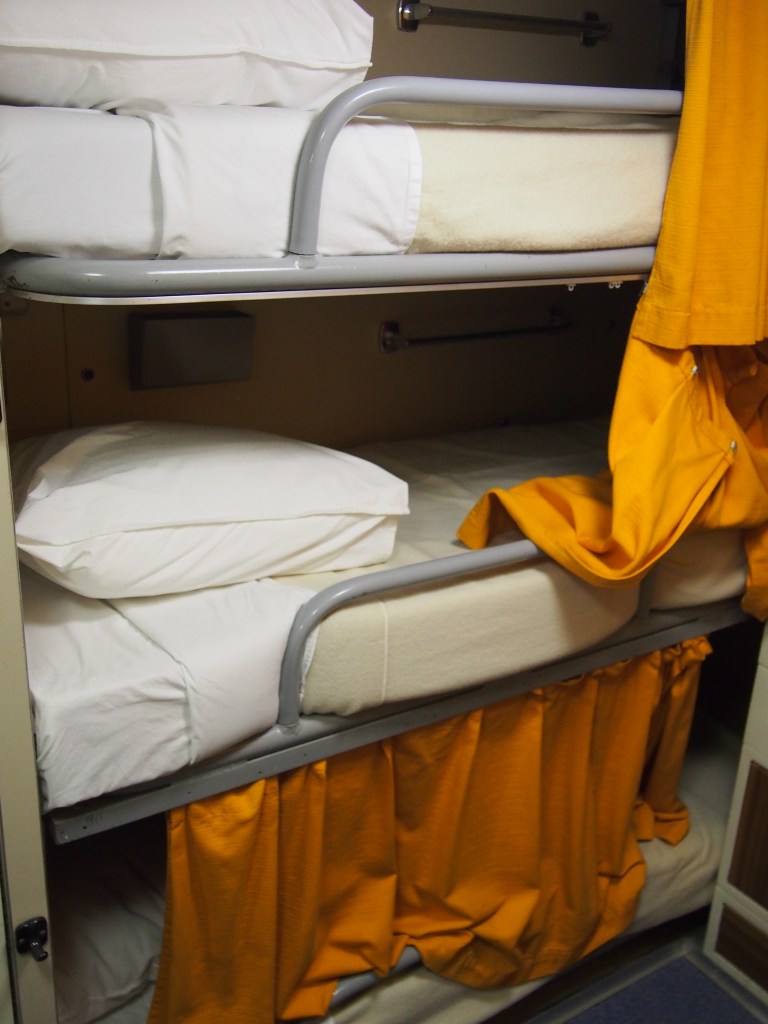
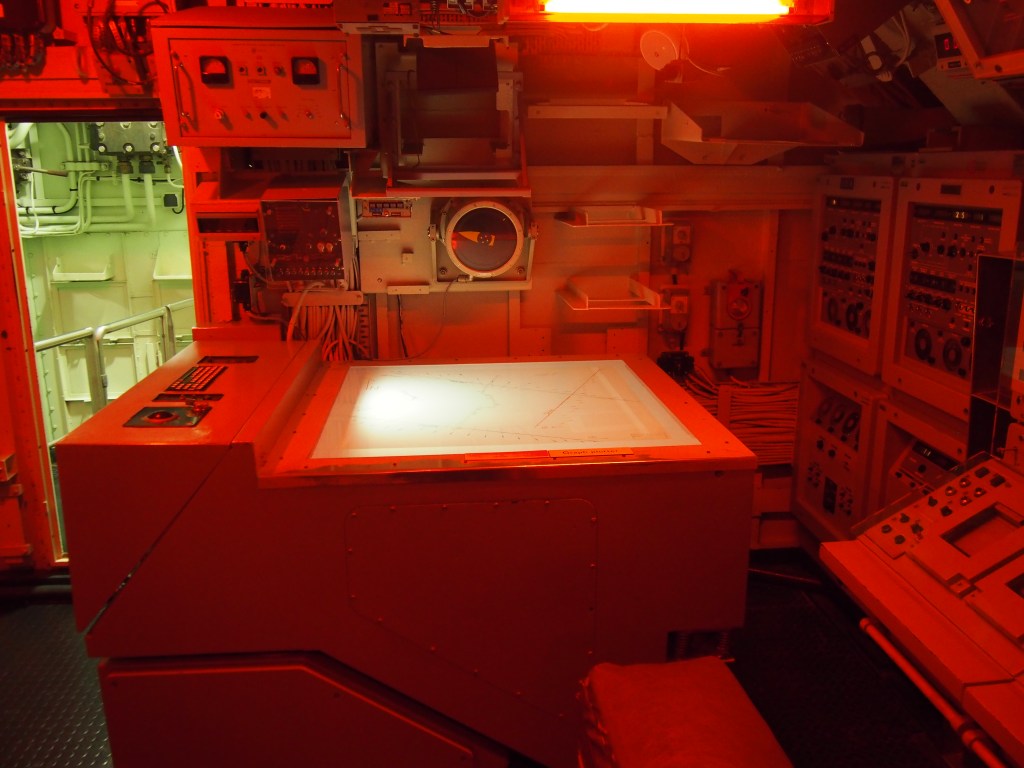
The first thing you notice about the interior, at least if you’ve been aboard as many WW2 era US, British and German diesel electric subs as I have, is how much room there is. It meant i generally didn’t have to hunch over or cram through narrow passageways … and that the officers had roomy cabins (comparatively, of course!) such as this … I’ll post some photos later (in a separate Blog post) of the French Diesel Electric Espadon which is at St Nazaire and you’ll see the difference!One of the Engineering control spacesThe Officer’s Wardroom.Crew Bunks … no ‘hot bunking’ aiui, each crewman had his own permanent space.The Crew Mess.The HelmThe Plotting TableThe best shot you could get of the whole shebang externally.
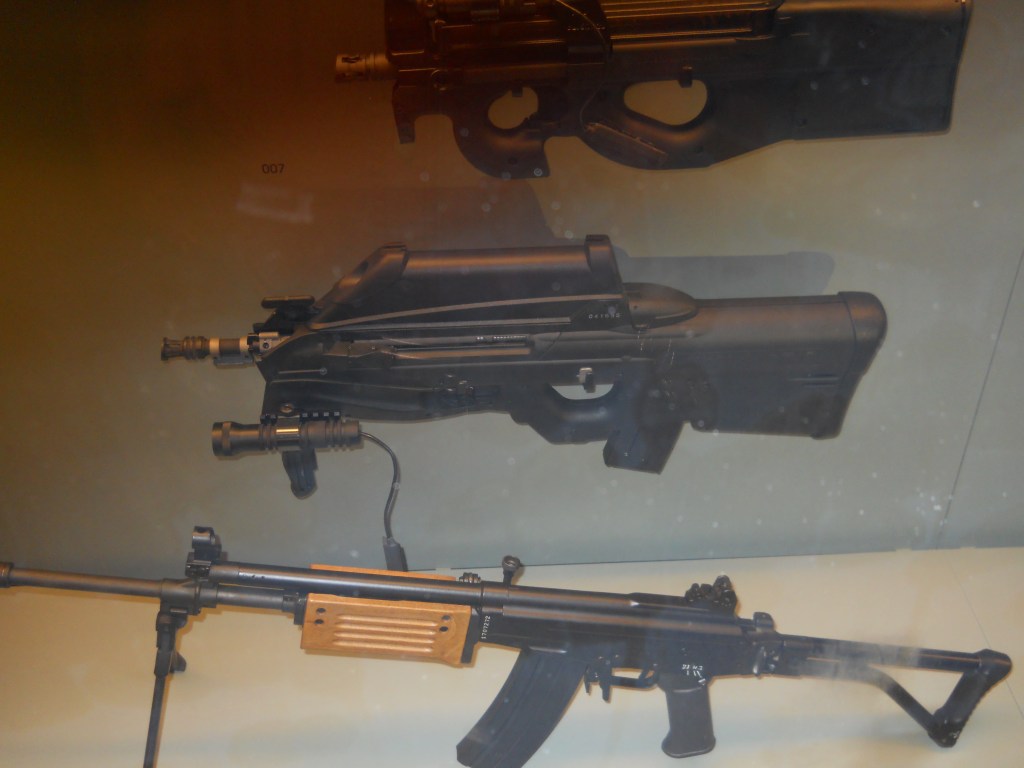
On my way to Lille I stopped at Liege and checked out the Grand Curtius museum. It is actually several museums in one – but, as is usual, it was undergoing renovations while I was there and the arms & armour collection (it’s near Herstal, of FN/Fabrique Nationale fame) was mostly not on display in the one spot, or even at all. Still, a chunk of it was …
A Mitrailleuse, one of the precursors of the true machinegun and, like early MGs, treated as artillery. You can clearly see the multiple barrels at the muzzle. A european version of the Gatling type ‘machine gun’ … also treated as artillery. FN-2000 in the centre … ring any bells, Adrian?P90 SMG so beloved of Stargate SG-1 teams, just above the FN-2000.WW1 Bergmann MP-18, the one with the Luger snail drum magazine rather than the post-war MP-28 which had a more practical ‘stick’ magazine.German FG-42, a failed attempt at the ‘assault rifle’ concept. Fired a full size 7.92 mm cartridge rather than the 7.92 ‘kurz’ used by the later Sturmgewehr series.Sorry about the fuzzy picture … crappy lighting … but the centre rifle is a Karabiner 43 automatic Rifle. Not an assault rifle, but a step in the same direction … more so than the FG-42 which was overly complex and too heavy.Lewis LMG with the horrible pan magazine.They also had an impressive selection of period furniture and clocks … including this one, which, IIRC, was 2nd Empire … possibly Napoleonic.There was also the usual selection of religious-y things, including this elaborate gold (or silver-gilt) tryptych. Not medieval, though.
Mons
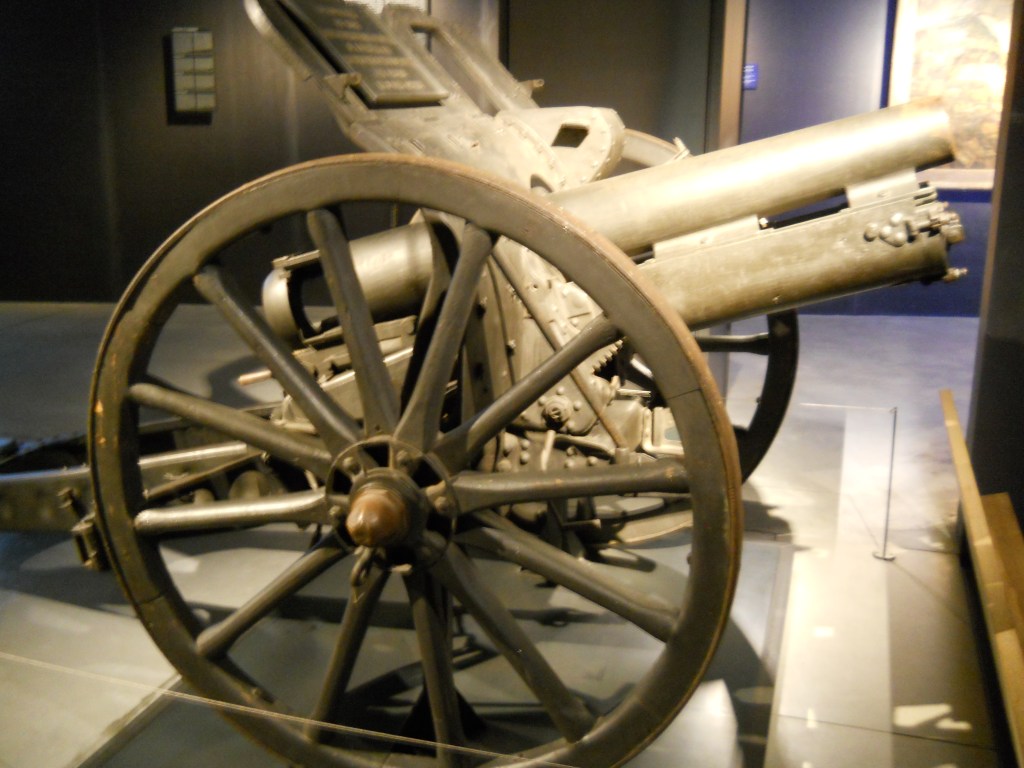
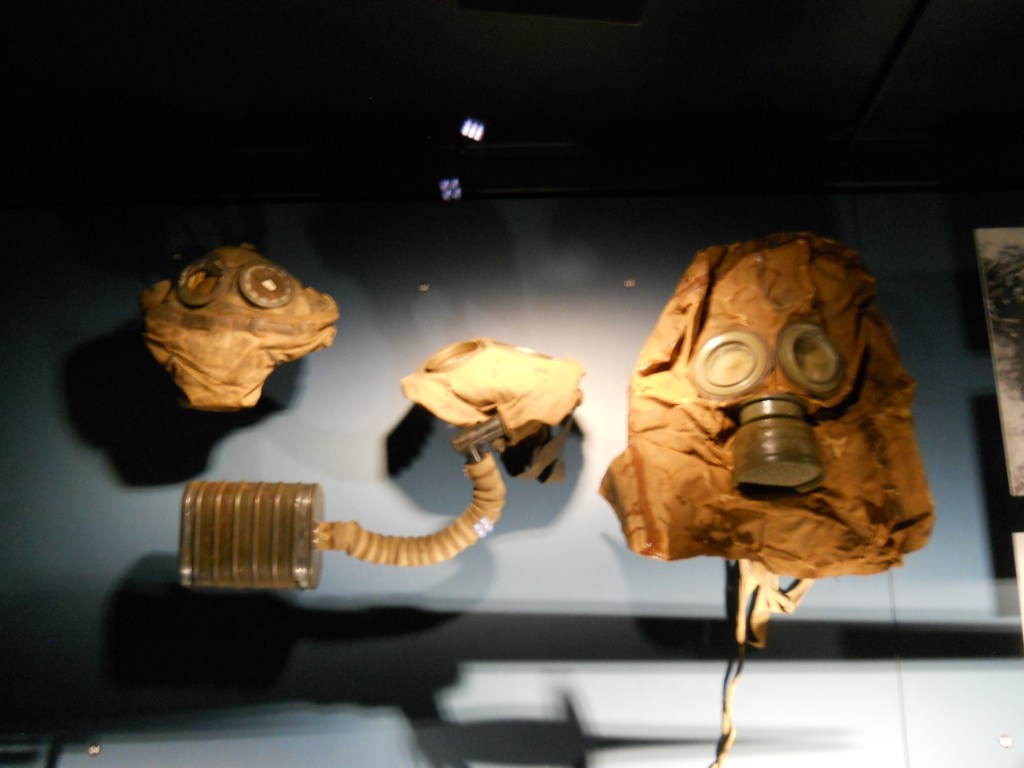
The Mons city museum covered WW1 and WW2 overall and as it affected the local area.
A ‘French’ 75 mm cannon.Different types of WW1 gas masks.
As usual, piss poor lighting and badly placed glass cases made most of the displays unphotographeable … but the museum was actually quite good despite all that.
Ypres
There are a lot of WW1 museums and memorials in the area … wonder why?
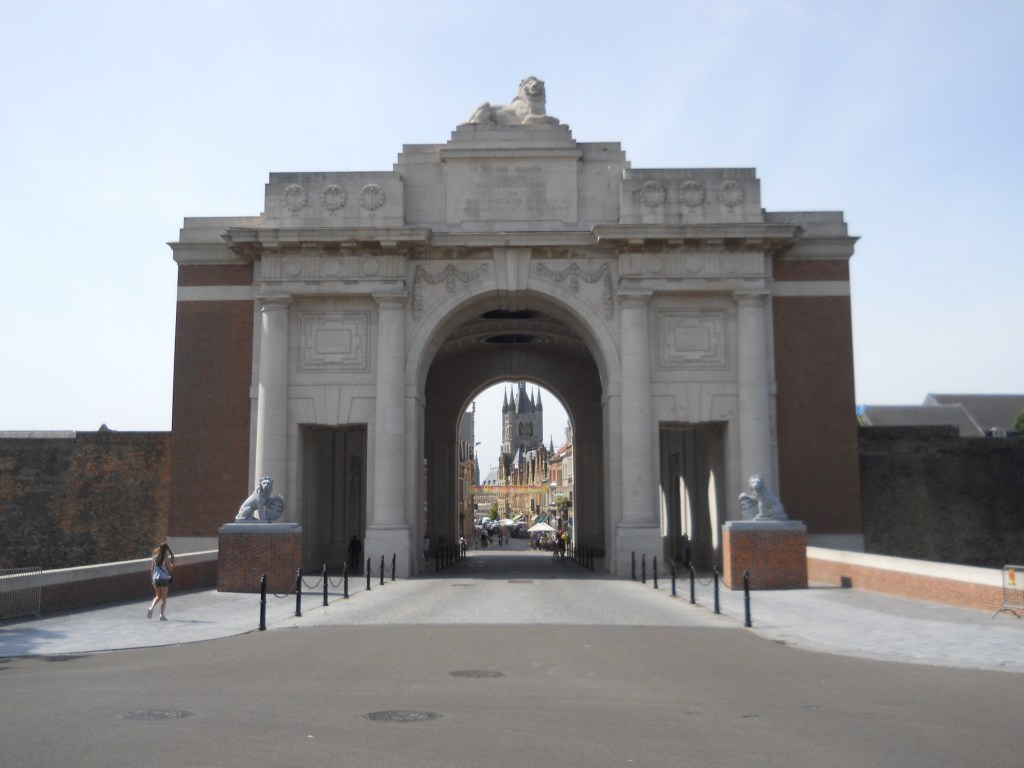
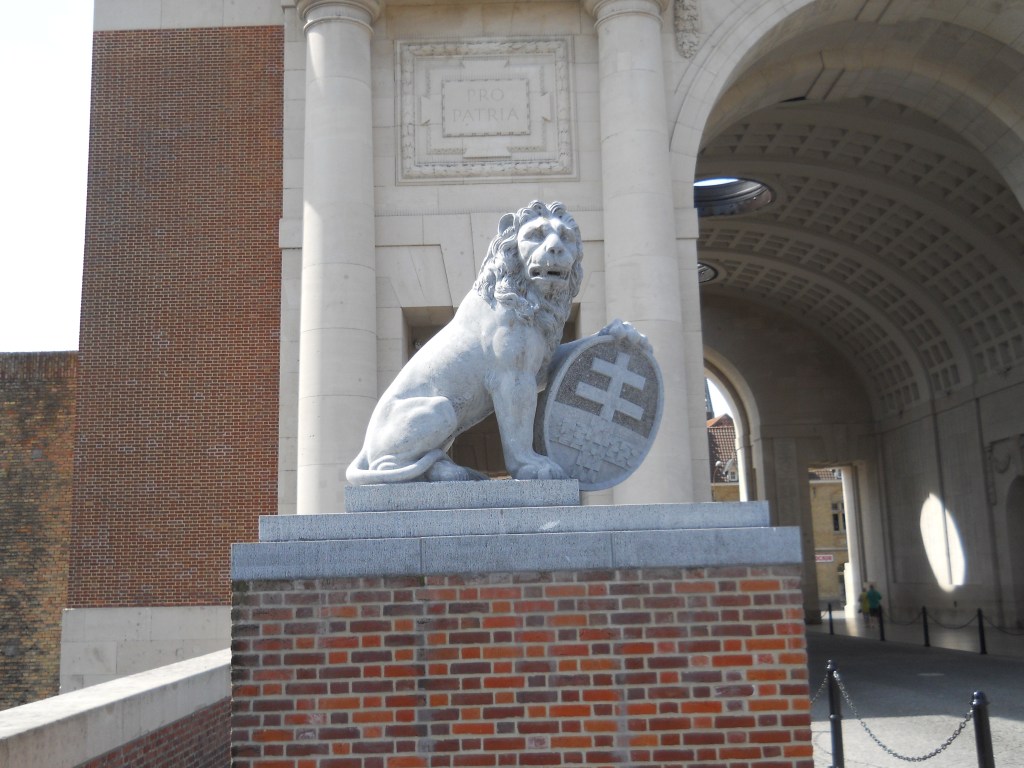
The famous Menin Gate. A replacement of the original medieval one destroyed in WW2 … built by the Imperial War Graves commission to list the names of all those MIA … but someone didn’t do their sums properly and … there wasn’t enough space. So the Canadians and some others are listed elsewhere. As new bodies are discovered and (occasionally) identified their names are removed from here as they will now have an actual marked grave. One of the two Lions, one on either side of the gate. These aren’t the originals – Menin/Belgium gave them to Australia as a ‘thank you’ for our part in WW1 … but we had exact copies made and re-gifted them to Menin in 2017.
Passchendaele Museum
This small but excellently presented museum is at Passchendaele – unfortunately most of the displays are, you guessed it, behind glass, poorly lit and almost impossible to photograph.
However, the basement has a reconstruction of a Trench Bunker system and this leads ourtside to the reconstruction of a section of German and of British trenches … but, again, the lighting in the Bunker was piss poor and only the trench sections were possible to take decent photos of!
A section of reconstructed trench – the use of wickerwork to reinforce the sides is indicative of German works (they were running out of raw materials of all sorts by the end of the war) and you can see the shelter in the rear, probably for ammo storage for a trench mortar or the like … Better quality work indicates this was a British or Allied trench … and, of you look carefully, you’ll note that the trench proper isn’t all that deep … it only goes up to the sandbag level. This sort of arrangement was used where trenches couldn’t be dug deep enough, sometimes because of underlaying rock, but more often because the ground was too waterlogged … as was all to common at the end of the trench lines in Belgium.A more conventional section of allied trench … note the duckboards at the left edge, designed to try and keep the solders’ feet out of water, and usually failing to do so, especially after any sort of rain. Also note the ‘zig-zag’ arrangement designed to limit the damage radius of any grenades lobbed in … and make it impossible for a raiding party to fire down more than a a dozen feet or so if they managed to take a section of the trench … turning any corner and they could be in the line of fire of waiting defenders.Inside of one of the prefab shelters for ammo.



































 phalanxgamesdesign.com